Unknown's avatar

About Scott

A cultural thinker with a life long interest in the arts and humanities: theatre, music, architecture, photography, history, urban planning, etc.

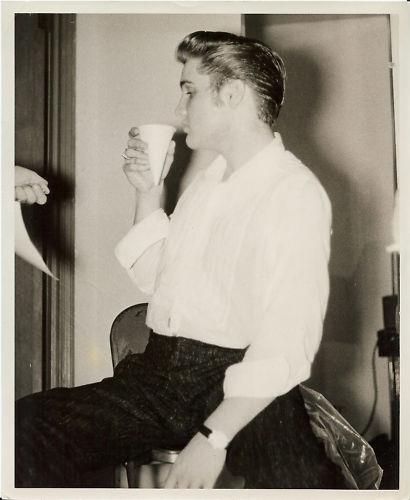
80 Years of Elvis Presley

Photo by Wayne Cranford

Photo by Wayne Cranford

Eighty years ago today, Elvis Presley was born in Tupelo, Mississippi.  He would, of course, grow up to become a cultural phenomenon.

Elvis performed in Little Rock throughout his career.  In April 1972, he played at Barton Coliseum (with tickets on the arena floor going for a whopping $10!).  In the 1950s, he played three at Robinson Auditorium. His first appearance was as his career was just starting to take off. The final, a mere 15 months later, was when he had become a national icon.

His first appearance at Robinson was on February 20, 1955.  Billed as the “WSM Grand Ole Opry” show, Elvis Presley was third on the bill behind the Duke of Paducah and Mother Maybelle and the Carter Sisters as he began week long tour of Arkansas and Louisiana.  On this date there were a pair of shows, at 3:00 and 8:15 p.m., at Robinson Auditorium. Tickets were 75-cents in advance, $1.00 at the box office and 50-cents for kids. It is believed that Gladys and Vernon Presley attended this performance, invited by Elvis who wanted to introduce them to the Colonel. Gladys was a big fan of the Duke of Paducah. Elvis Presley, Scotty Moore, and Bill Black receive $350 for these two shows instead of their usual $200 per day.  In August 1955, he returned and played Robinson as part of the All-Star Jamboree.

His third and final appearance at Robinson Auditorium was on May 16, 1956.  This time, the Auditorium was packed. The tickets were $1.50 in advance at Walgreens and $2.00 at the box office.  The ads featured 8 great acts in “his” variety show which consisted of the Jordonaires; Rick and Emil Flaim and their orchestra; vocalists Frankie Conners and Jackie Little and comedian-magician Phil Maraquin. A second show was added to accommodate the ticket demand.  

About 30 minutes late, due to a missed flight, Elvis appeared on stage in a purple blazer and started singing “Heartbreak Hotel.”  The crowd rushed the stage. Little Rock police officers were able to control them eventually and get the teenagers back to their seats.  While the crowd was impressed, the police officers were less so.  One of the patrolmen told the Arkansas Gazette reporter: “I wouldn’t know him if I saw him. And I wouldn’t be here unless I was being paid.”

Little Rock Look Back: Orval Eugene Faubus

FaubusOrval_fOn January 7, 1910, one of the most controversial figures in Arkansas history was born: future Governor Orval Eugene Faubus.

Faubus is today remembered for his role fighting for the continued segregation of the Little Rock public schools.  Raised in a socialist family, his staunch embrace of segregation was a surprise to many who viewed him as more of a moderate on the issue.  At the time, and later, it was viewed as more of an opportunistic move to head off a political challenge from segregationists such as Jim Johnson.  However, throughout the rest of his lifetime, as others such as George Wallace would recant and repent, Faubus continued to maintain he was “merely” upholding the law of the land (the Supreme Court striking down the law a few years earlier, notwithstanding).

Interestingly, Faubus was also known for hiring African Americans in state government for more than menial tasks. He worked to increase funding to historically black colleges and universities in Arkansas. He fought to abolish the predatory poll tax.

His segregation efforts curtailed Arkansas’ business recruitment for a few years in the late 50s and early 60s.  But a few years earlier, in 1955 Faubus had created the Arkansas Industrial Development Commission and appointed Winthrop Rockefeller to lead it.  He also increased teacher pay, overhauled the State Hospital, created the Arkansas Children’s Colony, expanded state parks, and stopped the Army Corps of Engineers from damming the Buffalo River.

In late 1965, by executive order, he created the Arkansas Arts and Humanities Council and funded it with his discretionary funds until the legislature would appropriate money in 1967. He also oversaw the creation of the state’s historic preservation program.

Certainly his efforts to flout federal law have tarnished his image. Looking at his accomplishments in the areas of industry, education reform and culture – one wonders what he could have accomplished if he had exerted even more efforts in those areas instead of fighting Eisenhower.  It is all moot, because he did not.  And the reality is that, yes had he supported Eisenhower, he might well have lost in 1958 to someone like Jim Johnson who would have continued fighting for segregation even more vehemently and would have been unlikely to champion these other issues.

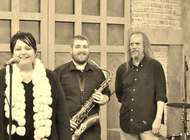
Tonight at South on Main’s Local Live: Charlotte Taylor & Gypsy Rain

local live 01 07 15Join the Oxford American magazine at South on Main at 7:30 p.m. tonight for the free Local Live music series, featuring Charlotte Taylor & Gypsy Rain! Call ahead and make a reservation to ensure your seat.

Little Rock singer-songwriter Charlotte Taylor has been performing since an early age. Born and raised in Heber Springs, AR., Taylor formed her first band, Project Blue in 1994 after getting hooked on the blues, and went on to record on the famed Memphis label, Hi Records. Her CD entitled “Taylor and Martinez” featuring guitarist George Martinez, was released in 2000, and received many great reviews and airplay on blues formatted radio across the U.S. and Europe, and was the first release on Hi in over 20 years. Produced by Roy Orbison band alum (drums on “Pretty Woman”) Oliver Warren, Stevie Ray Vaughan producer Danny Jones, and with performances by the Memphis Horns, the album features 10 original songs written by the duo of Taylor and Martinez, with the cover song “Cry Me A River” produced by Hi Records founder and Al Green producer, Willie Mitchell.

Taylor has been compared to blues legends Etta James and Bonnie Raitt, as well as being influenced by rockers, Janis Joplin, and Nancy Wilson of Heart, and even British Soul singer Annie Lennox. With many musical influences, including her mother whom Taylor says “was a great singer“, she has described her style as eclectic, but always with soul. “I want to make you feel something when I sing” she said. The songs I write are usually about something that happened, and can be very personal, others might be about something I heard someone say, or just a hook that wouldn’t get out of my head. A lot of the blues songs are about relationships, love, and lost loves, all the songs are about life. Local Live logo

Taylor and her band Gypsy Rain have won numerous blues competitions across the mid-south, and have played on Beale St. in Memphis at B.B. King’s, The Rum Boogie, The Hard Rock Café, King’s Palace and Blues Hall and competed in the International Blues Challenge. Charlotte Taylor and Gypsy Rain have performed at many blues festivals including Riverfest in Little Rock, The Riverwalk Blues Festival in Ft Lauderdale, Fl., The Spa City Blues Festival in Hot Springs, AR., Blues Eureka in Eureka Springs, AR., and the King Biscuit Blues Festival in Helena, AR.

Gypsy Rain features multi-instrumentalist Matthew Stone on guitar and pedal steel. Originally from Chicago, Matt plays with great skill and passion and excels in many genres of music. Stuart Baer is a Little Rock born piano player and keyboardist with roots in rock and blues, Stuart has performed with some of the greats in blues including Michael Burks, Guitar Shorty, and many more. Searcy native, Berkley School of music graduate, and one of the original members of Project Blue Dr. Bruce Johnston plays bass. Johnston received his doctorate in musical composition from the University of Miami, and currently teaches jazz guitar and bass at Ouachita Baptist University in Arkadelphia. Dr. Bruce is a master in many styles and genres and instruments, but has focused mostly on blues and jazz on the bass. John Roach has been a member of Gypsy Rain for over 10 years and attended the University of Central Arkansas in Conway where he played in the big band. John has many influences from percussion especially the hard-hitting Led Zeppelin drummer John Bonham, and always plays with great passion and soul.

Dave Williams II plays saxophone and is a University of Central Arkansas grad and a phenomenal jazz, blues, and funk brass player. Dave regularly performs at the rep and with several groups around Little Rock and brings a wealth of musical knowledge and masterful chops to the group.

Taylor and Martinez is available at www.cdbaby.com, www.itunes.com/taylorandmartinez

www.facebook.com/chartay88

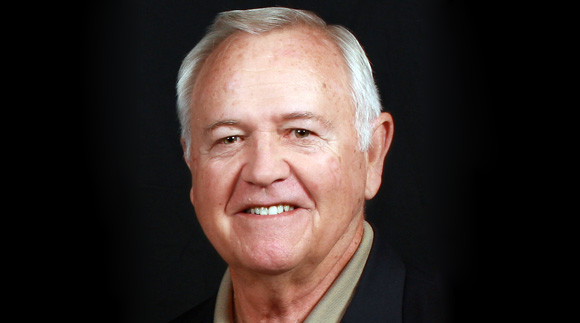
Ed Bethune speaks at Butler Center Legacies & Lunch today

EdBethune-580x323Former Congressman Ed Bethune’s diverse career has included service in the Marine Corps, as a special agent in the FBI, and as a prosecuting attorney.

Bethune will provide an “Arkansas autobiography” at Legacies & Lunch, the Butler Center’s monthly lecture series, on Wednesday, January 7, from noon-1 p.m. in the Main Library’s Darragh Center, 100 Rock Street.

Bethune, a native of Pocahontas who served three terms in the United States House of Representatives, will share details about his childhood during World War II and his career. He will also discuss his family and cultural changes in his lifetime. Finally, Bethune will talk about how he and his wife attempted to sail across the Atlantic Ocean in a 31-foot sailboat, detailed in his memoir, Jackhammered. Copies of Jackhammered and Gay Panic in the Ozarks, a novel by Bethune, will be available for sale; Bethune will sign books after the program.

Legacies & Lunch is free, open to the public, and sponsored in part by the Arkansas Humanities Council. Attendees are invited to bring a sack lunch; drinks and dessert are provided. For more information, contact 501-918-3033.

“Between a Rock and a Hardplace” as the 2015 Tales from the South kicks off tonight at the Arkansas Arts Center’s Best Impressions

talesfromsouthWhen Tales from the South’s permanent home closed in mid-2014, it was put between the proverbial “rock and a hard place.”  Founder/Host Paula Martin Morell persevered and has re-established the program rotating through several sites.  So it is fitting that the program celebrates the kick off of the 2015 season with the theme “Between a Rock and a Hard Place.”

Tonight, Tales originates at Best Impressions at the Arkansas Arts Center. The storytellers for this edition are Connie Mack Meskimen, Holly Patton and Karen Hayes.

Music is by The Salty Dogs’ Brad Williams and blues guitarist Mark Simpson.

“Tales From the South” is a radio show created and produced by Paula Martin Morell, who is also the show’s host. The show is taped live on Tuesday. The night is a cross between a house concert and a reading/show, with incredible food and great company. Tickets must be purchased before the show, as shows are usually standing-room only.

“Tales from the South” is a showcase of writers reading their own true stories. While the show itself is unrehearsed, the literary memoirs have been worked on for weeks leading up to the readings. Stories range from funny to touching, from everyday occurrences to life-altering tragedies.

Dinner is served from 5pm to 6:30pm, the show starts at 7pm.  Admission is $15.  Dinner can be purchased separately.

You MUST purchase your ticket before the show.

Previous episodes of “Tales from the South” air on KUAR Public Radio on Thursdays at 7pm.  This program will air on January 15.

Little Rock Look Back: John Gould Fletcher, LR 32nd Mayor

IMG_4006Future Little Rock Mayor John Gould Fletcher was born on this date in 1831. The son of Henry Lewis and Mary Lindsey Fletcher, he later served as a Captain in the Capital Guards during the Civil War. One of his fellow soldiers was Peter Hotze.

Following the war, he and Hotze began a general merchandise store in Little Rock. They were so successful that they eventually dropped the retail trade and dealt only in cotton. Peter Hotze had his office in New York, while Fletcher supervised company operations in Little Rock. In 1878 Fletcher married Miss Adolphine Krause, sister-in-law of Hotze.

John Gould Fletcher was elected Mayor of Little Rock from 1875 to 1881. He was the first Mayor under Arkansas’ new constitution which returned all executive powers to the office of the Mayor (they had been split under a reconstruction constitution). Following his service as Mayor, he served one term as Pulaski County Sheriff. Mayor Fletcher also later served as president of the German National Bank in Little Rock.

Mayor and Mrs. Fletcher had five children, three of whom lived into adulthood. Their son was future Pulitzer Prize winning poet John Gould Fletcher (neither father nor son used the Sr. or Jr. designation). Their two daughters who lived to adulthood were Adolphine Fletcher Terry (whose husband David served in Congress) and Mary Fletcher Drennan.

In 1889, Mayor Fletcher purchased the Pike House in downtown Little Rock. The structure later became known as the Pike-Fletcher-Terry House. It was from this house that Adolphine Fletcher Terry organized the Women’s Emergency Committee which worked to reopen the Little Rock public schools during the 1958-1959 school year.

In the 1960s, sisters Adolphine Fletcher Terry and Mary Fletcher Drennan deeded the house to the City of Little Rock for use by the Arkansas Arts Center. For several decades it served as home to the Arts Center’s contemporary craft collection. It now is used for special events and exhibitions.

Mayor Fletcher died in 1906 and is buried in Mount Holly Cemetery along with various members of his family. His grandson William Terry (son of Adolphine Fletcher Terry) and members of his family still reside in Little Rock.

Final Day for Chihuly Exhibit at Clinton Library

chihuly2

Today is the final day to see the Dale Chihuly exhibit at the Clinton Presidential Library & Museum.

Dale Chihuly is credited with revolutionizing the Studio Glass movement and elevating the perception of the glass medium from the realm of craft to fine art. He is renowned for his ambitious architectural installations around the world in historic cities, museums, and gardens.

The exhibit includes new and early works representing the breadth and scope of the artist’s vision over the last four decades. The exhibit features four installations designed specifically for the Clinton Presidential Library. One installation is on-view in the temporary exhibition space, one in the Garden View Room, one in the Sky Lobby and one in the outdoor fountain.

The Clinton Presidential Library & Museum is open until 5.