Unknown's avatar

About Scott

A cultural thinker with a life long interest in the arts and humanities: theatre, music, architecture, photography, history, urban planning, etc.

Little Rock Look Back: Early Organization of Little Rock

20131027-093707.jpg

Little Rock was designated as the capitol of Arkansas in 1821. But by 1825 the settlement know as Little Rock was little more than a loosely defined group of structures. One hundred and eighty-eight years ago today, on October 27, 1825, Territorial Governor George Izard signed legislation which started establishing a framework for Little Rock to function as a city.

It established that Little Rock citizens could elect a board of trustees to decide matters. Those trustees would choose one of their own to be a presiding officer. Though Little Rock would not be officially incorporated until 1831, this was the first step towards incorporation. The first trustees, elected for 1826, were Robert Crittenden, Joseph Henderson, Nicholas Peay, Bernard Smith and Isaac Watkins. Smith was chosen to be the presiding officer.

Crittenden had been largely responsible for the relocation of the capitol to Little Rock, where he owned a lot of land. He was a major political force in Arkansas politics during the territorial days. Watkins was a nephew of a signer of the Declaration of Independence. He had established the first tavern in Little Rock in 1821 and later he first mill in 1826. He was murdered in 1827 and the perpetrator was never captured.

Peay bought the tavern from Watkins in 1826 and continued in the tavern and hotel business the rest of his life. He later served on the Little Rock City Council and was acting mayor. His son Gordon Neil Peay served as Mayor of Little Rock. The Peay family also cofounded Worthen Bank and Christ Episcopal Church. Nicholas Peay’s great-great grandson Joseph B. Hurst, Sr. served on the Little Rock City Board from 1967 to 1970. Mr. Hurst’s daughter-in-law, Stacy, is currently on the City Board.

Little Rock Look Back: Mayor Pratt Remmel

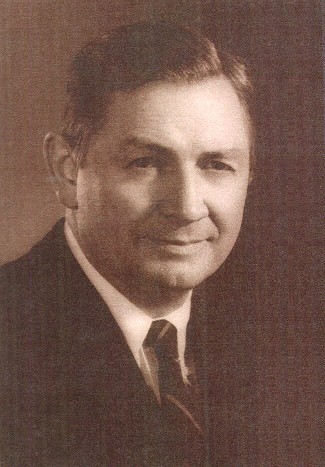
PrattRemmel-2bOn October 26, 1915, future Little Rock Mayor Pratt Cates Remmel was born.  He was one of five children of Augustus Caleb and Ellen Lucy Remmel.  His father died when he was five, leaving his mother to raise five children by herself.  After graduating from high school in 1933, he received a bachelor’s degree in economics from the University of Virginia in 1937.  During World War II, he held the rank of Lieutenant in the US Navy.

The Remmel family had long been involved in politics.  A great-uncle had been the GOP nominee for governor and senator as well as serving on the GOP national committee.  Remmel’s father had been the state GOP chair and his mother was the Arkansas Republican national committeewoman for nearly three decades.  In 1938, shortly after returning from college, Remmel ran for the Little Rock City Council but did not win.  In 1940, he became chairman of the Pulaski County Republican Executive Committee. For the next several decades, he held various leadership posts in the GOP at the county, state and national level.

Remmel made his second bid for public office in 1951 when he challenged incumbent LR Mayor Sam Wassell, who was seeking a third term.  Wassell shared the often held belief at the time that the GOP could not win any races in Arkansas because of the aftereffects of Reconstruction.  Remmel ran a vigorous campaign and won by a 2-to-1 margin becoming Little Rock’s first Republican mayor since Reconstruction.  In 1953, he sought a second two year term and was re-elected.  Though he had worked to build the GOP in Arkansas, he did not emphasize party affiliation in this campaign. He stressed he had been “fair to all and partial to none.”  This campaign included a rally which was aired live on six LR radio stations at the same time, a first for Arkansas. He won by over 3,000 votes this time over alderman Aubrey Kerr.

The Mayor (r) presenting Key to Little Rock to Key Club International President

The Mayor (r) presenting Key to Little Rock to Key Club International President

Remmel had been mentioned as a potential candidate for US Senate or Congress in 1954.  Instead, he ran for governor and was defeated by Orval Faubus in his first race for the office.  Remmel did receive more votes for governor than any GOP candidate had since reconstruction.  He is credited with laying the groundwork for the future successful campaigns of Winthrop Rockefeller.

A month before the election in 1955, Remmel announced he would seek a 3rd term as Mayor.  While later admitting he should have stuck with the customary two terms, he also said he ran to give voters an alternative to the Democratic nominee Woodrow Mann.  Mann, like Remmel, was in the insurance business; Remmel considered Mann to have a questionable reputation.  Several statewide Democratic leaders campaigned for Mann, who beat Remmel by 1,128 votes, one of Little Rock’s closest mayoral elections.

As Mayor, Remmel served in leadership positions with the US Conference of Mayors and the Arkansas Municipal League.  It was during his tenure as mayor that the land which is now Rebsamen Golf Course was given to the City.

After he left office, Remmel returned to business interests and staying active in civic affairs.   He was an active leader of First United Methodist Church and Gideons International.  He was a Mason, a Shriner, a member of the American Legion, and the American Red Cross.   Remmel served on the Arkansas River Basin Commission and chairman of the Arkansas Waterways Commission.  In 1996, he was posthumously inducted into the Arkansas River Hall of Fame.

Married for many years to Catherine Couch, the couple had three children, Pratt Jr., Cathie and Rebecca.  Lake Catherine in Arkansas is named for his wife. Remmel Park and Pratt Remmel Road in Little Rock are named for Mayor Remmel.

Mayor Remmel died on May 14, 1991.  He and Catherine (who died in 2006) are buried in Oakland Cemetery.

SORCERER’S APPRENTICE at Children’s Theater

As the state’s premiere center for visual and performing arts with a renowned collection of international art, the Arkansas Arts Center Children’s Theatre will present The Sorcerer’s Apprentice October 25 – November 10.

The audience will love this fun-filled, popular rendition of a thoroughly modern young girl on a magical journey when she meets a mysterious medieval sorcerer’s apprentice. The production is written by Alan Keith Smith and is based on a poem by Johann Wolfgang von Goethe.

“This Children’s Theatre production brings to life an exciting magical world while reminding us that our actions have consequences,” said Arkansas Arts Center executive director Todd Herman. “This tale of morality is a wonderful experience for the whole family to share and the relatable characters give the story an entirely new dimension on stage.”

The cast for The Sorcerer’s Apprentice includes: John Isner, Tanner Barry, Mark Hansen, Jeremy Matthey, Moriah Patterson, Veronica Lowry, Sissy Quaranta, Sarah Nicholson, Huner Wood, Sophie Wacaster, Margaret Lowry, Brooke Melton, Mattingly Bartole, Savanna Fischer, Erin Fowler, Ben Fish, Montana Bartole and Kate Kelly.

Keith Smith is the director, playwright and scene designer for the production. Artistic direction by Bradley Anderson, choreography by Moriah Patterson, costumes are designed by Nikki Webster, technical direction by Drew Posey, lighting design by Penelope Poppers, musical direction by Lori Isner, properties by Miranda Young, children’s acting coach is Aleigha Morton and Sarah Gasser is the stage manager.

Presenting sponsors for the event are Landers Fiat and Arkansas Blue Cross and Blue Shield. The production is also sponsored by Centennial Bank, JPMS Cox, PLLC with in-kind support provided by Boulevard Bread Company.

Recognized by The Drama League as one of the best regional theatre companies in America, the Arkansas Arts Center Children’s Theatre is the only professional company in Arkansas that produces children’s literary works for the stage. Since 1979, Children’s Theatre has been creating unique experiences for family audiences. During the 2012-13 season, nearly 43,000 children and families enjoyed Arkansas Arts Center Children’s Theatre productions which included more than 200 schools across Arkansas.

RED at Rep

John Logan’s Tony winning play Red opens at the Arkansas Rep tonight for a run that goes through November 10.

 While the name Rothko may not have been a part of your consciousness, his works surely have. Rothko’s canvases feature layers of emotion with each brush stroke: Bold reds, geometric shapes and streaks of color literally bleeding one into the other.

Rothko specially designed his paint to be fast drying so he could layer quickly and work in the moment. Groundbreaking in its day, Rothko’s masterpieces fetch in the millions of dollars and the influence of his work is still being felt.

In partnership with the Arkansas Arts Center’s exhibit “Mark Rothko in the 1940’s: The Decisive Decade,” The Rep is thrilled to stage the revealing Rothko drama Red. Rep Producing Artistic Director Robert Hupp will direct Red, which will star Rep favorite Joe Graves (Othello, The Tempest, Of Mice and Men, Moonlight and Magnolias) as the abstract artist Mark Rothko.

Written by John Logan (whose Hollywood screenplays include Hugo, Gladiator and Skyfall) and set in Rothko’s studio on the Bowery, Red drops you squarely inside the world of the painter and sets your heart pounding, chronicling the tormented artist’s two-year struggle to complete a lucrative set of murals for Manhattan’s exclusive Four Seasons restaurant.

This production provides a rare glimpse of an artist through the lens of his relationship with his naïve young assistant, who must choose between appeasing his mentor—and changing the course of art history. When his assistant challenges his artistic integrity, Rothko must confront his own demons or be crushed by the ever-changing art world he helped create.

The Rep’s first-time partnership with the Arkansas Arts Center provides a depth of artistic exploration never before offered to Little Rock audiences. Amid the swiftly changing cultural tide of the late 1950s, Red is a startling snapshot of a brilliant artist at the height of his fame, providing Arkansans a unique opportunity to witness both the artists’ life and work, all within a five mile radius.

Joining Graves in the cast is Chris Wendleken plays the young protege.  The design team includes Mike Nichols (set), Shawn Sturdevant (costumes), Justin A. Partier (lighting), Allan Branson (sound) and Lynda J. Kwallek (props).

18th Big Boo!-seum Bash Tonight

bigbooseumFor the 18th year, Little Rock Museums have joined together to present BIG BOO!-seum Bash Thursday, October 24, 2013 from 6 p.m. to 8:30 p.m. This FREE event provides a safe alternative to door to door trick-or-treating. Each location will offer games, story-telling, candy and fun!

Participating members of the Greater Little Rock Museum Consortium will host BIG BOO!-seum Bash at the following locations:

  • Central Arkansas Library System (Main Branch)
  • Central High School National Historic Site
  • Curran Hall Visitors Center
  • Historic Arkansas Museum
  • MacArthur Museum of Arkansas Military History
  • Museum of Discovery
  • Mosaic Templars Cultural Center
  • Old State House Museum
  • Witt Stephens Jr. Central Arkansas Nature Center

Visitors can drive to each location, where FREE parking is available.

Participants can start at any location where Game Cards will also be issued at each site. Visit all nine participating locations to qualify for the Grand Prize-Flat Screen TV (additional information listed on Game Cards). 

New this year, each site will offer a prize drawing for kids who visit that site.  Be sure to register at each of the sites visited.  For instance, the MacArthur Museum of Arkansas Military History will draw for a FREE boys or girls bicycle.

Mark Rothko in the 1940s – focus of new exhibit at Ark Arts Center


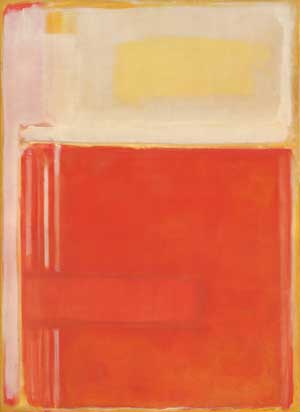
No. 8, 1949 Oil and mixed media on canvas 90 x 66 in. The National Gallery of Art, Washington Gift of The Mark Rothko Foundation, Inc., 1986.43.147 ©1998 Kate Rothko Prizel & Christopher Rothko /Artists Rights Society (ARS), New York Image courtesy of the National Gallery of Art, Washington

No. 8, 1949
Oil and mixed media on canvas
90 x 66 in.
The National Gallery of Art, Washington
Gift of The Mark Rothko Foundation, Inc., 1986.43.147
©1998 Kate Rothko Prizel & Christopher Rothko /Artists Rights Society (ARS), New York Image courtesy of the National Gallery of Art, Washington

The Arkansas Arts Center, the state’s premiere center for visual and performing arts with a renowned collection of international art, presents the Mark Rothko in the 1940s: The Decisive Decade exhibition, on view October 25 – February 9, in the Winthrop Rockefeller Gallery.

“When I began organizing the Mark Rothko exhibition back in 2009, it came together very quickly and grew from a dozen pieces to nearly 40. It was an honor and a privilege to see the exhibition come to fruition from its humble beginnings to a touring collection,” said Arkansas Arts Center executive director Todd Herman. “We are delighted to afford Arkansans the opportunity to view the thoughtfully rich works of a master in modern American art.”

Herman developed the Rothko exhibition while he was the chief curator and curator of European art at the Columbia Museum of Art in Columbia, S.C. Herman approached the National Gallery of Art in Washington about a collaboration to bring to the forefront a thought-provoking depiction of the famed late artists’ works.

The show began its run at the Columbia Museum of Art in Columbia, S.C., in September 2012, the Denver Art Museum in Denver, Colo. and will arrive at the Arkansas Arts Center in October. Herman also wrote the forward and introduction in the book, Mark Rothko: The Decisive Decade 1940-1950, which was listed at #6 on Huffington Post’s top art books in 2012.

Regarded as one of the leading American artists of the 20th century, Mark Rothko (1903-1970) forever changed the landscape of modern American art. Rothko was a member of The New York School, a collection of artists working in a nexus of artistic approaches, the best known of which were Gesturalism, or Abstract Expressionism and Color Field. What most members of this group shared was a faith in using the power of art effectively to address the pressing historical problems of their era though channels such as the movies, news reports and photographs of the war.

Rothko was the most important artist of the School’s Color Field wing and like many of his colleagues, the 1940s was the critical decade for his development. This exhibition is an examination into the artistic maturation, a decade of searching and rapid evolution, of one of the most influential artists of the twentieth century that deserves not only closer attention, but also a re-evaluation. Included in the exhibition are works by Rothko’s colleagues such as Jackson Pollock, Adolph Gottlieb and Clyfford Still developing along a very similar vein at the same time.

Mark Rothko in the 1940s will be the first exhibition and catalogue to reevaluate this work in the context of Rothko’s thoughts about art from the period. The exhibition will bring to light many works not seen before by scholars or the public and highlight a period of his career that is often overlooked.

The paintings, drawings and watercolors by Mark Rothko in this exhibition are on loan from the National Gallery in Washington. The exhibition was organized by the Arkansas Arts Center, the Columbia Museum of Art, the Columbus Museum of Art and the Denver Art Museum in conjunction with the National Gallery of Art in Washington, D.C. The exhibition is funded in part by the Dedalus Foundation. Local support is provided by Harriet and Warren Stephens, Chucki and Curt Bradbury, The Brown Foundation, Inc., of Houston, Mary Ellen and Jason Vangilder and the Capital Hotel.

Arkansas Arts Center members are invited to a member reception for Mark Rothko in the 1940s: The Decisive Decade, Face to Face: Artists’ Self-Portraits from the collection of Jackye and Curtis Finch, Jr. and Portraiture Now: Drawing on the Edge exhibitions to be held on Thursday, October 24, from 6:30 – 8:30 p.m. Dr. Bradford R. Collins, University of South Carolina associate professor of art history and catalogue editor of Mark Rothko, The Decisive Decade: 1940-1950, will present the lecture, “Rothko’s Dilemma: Beauty and Tragedy,” at 6 p.m. in the lecture hall, sponsored by the Fine Arts Club. Members and guests will enjoy music, cocktails and light hors d’oeuvres. Tickets are required to attend and are free for members. Non-members may purchase a ticket for $15 which includes access to the lecture, exhibitions and reception.

Additional events associated with the Mark Rothko in the 1940s: The Decisive Decade exhibition include;

Museum School Workshop: Artist Catherine Rodgers will lead a workshop, Paint like Rothko – Color: Complement, Shade, Tone and Tint, on Saturday, October 26, from 9 a.m. – 4 p.m. and on Sunday, October 27, from noon to 4 p.m. Admission to the workshop will be $92 for members and $115 for non-members. Those interested can register through the Museum School, arkansasartscenter.org or by contacting (501) 372-4000.

Dance: A special performance titled Color Play, an original choreographed interpretation of the work of Mark Rothko featuring Stephanie Thibeault and the UALR dance department, will be held on Saturday, December 7, at 2 p.m. in the Winthrop Rockefeller Gallery. Admission will be free with ticket purchase to exhibition. Guests may sign up at Stephens Inc. Visitors Center. Space is limited.

Feed Your Mind Fridays:

·         Artist Gallery Talk with Virmarie DePoyster will be held on Friday, November 8, at noon in the Winthrop Rockefeller Gallery. Admission will be free with ticket purchase to exhibition. Guests may sign up at the Stephens Inc. Visitors Center. Space is limited.

·         The film The Rothko Chapel (68 minutes) will be shown on Friday, November 29, at noon in the lecture hall.

·         The film Rothko’s Rooms (60 minutes) will be shown on Friday, December 13, at noon in the lecture hall.

·         The film Motherwell & the New York School: Storming the Citadel (55 minutes) will be shown on Friday, February 7, 2014, at noon in the lecture hall.

Lecture: Christopher Rothko, son of artist Mark Rothko, will be on hand for questions Thursday, January 16, 2014, at 6 p.m. for the lecture, “Conversations with Christopher Rothko and Todd Herman”, in the lecture hall presented by the Fine Arts Club. The Arkansas Arts Center will have extended hours through 9:00 p.m.

Family Festival: Rothko’s Colors and Perfect Portraits, a family festival, will be held on Saturday, January 18, 2014, from 11:30 a.m. – 2:30 p.m. Admission will be free for members, $5 per person and $20 per family.

Music: Haskell Small will present an original composition inspired by Mark Rothko and his paintings on Sunday, February 2, 2014, at 2 p.m. in the Winthrop Rockefeller Gallery. Admission will be free with ticket purchase to exhibition. Guests may sign up at the Stephens Inc. Visitors Center. Space is limited.

Drop-In Tours Museum docents will be giving 1-hour tours of Mark Rothko in the 1940s: The Decisive Decade. Tour times are as follows: Tuesday – Friday at 1 p.m., Saturdays at 11 am. and 1 p.m. and Sundays at 1p.m. Free with ticket. Space is limited to 20. Please sign in at the Stephens Inc. Visitors Center. First come, first served.


For more information, visit arkansasartscenter.org or call (501)372-4000.

 

Arkansas Shakespeare Theatre 2014 Lineup

AST_logoLittle Rock native Rebekah Scallet, the artistic director of the Arkansas Shakespeare Theatre, has announced the lineup for the 2014 season.  In announcing the season, she has described the shows as being about people in search of their identity.

Two Gentlemen of Verona by William Shakespeare
Enjoy a romantic evening under the stars with Shakespeare’s comedy of best friends divided by love, featuring wise-cracking servants and a playful pup.  This will be performed outdoors at the Hendrix Village in Conway and in North Little Rock.  One of Shakespeare’s early plays, it features romantic mixups, disguises, deception and a happy ending, all of which would become hallmarks of Shakespeare’s comedies.

Pippin featuring libretto by Robert O. Hirson and score by Stephen Schwarz
Based loosely on the lives of Charlemagne and Pepin, it tells the story of a young prince named Pippin who undertakes a musical journey of self-discovery that celebrates the magic of theatre. The current Broadway production was the winner of the 2013 Tony Award for Best Revival.  This will be presented in the Reynolds Center on the UCA campus.

Hamlet by William Shakespeare
Perhaps Shakespeare’s greatest tragedy, Prince Hamlet seeks to revenge his father’s death.  Directed by Robert Quinlan, who helmed the acclaimed 2012 production of Richard III, it will be presented in an intimate on-stage setting.

The Comedy of Errors by William Shakespeare
This will be the touring production in a pared down special adaptation of Shakespeare’s rip-roaring farce, perfect for kids of all ages.

Specific dates and further details will be announced soon.