Little Rock Look Back: LR Mayor Harold “Sonney” Henson

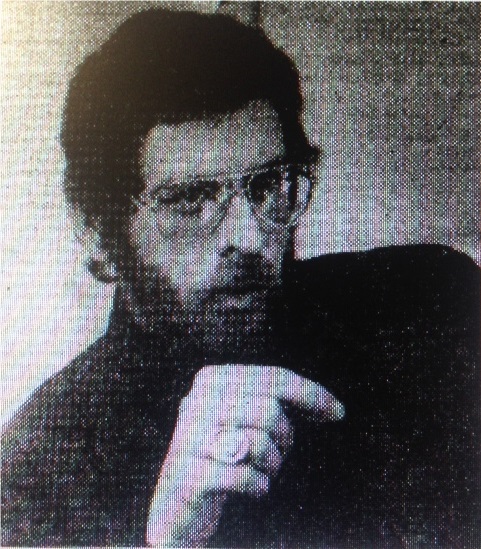
On July 18, 1928, future Little Rock Mayor Harold E. “Sonney” Henson, Jr. was born in Fayetteville to Harold E Henson Sr. and Dollie Croxdale Henson.  He and his sister Sara Sue grew up in Springdale.

Henson graduated from Springdale High School and was later inducted as one of the first inductees into the Springdale High School Hall of Fame where he participated in the state high school championship in football and basketball. He attended the University of Arkansas in 1945 on an athletic scholarship where he participated in three sports, golf, basketball and football, and graduated in 1949 with a degree in Business Administration.

He was active in ROTC at the university and graduated as a second lieutenant in the U.S. Army. Henson served in Korea as a captain and commander during the Korean conflict. He attained the rank of major as an active member of the Army reserve post his duty in Korea.

Henson’s professional career began with First National Bank of Springdale and soon moved to Little Rock where he served as Vice President at the Worthen Bank on Asher Avenue. In 1962 he was elected to the City of Little Rock Board of Directors.  From January 1965 to December 1966, he served as mayor of Little Rock.  In November 1966, he was unopposed in his bid for a second term on the City Board.  However in October 1967, he resigned from the City Board because he was taking a position with a bank in Joplin, Missouri.

From 1966 to 1972, he served as President of Security National Bank Joplin.  While there, he was a Missouri amateur championship golfer.  Herbert Thomas then asked him to move to Ft. Smith to head up City National Bank (present Bank Corp South) where he served as President and CEO from 1972 to his retirement in 1993 at the age of 65. He continued his service to Bank Corp South as an active board member for several years.

Among his many civic activities throughout his career were the Springdale Junior Chamber of Commerce,  Sparks Regional Medical Center board of directors of Fort Smith, president and active member of the board for the Arkansas Sports Hall of Fame and Razorback Foundation, on the board for the University of Arkansas for Medical Sciences foundation, the Westark area council for Boy Scouts, the Arkansas State Chamber of Commerce, the Small Colleges of Arkansas, Leadership Fort Smith, the Community Rescue Mission and the President of the Arkansas Bankers Association to name a few.  In 1995 he received the meritorious service award by the Arkansas Sports Hall of Honor for his lifelong commitment to Arkansas sports.

Henson was married for 53 years to Helen Garrott Henson. He had four children, 16 grandchildren and one great-grand child.
Little Rock Look Back: Mrs. Ruth May Wassell Gibb

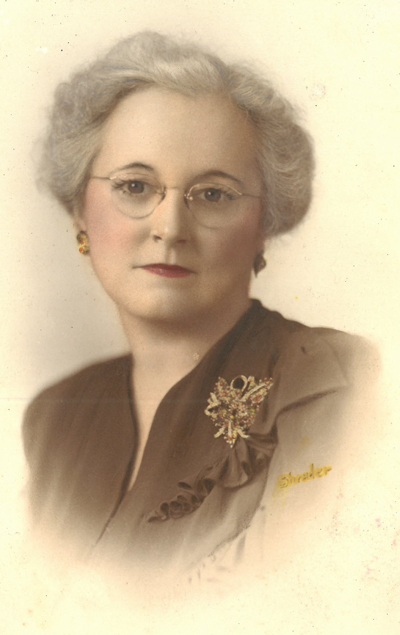
Ruth-May-Wassell-GibbOn August 27, 1944, Ruth May Wassell shattered a bottle on the hull of a new ship and christened it the U.S.S. Little Rock.  Mrs. Wassell, whose husband was Little Rock alderman Sam Wassell, had been designated as the official sponsor for the City of Little Rock by Mayor Charles Moyer.

Details are vague as to why Mayor Moyer designated Mrs. Wassell for the honor.  Her husband was a first cousin of World War II hero Dr. Corydon Wassell, which might have had something to do with it.

Ruth May Wassell was more than the wife of a local political leader.  The daughter of Dr. and Mrs. Wiley Singleton May, she moved from Gurdon to Little Rock with her family and graduated from Little Rock High School. She later graduated from Henderson-Brown College and received a law degree from the University of Arkansas.  In 1932, she was admitted to the Arkansas Bar and later was admitted to practice before the Arkansas Supreme Court, one of the first women to receive this designation.

Mrs. Wassell was active in business, serving as president of the Arkansas Lumber Company  and owner of a citrus farm in Texas.  She was also active in civic affairs through involvement with the Arkansas Democratic Women, Boys Club and Second Presbyterian Church.  From 1947 until 1951 she was First Lady of Little Rock when Sam Wassell was elected as Mayor.

Following the December 1954 death of Mayor Wassell, she subsequently married E. W. “Bud” Gibb.  She died in 1964.

Little Rock Look Back: Mayor James A. Woodson

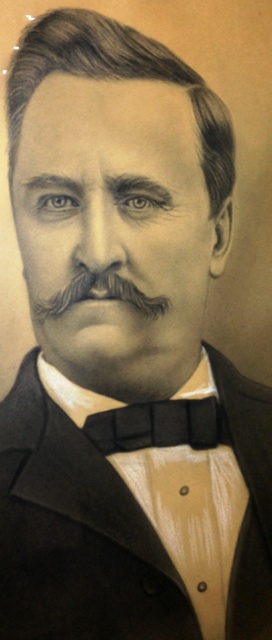
IMG_0298On July 14, 1848, future Little Rock Mayor James Alexander Woodson was born in North Carolina.  The son of two prominent eastern families, he and his parents moved to Pine Bluff in 1849.  His father died within two weeks of the family’s arrival in Arkansas.

With the outbreak of the Civil War, he enlisted as a drummer boy in the Ninth Arkansas infantry but was discharged because of his youth. He worked as a clerk at a general store in Pine Bluff. After the Civil War ended, he attended school in Virginia and Maryland before returning Pine Bluff. Upon his return he worked in the steamboat business and eventually started working in railroads. He was instrumental in putting together one of the forerunners of the Missouri Pacific Railroad and worked for them for 18 years.

Woodson moved to Little Rock in March 1881 and continued working for the railroad until 1891.  Working in the mercantile business allowed him more time to be engaged in civic affairs.  In 1895 he was elected mayor.   He handily defeated former mayor W. G. Whipple who was seeking to return to office.

During Mayor Woodson’s tenure, he oversaw renovations of the 1867 Little Rock City Hall (which was located at the time on the north side of Markham between Main Street and Louisiana Street).  He also championed the construction of a city hospital and the first free bridge across the Arkansas River.  Mayor Woodson was reelected in April 1897 and April 1899.

In April 1890, he resigned to take over the Arkansas and Southwestern Railway.  After restoring it to sound financial footing, he later led the Arkansas Asphalt Company.  That company provided the first asphalt for paving Little Rock city streets.

Woodson served as a director of the Little Rock board of trade (forerunner to the Little Rock Regional Chamber of Commerce), director of the Mercantile Trust Company and president of the state board of trade (forerunner of the Arkansas State Chamber of Commerce).

Woodson married Virginia Lanier in 1868.  They had six children, five of whom lived to adulthood.  Mayor Woodson died on October 19, 1908 and is buried in Mount Holly Cemetery.  His wife lived until 1937 and is buried next to him.  Also buried in Mount Holly are their children James Alexander Woodson, Benjamin Morehead Woodson and Gertrude Woodson Hardeman; each of whom died before their mother.  Mrs. Hardeman’s husband and son are also buried in Mount Holly.

In 2013 and 2014, Mayor Woodson was one of the characters portrayed at the annual Parkview High School “Tales from the Crypt” program at Mount Holly.

Some have noted his resemblance to actor Nick Offerman of the show “Parks and Recreation.”  Here is a Six Degrees game to link the two.

  • James Woodson
  • The Woodson community and Woodson Lateral is named for him
  • Growing up in the area, actor Billy Bob Thornton has been to Woodson Lateral
  • Bruce Willis appeared in BANDITS with Thornton.
  • “Friends” featured Willis and Paul Rudd as multi-episode guest stars
  • Rudd appeared in “Parks & Recreation” as a multi-episode guest star
  • Nick Offerman starred in “Parks & Recreation”

Celebrate the Arts Council’s Arkansas Living Treasures tonight at Historic Arkansas Museum

2fan ham 0715Tonight’s 2nd Friday Art Night at Historic Arkansas Museum is a special event! In collaboration with the Arkansas Arts Council, a sister agency of the Department of Arkansas Heritage, it celebrates the work of those who have been designated Arkansas Living Treasures.

“Art. Function. Craft. The Life and Work of Arkansas Living Treasures” – See the works of Arkansas’s finest and most fascinating artists and artisans practicing, preserving and progressing traditional craft. Hear about their personal artistic journeys in a series of documentary shorts. This exhibition, and corresponding film series, is a collaboration of Historic Arkansas Museum and the Arkansas Arts Council, which gives the Arkansas Living Treasure Award to those who excel in the practice of a traditional craft.

Since 2002, the Arkansas Arts Council has recognized Arkansas Living Treasures, Arkansas artisans who excel in the practice of a traditional craft and who have passed the tradition on to the next generation. For the past four decades, Historic Arkansas Museum’s Arkansas Made has systematically documented, collected and preserved the work of Arkansas artisans who lived and worked in the state from the early 19th century to present day. In 2013, the Arkansas Arts Council and Historic Arkansas Museum collaborated to produce a series of short films that celebrate the lives and work of each Arkansas Living Treasure.

In addition, the evening will feature award-winning Arkansas fiddler,Clancey Ferguson. Historic Arkansas Museum’s Year of Arkansas Beer continues with Saddlebock Brewery of Springdale.

The festivities run from 5pm to 8pm.

Shark Week Special: Mack the Knife at Arkansas Rep

1976 Gazette photo by Steve Keesee

1976 Gazette photo of Cliff Baker by Steve Keesee

In honor of Shark Week and the upcoming 40th anniversary season at the Arkansas Repertory Theatre, a quick look back at the Rep’s first production.

In November 1976, the Arkansas Repertory Theatre’s debut production was the Kurt Weill-Bertolt Brecht musical The Threepenny Opera.  In the Marc Blitzstein translation, the opening song begins with these appropriate-for-Shark Week lyrics:

Oh, the shark has pretty teeth, dear,
And he shows them pearly white;
Just a jack-knife has Macheath, dear,
And he keeps it out of sight!

When the shark bites with his teeth, dear,
Scarlet billows start to spread;
Fancy gloves, though, wears Macheath, dear,
So there’s not a trace of red!

Often called “Mack the Knife” the song’s title is officially “Moritat” which translates to “Deadly Deed.”  In the original Arkansas Rep production, the song was sung about the Rep’s founder and artistic director Cliff Baker who played Macheath.  He also directed this production.  Others in the cast included Herb Rule, Jean Lind, Theresa Quick, Connie Gordon and Guy Couch.

In his review in the Arkansas Gazette, Bill Lewis called the production “memorable” and that it achieved the intentions of the authors.  He praised the cast, the designers and orchestra as well as Baker’s directing.   All in all, it was an auspicious beginning which has prepared the Rep well.

Interestingly, the Rep’s 40th season starts with another blood-thirsty Mack. This one, Mackers or the Thane of Cawdor, headlines Shakespeare’s Scottish Play. This Mac spends a lot of time on the heath, so it seems a very appropriate way to pay homage to the inaugural Rep production. The Rep’s 40th season kicks off on September 11.

Little Rock Look Back: Miss City Beautiful

Miss City Beautiful 1964 Rita Fern Yoder with two of her princesses

Miss City Beautiful 1964 Rita Fern Yoder with two of her princesses

In the 1950s and 1960s, the City of Little Rock’s City Beautiful Commission sponsored a beauty pageant – Miss City Beautiful.

The commission was created in 1947. In 1950, they started the pageant.  The contest was linked to the annual beautification drive with the winner presiding over a series of events.

Though most of the appearances centered around the beautification drive, they would also appear at other City-related events throughout the year.  One summer, West Point cadet Wesley Clark was greeted at the Little Rock airport by city dignitaries and Miss City Beautiful when returned to make some appearances.

Contestants were usually high school seniors or recent graduates.  There was a preliminary round in which contestants would meet with judges, who would pick finalists. The young women were judged on “attractiveness, poise, personality, and effective speech.”

Usually there would be around eight judges, who would be from other cities in Arkansas or neighboring states.  Sometimes the final day of the pageant would be televised on local TV.

The winners and the finalists would receive prizes.  On at least one occasion the five finalists were given a trip to Washington D.C.  A comprehensive list of the finalists and winners does not currently exist.  But perhaps the most notorious winner was 1952’s Charlotte Moorman, who would later gain national notice as the Topless Cellist.

By the late 1960s, interest in the pageant waned from potential contestants. At the same time, the City Beautiful Commission was undergoing some organizational shifts of its own.  Therefore the pageant was discontinued.

Little Rock Look Back: New City Hall approved in 1906

The 1906 plans for City Hall with the Municipal Auditorium on the left portion.

The 1906 plans for City Hall with the Municipal Auditorium on the left portion.

On July 9, 1906, the Little Rock City Council approved Resolution 281 and Ordinance 1,295. These actions approved the plans for a new City Hall complex to be constructed on land at the northwest corner of Markham and Broadway Streets.  A few days later, the contract was awarded for the construction of the new building.

Mayor Warren E. Lenon had first called for a new city hall complex in his annual address in April 1904. He repeated his request in April 1905.   The City Council took up Mayor Lenon’s quest for a new city hall in December of 1905.  The Council appropriated money for the purchase of land for a city hall, jail and auditorium.

In response to this, the Arkansas Gazette daily newspaper ran a story featuring the viewpoints of a few civic leaders weighing in on the need for a new city hall complex which would also include a new jail and a city auditorium.  Two of the respondents, L. B. Leigh and P. Raleigh, stressed the need for paved streets and better sewers instead of a new city hall and auditorium.

The other three businessmen interviewed were more favorable to Mayor Lenon’s proposal.  Morris M. Cohn, a former Little Rock City Attorney, stated “I do not think we can make a better investment than in a fine city hall and auditorium.”  (Mr. Cohn, though an M. M. Cohn, was not related the M. M. Cohn who was the namesake for the longtime Little Rock department store.) County Judge William Marmaduke Kavanaugh offered his satisfaction with the action of the City Council on that matter.  R. E. Walt, a banker, opined that he thought $150,000 was not enough; he suggested $200,000 should be spent.

Later that month the Gazette reported that a site had been selected for the city hall and auditorium complex.  The proposed location was most of a city block located at the corner of Markham and Broadway Streets.  Mayor Lenon was vague as to the details of the deal because negotiations were still underway with the property owners

As 1906 dawned, Mayor Lenon and other city leaders continued to take steps to build the new city hall and auditorium.  They invited three local architects to make presentations for the chance to design the new complex.  The three were Charles L. Thompson, Frank W. Gibb and George R. Mann.  Mr. Thompson was chosen to receive the assignment.

On February 5, 1906, Mayor Lenon announced the creation of a special committee to work on the planning for a future city hall complex.  This committee consisted of Aldermen Louis Walther, A. B. Poe, L. N. Whitcomb, Christopher Ledwidge, and John A. Adams.

Mayor Lenon further stated that the new city hall complex and several private developments would “put us in that march of progress with which nothing can prevent us from having a 100,000 population in a few years.”

The saga to get the building built was just starting.