LR Cultural Touchstone: Mrs. H. H. Foster

Foster BandshellElizabeth Wallin Foster, known better as Mrs. H. H. Foster, became very active in Little Rock’s music scene when she and her husband arrived from Wisconsin in 1901.  She was a driving force of the Little Rock Music Festival which took place annually during the 1910s.

Though at the time she had been unable to exercise her vote, since this was prior to the passage of the 19th Amendment, Mrs. Foster was not afraid to exercise her voice and address the City Council to work for the City to support cultural life.  Mrs. Foster was very involved with the National Federation of Music Clubs serving in leadership positions and establishing an Arkansas affiliate.  She also organized the Little Rock Festival Chorus (during World War I) and the Little Rock Song Leaders (after the war).

Mrs. Foster appeared before the City Council in June 1926 to speak about the need for entertainment in City Park.  The matter was referred to the Council’s Parks Committee.  The following year the City Council appropriated money for construction of a Bandshell in City Park.  The City Park Bandshell was located in the southwestern corner of the park nearly in line with 13th Street.  The structure was positioned at a diagonal so that the music would be projected out toward the park and away from neighboring houses.  The City agreed to pay $1,500 toward the erection of the structure.  The stipulation was that the members of the Federation of Music Clubs would raise the remaining money.

Mrs. Foster purportedly donated one third of the cost of the bandshell. From 1928 through 1958 the bandshell would be the site of a variety of outdoor events including concerts and speeches.  Three 1952 presidential candidates spoke at the bandshell: Little Rock native General Douglas MacArthur (City Park had been renamed in his honor ten years earlier), General Dwight D. Eisenhower and Adlai Stevenson.  Following Mrs. Foster’s death in 1929, the bandshell was renamed in her memory by the City Council.

The bandshell was torn down in the early 1960s.  Today, the Foster Pavilion in MacArthur Park is named in her memory.

Mid-Century Modern architecture in Little Rock is on tour today

qqa mcmOn Sunday, October 12, the QQA will host the first-ever tour of mid-century modern architecture in Little Rock. The tour will begin at 1:00 p.m. at the Tower Building, 323 Center Street. Tickets are $15 for QQAmembers, $20 for nonmembers.

Guests will be viewing 10 prime examples of this often overlooked architectural style in the downtown area by trolley, with interior tours of 3 locations. .

Tickets may be purchased by calling (501)375-0076 or clicking here. Space is limited, reserve seats now.

The tour is sponsored by Delta Capital Partnership.

The Quapaw Quarter Association’s mission is to promote the preservation of Little Rock’s architectural heritage through advocacy, marketing and education.

Incorporated in 1968, the QQA grew out of an effort to identify and protect significant historic structures in Little Rock during the urban renewal projects of the early 1960s. Throughout its existence, the QQA has been a driving force behind historic preservation in Greater Little Rock.

LR Cultural Touchstone: Anita Davis

anita davisAnita Davis has founded a museum, a sculpture garden and nurtured an eclectic retail community which has transformed Main Street south of I-630 into a thriving SOMA with its own unique identity.

Starting in 2004, she began to acquire property along Main Street in the teen blocks.  After attending a conference and learning about “placemaking” she started to envision ways to transform South Main through various artforms.

On the site of a burned out fast food restaurant, she devised the plans for the Bernice Garden. This sculpture garden and community gathering spot has become a hotspot for festivals (including the annual Cornbread Festival – another of her projects – this year it will be November 3), community events and a farmer’s market.

More recently, she opened the ESSE Purse Museum.  ESSE grew out of a traveling exhibit selected from Davis’ extensive collection. From 2006 to 2011, “The Purse & the Person: A Century of Women’s Purses” (curated by Curatrix Group and managed by Smith Kramer Fine Art Services) traveled the country. The collection was exhibited in Concord, Mass.: Little Rock, Ark.; Edmund, Okla.; Columbia, S.C.; Pasadena, Calif.; Rockford, Ill.; Logan, Kan.; Fullerton, Calif.; Baton Rouge, La.; Dallas; Sacramento; and Seattle.

Now Davis has brought her handbags back to Little Rock for good and given them a home worthy of the part they have played in women’s lives and history. ESSE is housed in a historic building in SoMa, an up-and-coming, hip neighborhood in downtown Little Rock.  The Huffington Post declared it one of the hot museums for 2014.

Cleveland County native Johnny Cash is focus of UALR exhibit, concert

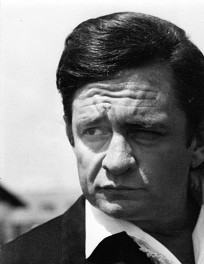
cash-image1-1-204x264The Center for Arkansas History and Culture (CAHC) at the University of Arkansas at Little Rock has announced plans to premier a new exhibit on Johnny Cash’s relationship with Arkansas. The exhibit, “Johnny Cash: Arkansas Icon,” will open in the Underground Gallery at the Arkansas Studies Institute on October 10, 2014, and run through January 24, 2015. The physical exhibit will be accompanied by a virtual exhibit with educational materials for teachers.

Opening Night

The exhibit opens Friday, Oct. 10, in the Ron Robinson Theatre.

A free concert will be at 7:30 p.m. featuring the W.S. Holland Band, with special guests Jeff Coleman and the Feedersbeginning at 6:45 p.m. Seating is limited.

Johnny Cash: Arkansas Icon

The exhibit explores the musician’s Arkansas connections over the decades, covering his 1930s childhood in Dyess, Arkansas (though he was born in Kingsland in Cleveland County), through his comeback at the turn of the 21st-century. The exhibit places special emphasis on connections between his Arkansas roots and his music from his first performance in Little Rock in 1955 to a 2002 music video. Though Cash’s career took him far from Arkansas, the exhibit argues, he never quite severed his Arkansas roots. This exhibit tells that story through narrative and archival photographs from CAHC’s own collections, as well as others.

According to Colin Woodward, the CAHC archivist who proposed the exhibit and wrote its narrative, “While writing an article about Johnny Cash’s work with Governor Winthrop Rockefeller on prison reform, I began to see the thread of Arkansas in Cash’s music and life. He was such a dynamic artist, who persevered through many personal and professional challenges. He was a great Arkansan, and I wanted to show that through historical research and archival images.”

The exhibit will cover the walls of the unique Underground Gallery and immerse visitors in an artistic representation of Cash’s life in pictures and text. Designed by Bachelor of Fine Arts student Nick Sosnoski under the direction of Tom Clifton, Department of Art Chair, the exhibit makes use of key design elements like variety, unity, and texture on a large scale. The exhibit uses rare images from family albums and other sources and incorporates Cash’s lyrics into the design. According to Sosnoski, “The design is meant to reflect Johnny Cash as a man who never forgot his roots.”

The accompanying virtual exhibit will offer deeper exploration of the topics covered in the physical exhibit. The website will include a media gallery and behind-the-scenes information on the exhibit development. Educational materials, including full lesson plans and PowerPoint presentations, will be available for Arkansas teachers to use with students before and after visiting the exhibit. Stan James, an undergraduate Social Studies Education major, worked on the project and says, “It was really exciting to be able to prepare materials that will teach students important world concepts, and at the same time, expose them to one of Arkansas’ true treasures, Johnny Cash.  These materials, along with the exhibit and related events, will guide the students through an exciting journey towards learning about key issues in our state and nation, as well as how celebrities use their influence and talent to further issues that are important to them.”

On opening night, the W. S. Holland Band will perform a free concert in the Ron Robinson Auditorium. Holland spent 40 years performing with Cash’s band, Tennessee 3, and is the only band member to stay with the group until Cash’s retirement in 1997. In his long career, Holland has toured with Elvis, Jerry Lee Lewis, Roy Orbison, and Carl Perkins. The Holland Band performance will start at 7:30, following an opening performance by Jeff Coleman and the Feeders at 6:45. Seating is limited. Also on opening night, Shape Note Singers from Mountain Home, Arkansas, will perform for Second Friday Art Night visitors to the Arkansas Studies Institute.

This project is supported in part by a grant from the Arkansas Humanities Council and the National Endowment for the Humanities.

Additional funding provided by the Arkansas Community Foundation. The Arkansas Community Foundation is a nonprofit organization that fosters smart giving to improve communities. The Community Foundation offers tools to help Arkansans protect, grow and direct their charitable dollars as they learn more about community needs. By making grants and sharing knowledge, the Community Foundation supports charitable programs that work for Arkansas and partners to create new initiatives that address the gaps. Contributions to the Community Foundation, its funds and any of its 27 affiliates are fully tax deductible.

The UALR Center for Arkansas History and Culture collects, preserves, and enables access to Arkansas records of enduring value; prepares students and the region for the 21st century through academic leadership and education on archival practices and technologies; and engages the community through outreach, programming, and exhibitions.

For more information on the exhibit or CAHC, contact us atcahc@ualr.edu or 501.320.5780.

Power of Glamour topic at Clinton School talk

Postrel“The Power of Glamour: Longing and the Art of Visual Persuasion”

Virginia Postrel is an author, columnist, and speaker whose work spans a broad range of topics, from social science to fashion, concentrating on the intersection of culture and commerce. Her most recent work, “The Power of Glamour: Longing and the Art of Visual Persuasion,” lays out the case for glamour as a life-shaping force, whether for good or for ill. Postrel takes an exhaustive look not only at the history of glamour, but at how it works, developing a theory that explains just about anything – from “how Jackie Kennedy is like the Chrysler Building or a sports car is like a Moleskine notebook, to why some audiences might find glamour in nuns, wind turbines or ‘Star Trek.’”

She will speak at the Clinton School at noon today. A book signing will follow.

*Reserve your seats by emailing publicprograms@clintonschool.uasys.edu or calling (501) 683-5239.

LR Cultural Touchstone: Ellen Turner Carpenter

Mrs CarpenterEllen Turner Carpenter was born on July 30, 1916 on West Ninth Street.  At the time of her death at the age of 93, her life had come full circle.

As a young girl, she was an active participant in the thriving African American life along west Ninth Street in downtown Little Rock. She attended many events at the Mosaic Templars Hall which sat at Ninth and Broadway.

A longtime Little Rock educator, she became the moving force behind preserving the Mosaic Templars building in the 1980s.   In 1992, she became president of the Mosaic Templars Building Preservation Society, which worked to preserve the Mosaic Templars building in Little Rock to create a museum for black history in Arkansas. Mrs. Carpenter served as president of the society until her death.

In the 1990s, the City of Little Rock purchased the building to keep it stable while the Preservation Society sought to raise the funds.  Due to lobbying efforts led by Mrs. Carpenter, the State of Arkansas purchased the building from the City with the intention of turning it into a museum under the auspices of the Department of Arkansas Heritage.  At a ceremony in 2003, Vice Mayor Willie Hinton handed the keys of the building to Governor Mike Huckabee with Mrs. Carpenter nearby beaming.  Governor Huckabee appointed her to the state advisory committee for this new museum.  She would serve as chair of that committee.

On March 16, 2005, tragedy struck.  The building burned to the ground.  That afternoon at a press conference at the State Capitol, leaders expressed their resolve that the project would move forward with a new building following the original design.  One of the speakers that afternoon was Mrs. Carpenter. She started out in her usual quiet voice. But as she recalled her youth spent at the Mosaic Templar’s building, the years melted away. She demonstrated some of the step dancing she had done as a teenager.

On September 20, 2008, she presided over the grand opening of the new Mosaic Templars Cultural Center. It was the culmination of 15 years of official work and many more years of dreaming.  At the ceremonies, she declared “We made it!” “We made it! We made it!”

Mrs. Carpenter remained an active supporter of the MTCC until her death on July 27, 2010, just three days shy of her 94th birthday.

Throughout her life she wore many hats (including numerous ones to church on Sunday). She was an educator, neighborhood organizer, and public servant. Everyone who met her was positively impacted by her.  Due to her vision and endurance, thousands each year are still positively impacted by her when they visit the Mosaic Templars Cultural Center.  Fittingly, the conference room at MTCC is named in her memory.


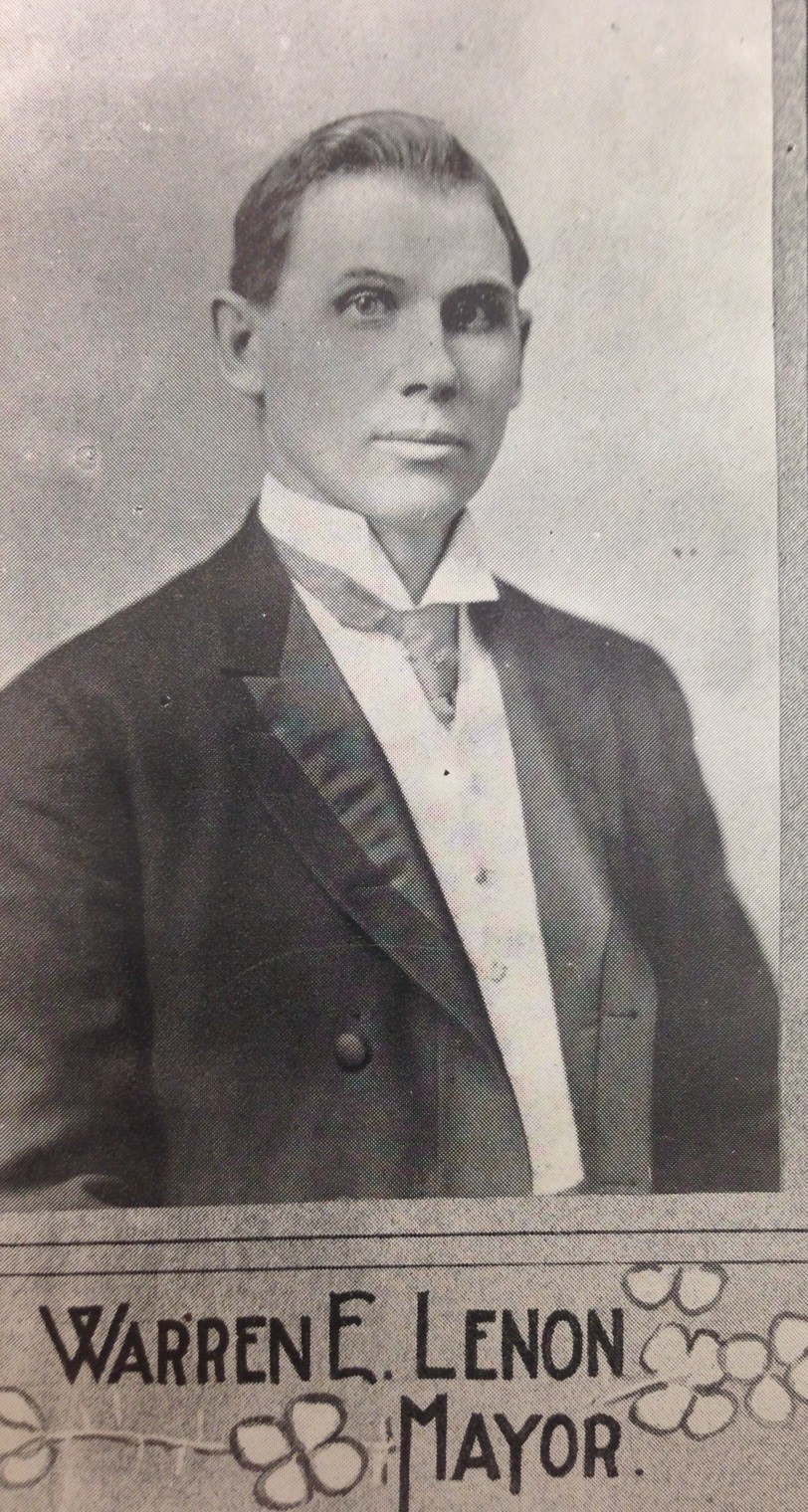
Little Rock Look Back: Warren E. Lenon – LR’s 39th Mayor and Father of City Hall

OMayor Lenonn October 8, 1867 in Panora, Iowa, future Little Rock Mayor Warren E. Lenon was born.  He was one of eleven children of John D. and Margaret M. Long Lenon.

Lenon came to LIttle Rock in 1888 after finishing his schooling in Iowa.  He helped set up an abstract company shortly after his arrival.  In 1902 he organized the Peoples Savings Bank.  Among his other business interests were the City Realty Company, the Factory Land Company, the Mountain Park Land Company, and the Pulaski Heights Land Company.

From 1895 to 1903, he was a Little Rock alderman, and in 1903, he was elected Mayor of the city. A progressive Mayor, he championed the construction of a new City Hall which opened in 1908.  At the first meeting of the City Council in that building, Mayor Lenon tendered his resignation.  His duties in his various business interests were taking up too much of his time.

Mayor Lenon had been a champion for the establishment of a municipal auditorium. He had wanted to include one in the new City Hall complex. But a court deemed it not permissible under Arkansas finance laws at the time.  He also worked to help establish the first Carnegie Library in Little Rock which opened in 1912.

Mayor Lenon continued to serve in a variety of public capacities after leaving office.  In the 1920s, he briefly chaired a public facilities board for an auditorium district. It appeared he would see his dream fulfilled of a municipal auditorium.  Unfortunately the Arkansas Supreme Court declared the enabling legislation invalid.

In 1889, he married Clara M. Mercer.  The couple had three children, two of whom survived him.  A son W. E. Lenon Jr., and a daughter Vivian Mercer Lenon Brewer.  She was married to Joseph Brewer, a nephew of Joseph Taylor Robinson, after whom the City’s eventual municipal auditorium would be named.  Mrs. Brewer was also a leader of the Women’s Emergency Committee.

Mayor Lenon died June 25, 1946 and is buried at Roselawn Cemetery.  Lenon Drive just off University Avenue is named after Mayor Lenon.