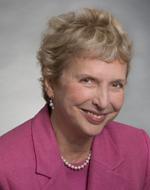
Carl Moneyhon examines emergence of legend of David O. Dodd at tonight’s Evenings With History

Carl_Moneyhon_smThis year marks the 24th year for the History Institutes’ Evenings with History.  This nationally recognized series has featured a variety of subjects.  The sessions take place at the Ottenheimer Auditorium of Historic Arkansas Museum. Refreshments are served at 7 with the program beginning at 7:30 pm. The cost is $50 for admission to all six programs.

Tonight’s program features Carl Moneyhon speaking on “David O. Dodd: A Legend Emerges.

One hundred and fifty years ago this year, David O. Dodd, convicted of spying for the Confederacy, was executed outside his old school in Little Rock. In the years that followed, the story of this seventeen-year-old’s death steadily changed, with new and usually undocumented additions. Today it is difficult to separate facts from the legend that has emerged. This talk examines the development of the legend, showing the facts of the story, then the additions. A major focus of the talk is an examination of when and who added to the legend and the purposes that lay behind these alterations.

Friday, Eldredge, & Clark and the Union Pacific Railroad help make these lectures possible. Other sponsors are the Ottenheimer Library, University of Arkansas at Little Rock; Historic Arkansas Museum, a museum of the Department of Arkansas Heritage; UALR Public Radio—KUAR-KLRE; UALR public television; and Grapevine Spirits.

Greater Little Rock Preservation Awards presented tonight at Quapaw Quarter annual meeting

QQAThe Quapaw Quarter Association will present the Greater Little Rock Preservation Awards at its 2014 Annual Membership Meeting on Tuesday, October 7 at the Ron Robinson Theater.  This year’s award recipients include the Argenta Branch of the William F. Laman Public Library System, Stone’s Throw Brewing Company, the Clinton Foundation, Donna Thomas and Wright Avenue Neighborhood Association, and J. Chandler and Co.  Rachelle Walsh will receive the Peg Smith Award to recognize her exemplary volunteer work. Carolyn Newbern will be presented with the Jimmy Strawn Award, the QQA’s most prestigious award, presented to someone whose efforts on behalf of the preservation of Greater Little Rock’s architectural heritage are an inspiration to the entire community.  Matt DeCample will serve as emcee of the awards ceremony.

The QQA is also kicking off efforts to raise awareness about mid-century modern architecture in Little Rock, beginning with a special lecture from Dr. Ethel Goodstein-Murphree of the Fay Jones School of Architecture.  Goodstein-Murphree’s lecture, “Rock ‘n’ Roll, Poodle Skirts, and a White I-Beam: The Preservationist’s Guide to Loving the 1950s and its Architecture” will be presented at the meeting.

The meeting will begin at 6:00 p.m. following a 5:30 reception at the Ron Robinson Theater at 100 River Market Avenue in Little Rock.  The QQA’s annual membership meeting is free and open to the public.  Nonmembers may join at the door.

LR Cultural Touchstone: Phyllis D. Brandon

phyllisbrandon_t180Phyllis D. Brandon has played a unique role in shaping and supporting Little Rock’s cultural life.  As the first and longtime editor of the Arkansas Democrat-Gazette‘s High Profile section, she promoted cultural institutions, supporters and practitioners.

Since it started in 1986, being featured in High Profile has been akin to the Good Housekeeping Seal of Approval.  It exposes cultural institutions and events to new and wider audiences.  There is no way to put a monetary measure on the support Brandon gave to Little Rock’s cultural life during her time leading High Profile from 1986 to 2009.  From 2009 to 2011, she served as editor of Arkansas Life magazine, again supporting and promoting cultural life.

With her unassuming manner, she coaxed stories out of interview subjects and captured photos which highlighted events.  A journalist since her junior high school days in Little Rock, Brandon has also been a witness to history.  As a recent graduate of the University of Arkansas, Brandon returned to her alma mater, Little Rock Central High, to cover the events in early September 1957 for the Arkansas Democrat.  Eleven years later, she was in Chicago for the contentious and violent 1968 Democratic National Convention as a delegate.

From 1957 until 1986, she alternated between careers in journalism and the business world, as well as being a stay-at-home mother.  Upon becoming founding editor of High Profile, she came into her own combining her nose for news and her life-long connections within the Little Rock community.  As a writer and photographer, she created art in her own right. A look through High Profile provides a rich historical snapshot of the changes in Little Rock and Arkansas in the latter part of the 20th Century and start of the 21st Century.

Since retiring in 2011, Brandon has kept a relatively low profile. She can be seen from time to time spending time with friends and family and enjoying attending events. Only this time she generally does not have her trusty camera or notepad.

Ramifications of Nixon’s Win in 1968 is topic of Clinton School Program today at noon

The 1968 general election was pivotal in the future of the U.S.  While locally it saw Arkansas voters re-electing GOP Governor Winthrop Rockefeller & Democratic Senator J. William Fulbright while tossing their electoral votes for independent (and segregationist) George Wallace, on the national scale the election of Richard M. Nixon set the tone for a new type of political partisanship.  Though the long-reaching outcomes of that election were not really apparent at the time.  The narrative in 1968 was more about Nixon’s career redemption, but it was also about the rise of the GOP in the formerly solidly Democratic South.

Michael Nelson, author of Resilient America: Electing Nixon in 1968, Channeling Dissent, and Dividing Government, will discuss his book at the Clinton School today at 12 noon.

Nelson is the Fulmer Professor of Political Science at Rhodes College, a Fellow of Southern Methodist University’s Center for Presidential History, and a Senior Fellow at the University of Virginia’s Miller Center. He is the author of numerous books, including “How the South Joined the Gambling Nation: The Politics of State Policy Innovation,” with John L. Mason, winner of the 2009 V. O. Key Award for Outstanding Book on Southern Politics from the Southern Political Science Association. His new book, “Resilient America,” explores how urban riots and the Tet Offensive, the assassinations of Martin Luther King, Jr. and Robert F. Kennedy, the politics of outrage and race—all pointed to a reordering of party coalitions, of groups and regions, a hardening and widening of an ideological divide—and to the historical importance of the 1968 election as a watershed event.

With all the talk recently about the 40th anniversary of Nixon’s resignation, this talk will present an interesting take on the set-up to Nixon’s first term.  In addition, as both the GOP and Democrats have their eyes on Arkansas’ political future, Nelson’s book sets the stage for the seeds being sown of the rise of the two party system in the South.

Reserve your seats by emailing publicprograms@clintonschool.uasys.edu or calling (501) 683-5239.

LR Cultural Touchstone: Deborah Baldwin

9 Deborah BaldwinAs a historian, arts patron, and administrator, Deborah Baldwin has had a hand in shaping Little Rock’s cultural scene for nearly thirty years.   As Chair of the UALR History Department from 1986 to 1992, she lead the department as it created the History Institute which sponsors the “Evenings with History” lecture series.  At the time it was started, it was one of the few lecture series in Little Rock (if not the only one).

A member of the UALR faculty since 1980, Baldwin is a specialist in modern Mexican history with a Ph.D. from the University of Chicago. She has published a book on the Mexican Revolution of 1910 and a variety of articles, primarily on Mexican social history topic.

As a History Department faculty member, she has lead the Public History seminar. This program has documented the history of several Little Rock cultural institutions over the years including the Arkansas Arts Center, Arkansas Symphony Orchestra and Museum of Discovery.  The Public History program has trained many of the museum professionals working in Little Rock today.  The Central High Museum, a private forerunner of the National Park Service Central High National Historic Site Visitor Center, was lead in a large part by persons associated with the UALR Public History Program.

Starting in the mid-1990s, Baldwin led the College of Arts, Humanities and Social Sciences.  In that capacity, she oversaw the visual and performing arts programming at UALR.  Under her leadership, the Departments of Art, Music, and Theatre & Dance were all revitalized.  As a part of this, she ensured that cutting-edge technology was being integrated to arts curriculum.  She also led efforts to upgrade the performance facilities.  During her tenure as Dean, the College also played leading roles in the commemoration of the 40th and 50th anniversaries of the integration of Central High School, the centennial of the Mexican Revolution, and the “Life Interrupted” exhibit which highlighted the Japanese-American internment experience in Arkansas.  She also oversaw the creation of Finale!, an event each spring which celebrates the arts in Little Rock and honors arts patrons.

With the creation of the Arkansas Studies Institute (a collaboration between UALR and Central Arkansas Library System), Baldwin took on additional duties as UALR’s supervisor on the project.

In 2014, UALR underwent a campus-wide administrative and academic reorganization.  In conjunction with that, Baldwin became Associate Provost for UALR Collections and Archives.  In that capacity she oversees the campus library system, Center for Arkansas History and Culture and the Sequoyah National Research Center.  She continues to teach in the Department of History.

She is a past member of the board of the Arkansas Humanities Council and the MacArthur Military History Museum Commission.

 

LR Cultural Touchstone: Bernie Babcock

BabcockBernie_fLittle Rock’s rich cultural history has been influenced by many outstanding men and women.  This October, during Arts & Humanities Month 2014, the Culture Vulture is looking at 31 outstanding women who have shaped cultural life in Little Rock…and beyond.

Julia Burnelle “Bernie” Smade Babcock was an author and museum founder.  Born in April 1868 in Ohio, she moved with her family to Arkansas as a child.  Marrying and starting a family, she also continued to write, which had been a passion since she was younger.  When her husband died, leaving her with five children, she starting writing for money. She published several temperance novels and later wrote for the Arkansas Democrat.  She also published a magazine and a poetry anthology.  She later became recognized as an expert on Abraham Lincoln and wrote several books about him, as well as other historical figures.

In 1927, after professional curmudgeon H. L. Mencken wrote derisively of Arkansas, she decided to start a museum. The Museum of Natural History and Antiquities was first located in a Main Street storefront.  In 1929, she “gave the City of Little Rock a Christmas present” by giving the museum to the city.  It was relocated to the unfinished third floor of City Hall, with her as its employee.  In 1933, as New Deal programs were ramping up, the space was needed for WPA offices, and the museum was shuttered. Many of the museum’s artifacts were lost during this time.    She became folklore editor for the Federal Writers’ Project in 1935.

In 1941, she and businessman Fred Allsopp convinced the City of Little Rock to reopen the museum (then known as the Museum of Natural History) by locating it in the old Arsenal Building in City Park.  She lived in the basement of the building.  She was involved in the efforts to rename City Park in honor of Douglas MacArthur (who had been born there) and welcomed him when he came to Little Rock in 1952.  Retiring from the museum in 1953, she donated some items and billed the City $800 for others. That money was her retirement pension at age 85.

Moving to Petit Jean Mountain, she wrote, painted and published poetry.  She died in June 1962 at age 94.  She is buried in Little Rock’s Oakland Cemetery.

After more name changes and a relocation, her museum is now known as the Museum of Discovery and is an anchor in the River Market district.

LR Cultural Touchstone: Kay Kelley Arnold

(Photo courtesy of Bill & Hillary Clinton National Airport)

(Photo courtesy of Bill & Hillary Clinton National Airport)

Little Rock’s rich cultural history has been influenced by many outstanding men and women.  This October, during Arts & Humanities Month 2014, the Culture Vulture is looking at 31 outstanding women who have shaped cultural life in Little Rock…and beyond.

Kay Kelley Arnold.  While attending law school, she worked at the Arkansas Arts Council.  As she relayed to Soiree, she helped artists who taught in schools. Through that job, she met many creative people “and developed a love of all types of artistic expression.”  During Bill Clinton’s first term in office as Governor, she was on his staff. In that capacity, she served as his liaison to what is now known as the Department of Arkansas Heritage.  When he left office in January 1981, so did she.

In 1986, Governor Clinton tapped Arnold to lead the Department of Arkansas Heritage.  In addition to supervising six cultural departments, she stepped into the job as plans were being made for Arkansas’ Sesquicentennial. She also oversaw those efforts which were heavily tilted toward artistic and historic events.

During the 1987 Arkansas General Assembly, Arnold led the successful effort for the legislators to approve a real estate transfer tax.  The legislation proved immensely beneficial to historic properties.  She entered the corporate world in 1988 joining Arkansas Power & Light. While serving in various capacities for AP&L and Entergy, Arnold split her time between Little Rock and Washington DC.  She maintained close ties to Little Rock’s cultural community including service on the Arkansas Symphony Orchestra Board.  She served as Chair of the ASO Board at a crucial time in the organization’s history.  In addition, she has served as a member of the Arkansas Natural Heritage Commission.

Arnold has recently completed two terms on the Little Rock Airport Commission.  During her time on that body, the airport purchased and installed several pieces of public art.

Now retired from Entergy, she is often seen around Little Rock enjoying cultural events.