Run Forrest Run – CALS Ron Robinson screens FORREST GUMP tonight

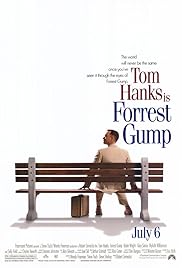
Forrest Gump PosterNo word on whether there will be boxes of chocolates available at the concessions stand, but the CALS Ron Robinson Theater will be showing Oscar winner FORREST GUMP tonight.

The story follows the life of low I.Q. Forrest Gump (Tom Hanks) and his meeting with the love of his life Jenny. The film chronicles his Zelig-like experiences with some of the most important people and events in America from the late 1950s through the 1970s including a meeting with Elvis Presley, JFK, Lyndon Johnson, Richard Nixon, fighting in Vietnam, etc. The problem is, he doesn’t realize the significance of his actions. Forrest comes to embody a generation.

Others in the cast include Sally Field, Robin Wright, Gary Sinese, and Mykelti Williamson.  The movie was nominated for 13 Academy Awards and won six including Best Picture, Best Actor (Hanks), Best Director (Robert Zemeckis), and Best Adapted Screenplay (Eric Roth).

The showing starts at 6:30pm. The cost is $5.00.

Little Rock Look Back: HAIR brings Age of Aquarius to Robinson Center

Ad for the original production of HAIR in Little Rock. Note the ticket prices. And that they could be purchased at Moses Music Shops.

Forty-seven years ago today, on January 18, 1972, the musical Hair settled in for a week-long run at Robinson Auditorium.  The saga to bring the national tour to Little Rock had actually begun eleven months earlier.

In February 1971, a young Little Rock attorney named Phil Kaplan petitioned the Little Rock Board of Censors to see if it would allow a production of Hair to play in the city. He was asking on behalf of a client who was interested in bringing a national tour to Arkansas’ capital city. The show, which had opened on Broadway to great acclaim in April 1968 after an Off Broadway run in 1967, was known for containing a nude scene as well for a script which was fairly liberally sprinkled with four-letter words. The Censors stated they could not offer an opinion without having seen a production.

By July 1971, Kaplan and his client (who by then had been identified as Southwest Productions) were seeking permission for a January 1972 booking of Hair from the City’s Auditorium Commission which was charged with overseeing operations at Robinson Auditorium. At its July meeting, the Commissioners voted against allowing Hair because of its “brief nude scene” and “bawdy language.”

Kaplan decried the decision. He stated that the body couldn’t “sit in censorship of legitimate theatrical productions.” He noted courts had held that Hair  could be produced and that the Auditorium Commission, as an agent for the State, “clearly can’t exercise prior censorship.” He proffered that if the production was obscene it would be a matter for law enforcement not the Auditorium Commission.

The Commission countered that they had an opinion from City Attorney Joseph Kemp stating they had the authority. One of the Commissioners, Mrs. Grady Miller (sister-in-law of the building’s namesake the late Senator Robinson, she had served on the Commission since 1940), expressed her concern that allowing Hair would open the door to other productions such as Oh! Calcutta!

On July 26, 1971, Southwest Productions filed suit against the Auditorium Commission. Four days later there was a hearing before federal Judge G. Thomas Eisele. Judge Eisele offered a ruling on August 11 which compelled the Auditorium Commission to allow Hair to be performed. Prior to the ruling, some of the Auditorium Commissioners had publicly stated that if they had to allow Hair, they would close it after the first performance on the grounds of obscenity. To combat this, Judge Eisele stated that the Commission had to allow Hair to perform the entire six day engagement it sought.

Upon hearing of the Judge’s ruling, Commissioner Emily Miller offered a succinct, two word response. “Oh, Dear!”

In the end, the production of Hair at Robinson would not be the first performance in the state.  The tour came through Fayetteville for two performances in October 1971 at Barnhill Arena.

On January 18, 1972, Hair played the first of its 8 performances over 6 days at Robinson Auditorium.  In his review the next day, the Arkansas Gazette’s Bill Lewis noted that Hair “threw out all it had to offer” and that Little Rock had survived.

The ads promoting the production carried the tagline “Arkansas will never be the same.”  Tickets (from $2 all the way up to $8.50–the equivalent of $12 to $51 in 2019 dollars) could be purchased at Moses Melody Shops both downtown and in “The Mall” (meaning Park Plaza). That business is gone from downtown, but the scion of that family, Jimmy Moses, is actively involved in building downtown through countless projects. His sons are carrying on the family tradition too.

Little Rock was by no means unique in trying to stop productions of Hair.  St. Louis, Birmingham, Los Angeles, Tallahassee, Boston, Atlanta, Charlotte NC, West Palm Beach, Oklahoma City, Mobile and Chattanooga all tried unsuccessfully to stop performances in their public auditoriums.  Despite Judge Eisele’s ruling against the City of Little Rock, members of the Fort Smith City Council also tried to stop a production later in 1972 in that city. This was despite warnings from City staff that there was not legal standing.

Within a few years, the Board of Censors of the City of Little Rock would be dissolved (as similar bodies also were disappearing across the US). Likewise, the Auditorium Commission was discontinued before Hair even opened with its duties being taken over by the Advertising and Promotion Commission and the Convention & Visitors Bureau staff.  This was not connected to the Hair decision; it was, instead, related to expanding convention facilities in Robinson and the new adjacent hotel.  Regardless of the reasons for their demise, both bygone bodies were vestiges of earlier, simpler and differently focused days in Little Rock.

Little Rock Look Back: 57th Mayor Martin Borchert

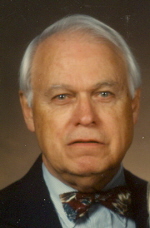
On January 16, 1916, future Little Rock Mayor Martin Borchert was born in Stuttgart.  After graduating high school he moved to Little Rock.  During World War II, he served as a bomber.  He started work at ACME Brick and spent 21 years there before engaging in other business interests.  Among these businesses were Martin Borchert Co., ASCO Hardware, Detection Systems Inc. and Component Systems Inc.  In 2005 he was inducted into the Arkansas Construction Hall of Fame.

Mayor Borchert was elected to the Little Rock City Board of Directors in 1964 and served from January 1965 through December 1968. He chose not to seek a second term.  In 1967 and 1968 he served as Mayor of Little Rock. During this time, he laid out the vision for what has become Riverfront Park along the Arkansas River.

Other civic achievements included being a member of the Board of the Little Rock Chamber of Commerce, being on the Governor’s Citizens Advisory Committee, a member of the Pulaski County Quorum Court, vice chairman of the Arkansas Planning Commission, and being on the Little Rock Air Force Base Community Council. In 1967 he served on the President’s National Advisory Council to the Small Business Administration.

Mayor Borchert served on the Little Rock Water Commission, including a tenure as chairman. In 1985, he was chairman of the Metropolitan Transit Policy Board and as chairman oversaw the transfer of the Central Arkansas Transit system to the Central Arkansas Transit Authority. One of the achievements of which he was very proud of was that he was one of the very first in Arkansas to receive an Adopt the Highway road.

Mayor Borchert was married for 57 years to Rosemary “Biddy” Branch Borchert.  They had two children, a son, John “Topper” Borchert and a daughter, Leslie Borchert Wilson.  He died on May 11, 2007.

Tonight – Clinton School and UA Little Rock present program on The Struggle in the South mural

Today (January 16) at noon, UA Little Rock officially cuts the ribbon on the new UA Little Rock Downtown campus in the River Market district.

Tonight at 6pm, the Clinton School Speaker Series in conjunction with UA Little Rock presents a panel discussion on the Joe Jones mural, “The Struggle in the South” which is featured in that new space.  It will take place in the UA Little Rock Downtown location.

In 1935, famed American artist Joe Jones created “The Struggle in the South,” a provocative depiction of Southern sharecroppers, coal miners and a black family in fear of a lynching.

Originally painted in the dining hall at Commonwealth College near Mena, Arkansas, this 44-by-9-foot work was recently restored with a $500,000 grant from Arkansas Natural and Cultural Resources Center.

During this program, moderator Senator Joyce Elliott will join Brad Cushman, UA Little Rock Department of Art and Design Gallery director and curator; author Guy Lancaster; Dr. Brian Mitchell, UA Little Rock professor of history; Dr. Bobby L. Robert, former UA Little Rock archivist and Central Arkansas Library System executive director; and Taemora Williams, UA Little Rock student, to discuss the artwork’s historical significance and importance of its new home in UA Little Rock Downtown’s reflection room.

All Clinton School Speaker Series events are free and open to the public. Reserve your seats by emailing publicprograms@clintonschool.uasys.edu or by calling (501) 683-5239.

Little Rock Look Back: First Little Rock Council Meeting in 1832

On January 16, 1832, Mayor Matthew Cunningham MD presided over Little Rock’s first council meeting.
Since Little Rock did not yet have a government hall, the Mayor and his wife hosted the meeting at their house. The Cunninghams owned the entire block which was bordered by what is now Main Street, 3rd Street, Louisiana Street and 4th Street.

A plaque at 3rd and Main Street commemorates this meeting and was placed at the northeast corner of the block in the 1930s. The Cunningham’s house was likely closer to the southwest corner of the block.  The records of this meeting do not exist, though the Arkansas Gazette did carry brief coverage of it. (The earliest records at City Hall date to November 1835 when Little Rock became a city.)

The plaque is on the Fulk building which now houses CJRW. The block also includes the Mann on Main project, which is comprised of the buildings originally constructed for the Gus Blass Department store.  Bruno’s and Samantha’s are also on the block.

Little Rock was chartered as a town in November 1831 and elections were subsequently held. Dr. Cunningham outpolled Rev. W. W. Stevenson to become the first Mayor. (Rev. Stevenson would be elected the second mayor in January 1833; Mayor Cunningham did not seek re-election.)

Joining Mayor Cunningham at the first meeting were the original four Town Council members – Charles Caldwell, Benjamin Clemens, David Holt and John McLain.  Both Mayor Cunningham and Alderman McLain had served on the Little Rock Board of Trustees, Little Rock’s pre-incorporation governing body.

In 1931 a plaque, as part of Little Rock’s Centennial, a plaque was erected to note the first meeting. The plaque erroneously implies that the first meeting was in 1831. This mistake is understandable since the legislation incorporating Little Rock was approved in November 1831. The plaque also refers to the body as the City Council. It was, in fact, the Town Council. There would not be a City Council until 1835 when Little Rock was elevated to City status.

The Pen to Podium series kicks off 2019 with HILLBILLY HELLRAISERS

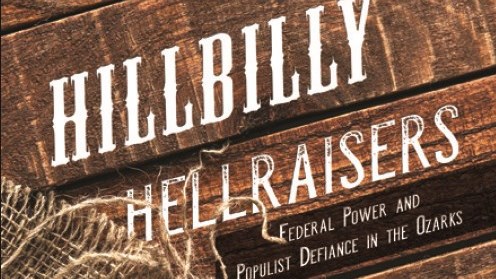
Image result for hillbilly hellraisersThe first Pen to Podium of 2019 is Dr. Blake Perkins discussing Hillbilly Hellraisers at 6:00 p.m.

This program is sponsored by the Arkansas State Archives, a division of the Department of Arkansas Heritage.  It will be held at the DAH headquarters located at 1100 North Street.

The lecture is free and part of the 2019 Historical Writers’ Lecture Series.  The Friends of the Arkansas State Archives plan to host a reception with refreshments 30 minutes before the lecture.

Perkins’ book, Hillbilly Hellraisers: Federal Power and Populist Defiance in the Ozarks, has drawn praise for its insightful look into how rural people in the Ozarks reacted to and resisted federalism in the 19th and 20th centuries.

The Ozarks includes parts of Arkansas and Missouri, where people have a reputation for anti-government sentiment. Perkins’ book asks what role heritage plays in perpetuating that attitude and focuses on real people’s experiences. The book traces social and political changes from the Populist revolt of the 1880s and 1890s to the modern-day Tea Party protests and the popularity of President Donald Trump.

“I think in many ways the Ozarks is an excellent microcosm of rural America in general,” Perkins said.

Perkins was born in the Ozarks and grew up on a fifth-generation farm near the southeastern Ozarks in western Lawrence and Sharp counties. He became interested in his family roots and history in elementary school. He has since become an assistant professor and chair of the History Department at Williams Baptist University in Walnut Ridge. He earned a bachelor’s degree from Lyon College, a master’s degree from Missouri State University and a doctoral degree from West Virginia University.

Perkins said the history behind local politics and its evolution is fascinating. “As I watched anti-Obama, anti-Washington politics surge in Arkansas between 2008 and 2016, I’ve been fascinated to investigate and learn more about rural political and social history,” he said.

Little Rock Look Back: Pulaski Heights officially becomes part of Little Rock

Ninth Ward

On January 13, 1916, the Little Rock City Council formally accepted Pulaski Heights into the City of Little Rock.

The Council had held a regular meeting on Monday, January 10, 1916, which was the same evening as the final meeting of the Pulaski Heights City Council.

Three days later, on Thursday, January 13, 1916, Mayor Charles Taylor again convened the Little Rock City Council to take the steps to officially annex Pulaski Heights into Little Rock.

By Ordinance 2259, the City’s boundaries were increased to include the land which had been Pulaski Heights.  Resolution 918 directed city staff to replat the land, which was necessary to bring the land in accordance with existing city plats and documents.

Resolution 919 set forth January 20 as a special election date to elect the two new members of the Little Rock City Council who would represent the new Ninth Ward of Little Rock.  Those who won would serve until April 1916.  The election would also serve as the primary for the April election.  Back then, winning the Democratic primary for a City race was tantamount to winning the race.  Since there were two seats being created, one would have a two year term, the other would be for only one year.  The candidate receiving the most votes on January 20 would, after April, take up the two year term and be able to run for re-election in April 1918. The candidate with the second highest total of votes would win the one-year term and be up for re-election in April 1917.  At the time, there were three publicly declared candidates for the two seats.  Another had been interested, but dropped out that morning.

Making Pulaski Heights the Ninth Ward was not the only focus of the City Council meeting.  An ordinance was also approved which allocated $438 for the purchase of beds, mattresses, chairs and other furniture for the City hospital.  (That is the equivalent of nearly $10,000 today.)  The Council then reimbursed a doctor the $438, which presumably had been spent on making the purchases.