Little Rock Look Back: Skip’s Game Day

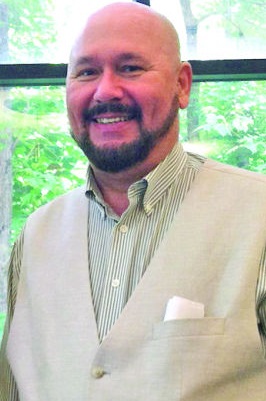
SkipTen years ago today was known simply as “Game Day” for a group of people.  The chief one was Skip Rutherford.

Overseeing the planning for the Clinton Presidential Center and the events surrounding it had been the focus of James L. “Skip” Rutherford for many years. A FOB for decades, he had stayed in Little Rock when so many went to Washington DC in 1993.

He oversaw the planning for the Clinton Library and led the Clinton Foundation.  No detail was too small or insignificant for him to consider. For months leading to the opening he led meetings to help restaurants, hotels, and attractions understand the scope of the opening.

Together with Dean Kumpuris and Bruce Moore on behalf of the City of Little Rock, he reviewed plans for the Clinton Presidential Park and the streets and neighborhoods around the Clinton Presidential Center.

He used his connections with the business community in Little Rock and throughout the state to discuss the importance of a Presidential Library regardless of one’s personal political affiliations.  He withstood critics who second-guessed everything from the cost, the design, the location, the purpose, and even the anticipated tourism and economic impacts.

Finally the big day had come.  If the weather was not ideal, that was almost inconsequential. It was still the culmination of more than seven years hard work.

However, the opening of the Clinton Presidential Center was not the end of the task. It merely was the move from one phase to another. A few years later, Skip’s role would change as he would leave the Foundation and become the second Dean of the Clinton School of Public Service.
Little Rock Look Back: The Opening of the William J. Clinton Presidential Center

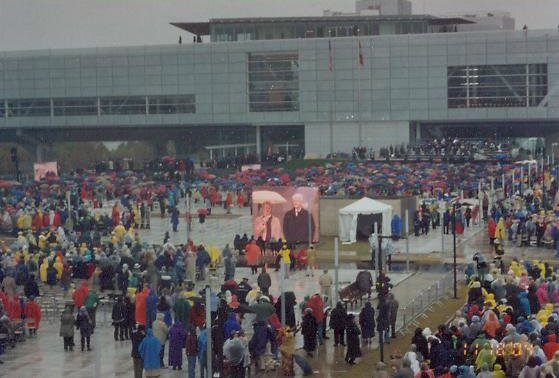
wjcopenrainArkansas Globecoming was the name given to the series of events in connection with the opening of the Clinton Presidential Center.  The week had been warm and sunny as Al Franken entertained at the Arkansas Repertory Theatre, Aretha Franklin performed with the Arkansas Symphony Orchestra and Senator John Glenn held court at the Museum of Discovery.  By Wednesday, November 17, Little Rock was filled with stars from the political and entertainment fields.  As many dignitaries as were here, there were rumors of even more who were supposedly here.

On Wednesday night, things reached a fever pitch. A reception at the Arkansas Arts Center was literally shoulder to shoulder. A preview tour of the Clinton Presidential Center was only slightly less crowded (because the space was so much bigger). Mary Steenburgen, Ted Danson and the Downtown Little Rock Partnership hosted a late night party at Nu.

As midnight approached, things slowed ever so slightly as people realized they had to be on site for the opening ceremony in a matter of hours.

Overnight a storm system came in. Not only did water fall, but so did the temperatures.

Those that did brave the weather had an unforgettable experience.  From performances by a rain-soaked Bono and The Edge to remarks by Presidents Carter, Bush 41, Bush 43 and Clinton, the event was memorable.  It was a Who’s Who of Washington, New York and Los Angeles.  All in Little Rock.

It took several hours for people to warm up and dry off after the event. But everyone agreed it was a memorable day for numerous reasons.

Little Rock Look Back: Woodrow Mann, LR’s 53rd Mayor

IMG_3231Future Little Rock Mayor Woodrow Wilson Mann was born on November 13, 1916, in Little Rock.

In 1955, he ran as the Democratic nominee for Mayor of Little Rock and defeated two term incumbent Pratt C. Remmel, a Republican.  He took office in January 1956 and immediately set about to make a lot of changes.  In addition to revitalizing the City’s bus system, and removing some color barriers at City Hall, he oversaw the dismantling of the copper dome on top of Little Rock City Hall (as opposed to the repair of the dome championed by Mayor Remmel).

Mayor Mann was caught up in a grand jury investigation into purchasing practices at City Hall as well as within the City government in North Little Rock.  Partially in response to this, Little Rock voters approved a new form of government in late 1956.  Mayor Mann opposed the switch to the City Manager form and refused to set the election for the new officials but was ultimately compelled to do so.

He was also Mayor during the 1957 integration of Little Rock Central High School.  He sought to keep the peace and to broker a deal between President Dwight Eisenhower and Governor Orval Faubus.  His powers within the city were, no doubt, hampered because of his lame duck status as Mayor.  In November 1957 following the election of the new City Board of Directors, he chaired his last City Council meeting and left office.

In January of 1958, a series of articles written by Mayor Mann detailed his perspective on the events at Central High. These were carried by newspapers throughout the US.

Because of ill will toward him due to the Central High crisis and grand jury investigation, Mayor Mann felt it would be difficult to maintain his insurance business in Little Rock. He moved to Texas in 1959 and remained there the rest of his life.  He died in Houston on August 6, 2002.

Visit Veterans at Mount Holly Cemetery this Veterans’ Day

MountHolly Memorial Day

Today is Veterans’ Day – a time to pay tribute to the men and women in uniform who have served their country in the military.

As a way to give this recognition, today would be a good day to visit a cemetery. One of Little Rock’s most storied cemeteries is Mount Holly Cemetery. There are veterans from all wars: Revolutionary, War of 1812, Mexican, Civil War, Spanish-American, World War I and II, Korean, Vietnam and Desert Storm.

Founded in 1843, Mount Holly has been called “The Westminster Abbey of Arkansas.” Thousands of visitors come each year. Those interested in history come to see the resting places of the territorial citizens of the state, including governors, senators, generals, black artisans, and even a Cherokee princess. For others the cemetery is an open air museum of artistic eras: Classical, Victorian, Art Deco, Modern––expressed in gravestone styles from simple to elaborate. Some come to read the epitaphs that range from heartbreaking to humorous to mysterious.

Though a City of Little Rock facility, the cemetery is maintained by the Mount Holly Cemetery Association, a non-profit organization with a volunteer Board of Directors. The cemetery is located at 1200 South Broadway in Little Rock. Gates are open from 8 a.m. until 5 p.m. in the summer and from 8 a.m. until 4 p.m. in the winter.

Interred within the rock walls of Mount Holly are 11 state governors, 15 state Supreme Court justices, four Confederate generals, seven United States senators and 22 Little Rock mayors, two Pulitzer Prize recipients, as well as doctors, attorneys, prominent families and military heroes.  Proving that death is the great equalizer (and the J. N. Heiskell lived a very long time) longtime Gazette owner and publisher J. N. Heiskell is buried near two different nemeses: Senator, Governor and demagogue Jeff Davis; and segregationist Congressman Dr. Dale Alford.

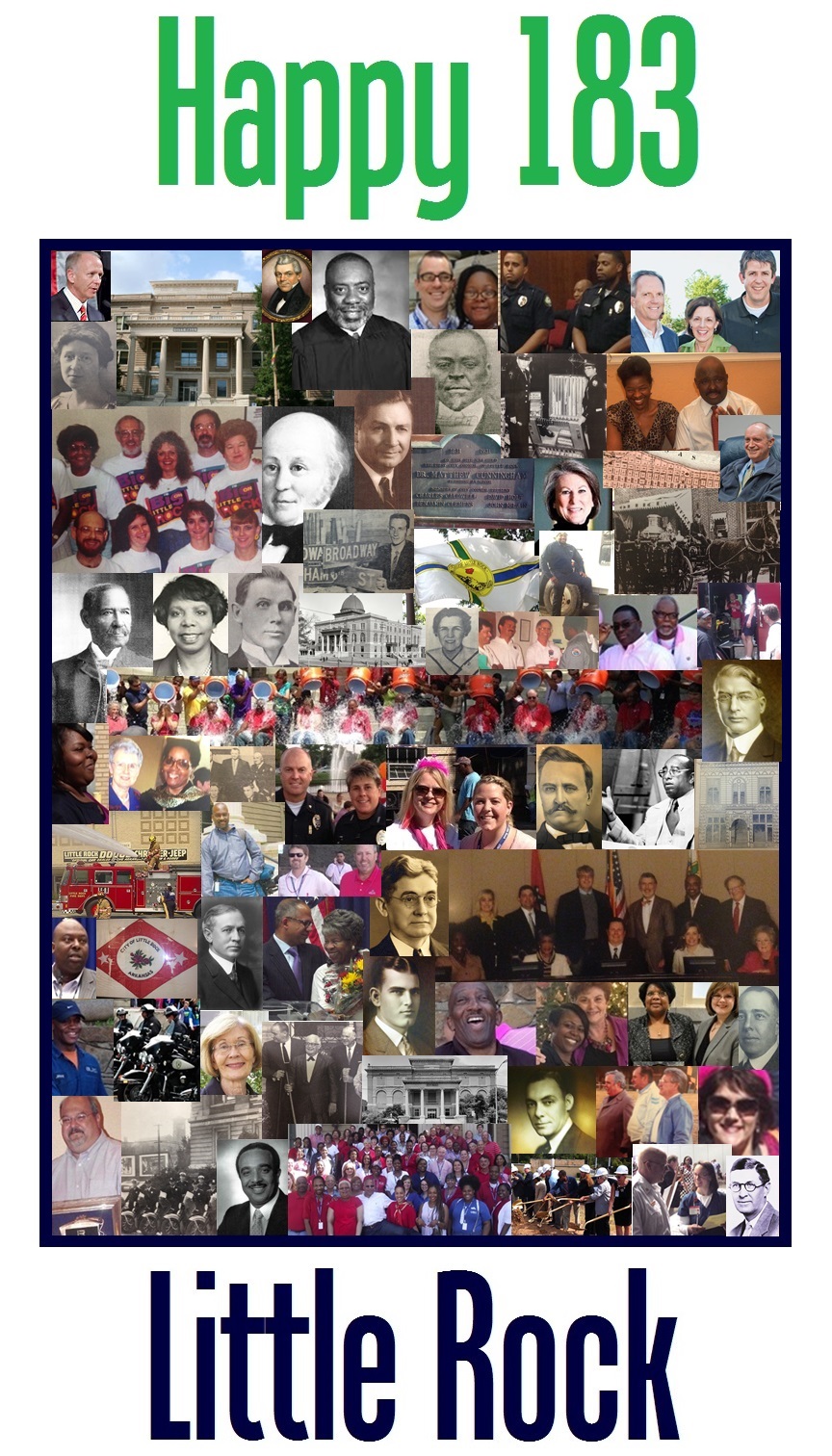
Little Rock Look Back: Happy 183 to Little Rock

LR 183With the stroke of Territorial Governor John Pope’s pen, Little Rock was officially chartered as a town on November 7, 1831. This followed approval by the Arkansas legislature a few days earlier.

As a chartered, officially recognized municipality, the Town of Little Rock was authorized to create a government and to plan for a Mayor and Aldermen to be elected. That election would take place in January 1832 with the initial council meeting later that month.

There are several earlier and later days which could be used to mark Little Rock’s official birth (LaHarpe sighting in 1722, first settler in 1812, permanent settlement in 1820, selection of trustees in 1825, chartered as a City in 1835, chartered as a City of First Class in 1875) — but it is November 7, 1831, which has been the officially recognized and accepted date.

In 1931, Little Rock celebrated her centennial with a series of events.  Likewise, in November 1981, Little Rock Mayor Charles Bussey signed and City Clerk Jane Czech attested Resolution 6,687 which recognized the Little Rock sesquicentennial.

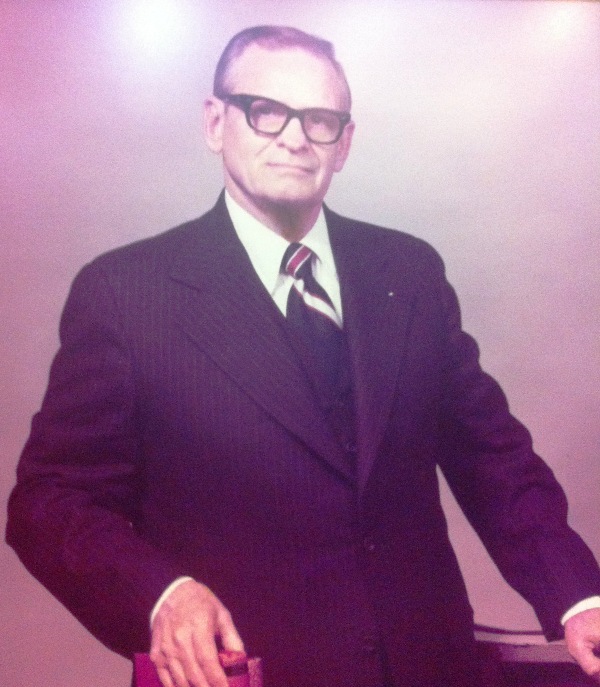
Little Rock Look Back: W. H. “Bill” Walters, LR’s 60th Mayor

Mayor Walters' official portrait

Mayor Walters’ official portrait

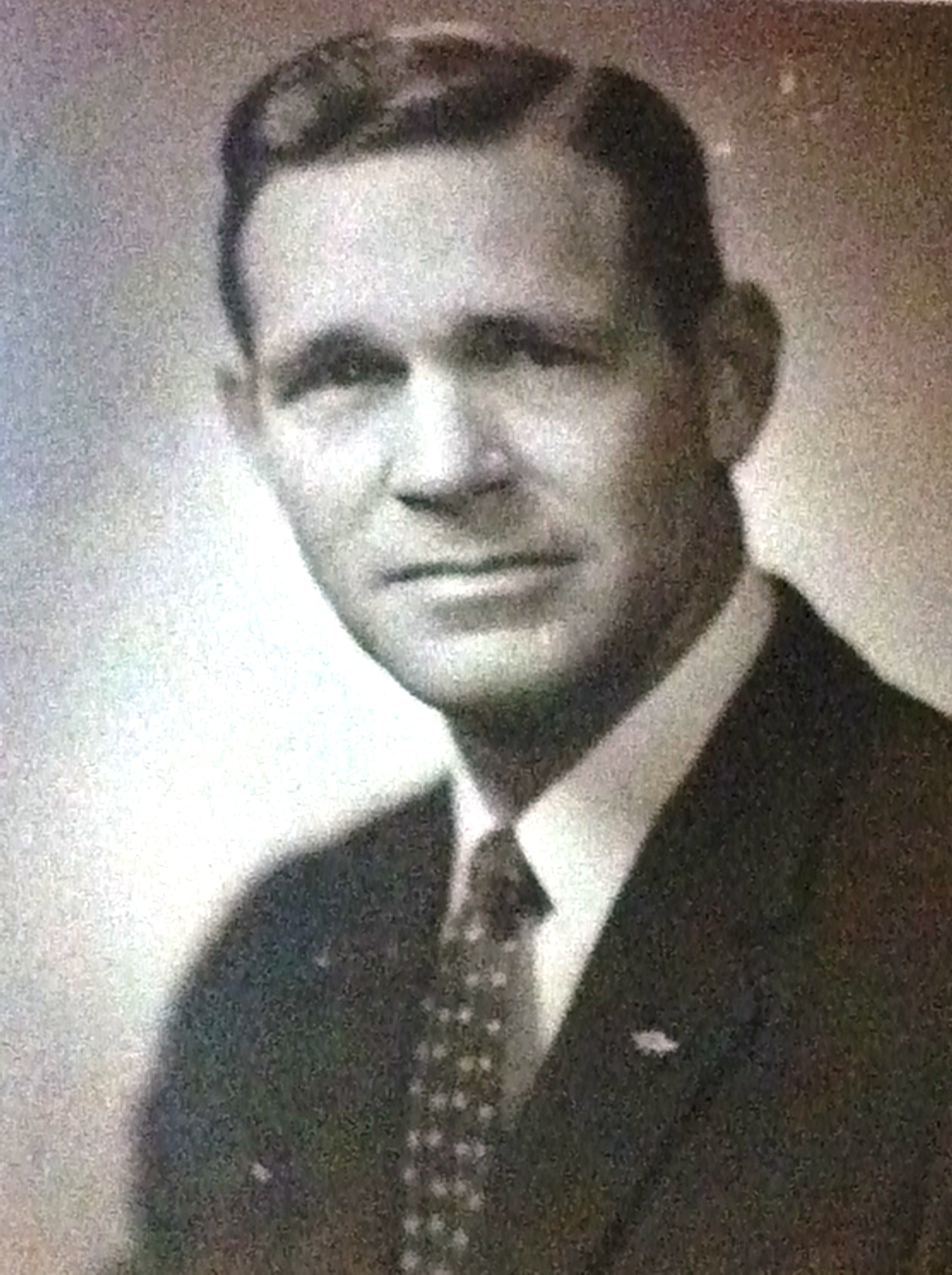
On November 6, 1912, future Little Rock Mayor William H. Walters was born in Clearfield, Pennsylvania.

He ran for the City Board of Directors in 1970 and was unopposed.  Walters took office on January 1, 1971 and served one term on the City Board.  He chose not to run for a second term and left office on December 31, 1974.

In January 1973, he was selected by his colleagues to serve a two year term as Mayor of the City of Little Rock.

Throughout his life, Mayor Walters enjoyed traveling and visiting over 100 countries throughout the world. Mr. Walters had a keen interest in the circus and collected circus memorabilia from many countries.

He was employed by 3M Company. He was Superintendent and Acting Plant Manager beginning January 1, 1951 and 3M Plant Manager beginning February 1, 1972. He retired in 1977.

In addition to serving on the City Board, he had been active in the Little Rock Chamber of Commerce (he served as Chamber President in 1969), Kiwanis Club, Associated Industries of Arkansas and the YMCA among other activities.

Mayor Walters died on February 14, 2005 at the age of 94.

Noon today, the Clinton School and Butler Center’s Legacies & Lunch present Justice Troy Poteete, executive director of the National Trail of Tears Association

PoteeteToday at noon, the Clinton School Speaker Series and the Butler Center’s Legacies & Lunch jointly present a program.  Justice Troy Poteete, executive director of the National Trail of Tears Association will speak at the Ron Robinson Theater.

Troy Poteete was appointed to the Cherokee Nation Supreme Court by Chief Chad Smith in 2007 and is the executive director of the National Trail of Tears Association, an organization he helped found. Justice Poteete also founded the Historical Society in Webbers Falls, Okla., served as executive director of the Cherokee Nation Historical Society, and was a delegate to the Cherokee Nation Constitutional Convention. In 2000, Justice Poteete was appointed executive director of the Arkansas Riverbed Authority, a tribal entity jointly created by the Chickasaw, Choctaw, and Cherokee Nations to administer their interests in the 96-mile section of the Arkansas River between Muskogee, Okla. and Fort Smith, Ark.

The Trail of Tears was actually several trails.  Little Rock is one of the only cities (if not the only city) that members of all six relocated tribes passed through.  Little Rock’s emerging merchant class benefited from the relocation efforts as the Federal government paid for goods and services in Little Rock.