Creative Class of 2015: Reese Rowland

reeserArchitect Reese Rowland has literally changed the landscape of Little Rock.  He has designed some of Little Rock’s most recognized buildings, including Acxiom’s River Market Tower Headquarters, Bank of the Ozarks Headquarters, Heifer International’s Education Center, the Little Rock Regional Chamber of Commerce, the Arkansas Studies Institute and Hillary Rodham Clinton Children’s Library.

Reese has been rewarded with over 60 National, Regional and State Design Awards in the last twelve years. His Heifer International World Headquarters design received the Nation’s highest honor for architecture, the 2008 AIA National Institute Honor Award, one of 13 awarded. The South’s first LEED Platinum building was also named a National AIA/COTE Top 10 Green Building in 2007. In 2011, his Arkansas Studies Institute design received a National AIA/ALA (American Library Association) Award of Excellence, one of five awarded in the biennial competition, honoring the best in library architecture worldwide. In 2015, his Hillary Rodham Clinton Children’s Library won the same Award.

Arkansas Business named Reese to its prestigious list of “25 Entrepreneurs & Innovators of the last 25 years”, crediting his work with helping to transform downtown Little Rock through modern architecture. His work has been published in 25 national and international periodicals, as well as 13 books. AY Magazine named Reese to its list of “12 Powerful Men in Arkansas” for having influence, making a difference, and serving others. Additionally, Arkansas Times Magazine named him as one of “50 Influential Arkansans” as well in 2012.

In recognition of his commitment to design and the architectural profession, Reese was selected as a Fellow of the American Institute of Architects in 2014.  This designation goes to fewer than 4% of all architects.

Little Rock Look Back: Gen. Grant speaks in Little Rock but does not ride horse in Capital Hotel elevator

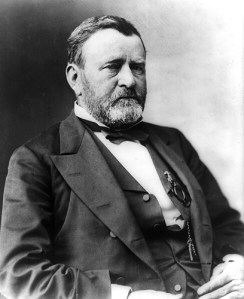
US_Grant_fOn April 15, 1880, former president Ulysses S. Grant spoke in Little Rock as part of his world tour. While here he made a couple of appearances and participated in a parade. It was Grant’s first visit to Arkansas either as a soldier or a politician.

At his outdoor speech, his remarks followed brief comments by Governor William R. Miller and Mayor John Gould Fletcher (erroneously referred to as John C. Fletcher in the Memphis Appeal story the next day). Grant’s comments were brief and flowery. He thanked Arkansans for a warm welcome, praised the future prospects of Arkansas and discussed the demise of what he termed “sectionalism” which was undoubtedly a reference to the division between the Union and and former Confederate states.

Also that day, Grant addressed a banquet in Concordia Hall (now part of the Arkansas Studies Institute complex on the Central Arkansas Library downtown campus). His was one of fifteen toasts that evening. It was simply “The United States of America, forever United.” He expounded briefly on the theme of unity of citizens from all states. He also discussed immigration noting, “All foreigners find a welcome here. We make them American citizens. After we receive them, it is but one generation until they are Americans.” He noted that he could speak much more on the topic, but that since he was but one of fifteen toasts and that there was to be music after each toast, “It will be to-morrow (sic) morning when we get through if we all take as much time as the subjects admit of.”

Not everyone was thrilled to have the former commander of the Union Army in Little Rock. The story goes that when he was parading down the street, some Little Rock women (in a display of Souther un-hospitality) sat in chairs with their backs to the parade route. But all in all, it appears to have been a successful visit for the man who was the only Republican in the 19th Century to win Arkansas’ Electoral votes.Grant arrived in Little Rock on the night of April 14 and lodged at the Capital Hotel. He undoubtedly enjoyed some whiskey and cigars while at the Capital. Grant had originally planned on departing in the afternoon of April 15, but Little Rock leaders pled with him to stay so that he could be honored at the banquet. He assented.

Incidentally, there is an urban myth that, while in Little Rock, General Grant rode his horse in the oversized elevator of the Capital Hotel.  This is a relatively recent story. The oversized elevator was not installed until the 1980s, over 100 years after Gen. Grant was a guest of the facility.

LR Cultural Touchstone: Cheryl Griffith Nichols

C NicholsCheryl Griffith Nichols is a historian, with an emphasis on historical structures, who has lived and worked in Arkansas since 1978.

She was born and raised in Indiana and graduated from Hanover College in 1974. After working for three years as the executive director of the Bartholomew County Historical Society in Columbus, Indiana, she enrolled in George Washington University in Washington DC, majoring in American studies with a concentration in historic preservation. While living in Washington, she worked for the National Register of Historic Places.

She moved to Little Rock in 1978, where she married attorney Mark Nichols and completed her Masters degree by writing a thesis on the Pulaski Heights community; the thesis was accepted in 1981. Meanwhile, Nichols became acquainted with Charles Witsell (a prominent Little Rock architect and historic preservation advocate) while he was working with F. Hampton Roy (a Little Rock ophthalmologist, historic preservation advocate and Little Rock City Director) to write a book about the history of Little Rock. Nichols did extensive research for the book, which was published in 1984 by August House as How We Lived: Little Rock as an American City.

Nichols then became a free-lance researcher, operating a business in Little Rock which she called History, Inc. This business did research and documentation of historic structures in Arkansas, mostly but not entirely in Pulaski County. Nichols also worked for the Museum of Science and History (now the Museum of Discovery) in Little Rock, served as the Executive Director of the Quapaw Quarter Association from 1984 through 1987 and again from 1991 through 1997, and wrote several books for the Arkansas Historic Preservation Program (Little Rock: Driving Tour of Three Historic Neighborhoods, 1989; MacArthur Park Historic Tours, 1993, Governor’s Mansion Area, 1993; Historically Black Properties in Little Rock’s Dunbar School Neighborhood, 1999, The Arkansas Designs of E. Fay Jones, 1999, Hillcrest: The History and Architectural Heritage of Little Rock’s Streetcar Suburb, 1999, and Construction of the Military Road Between Little Rock, Arkansas, and Fort Gibson, Oklahoma, 2003.)

She has remained active in historic preservation efforts.  She has served on the board of the Historic Preservation Alliance of Arkansas and the National Trust for Historic Preservation.  She also served on a task force to determine the best use of Curran Hall.  Much of her research has been donated to the Arkansas Studies Institute.

Cleveland County native Johnny Cash is focus of UALR exhibit, concert

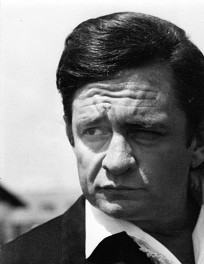
cash-image1-1-204x264The Center for Arkansas History and Culture (CAHC) at the University of Arkansas at Little Rock has announced plans to premier a new exhibit on Johnny Cash’s relationship with Arkansas. The exhibit, “Johnny Cash: Arkansas Icon,” will open in the Underground Gallery at the Arkansas Studies Institute on October 10, 2014, and run through January 24, 2015. The physical exhibit will be accompanied by a virtual exhibit with educational materials for teachers.

Opening Night

The exhibit opens Friday, Oct. 10, in the Ron Robinson Theatre.

A free concert will be at 7:30 p.m. featuring the W.S. Holland Band, with special guests Jeff Coleman and the Feedersbeginning at 6:45 p.m. Seating is limited.

Johnny Cash: Arkansas Icon

The exhibit explores the musician’s Arkansas connections over the decades, covering his 1930s childhood in Dyess, Arkansas (though he was born in Kingsland in Cleveland County), through his comeback at the turn of the 21st-century. The exhibit places special emphasis on connections between his Arkansas roots and his music from his first performance in Little Rock in 1955 to a 2002 music video. Though Cash’s career took him far from Arkansas, the exhibit argues, he never quite severed his Arkansas roots. This exhibit tells that story through narrative and archival photographs from CAHC’s own collections, as well as others.

According to Colin Woodward, the CAHC archivist who proposed the exhibit and wrote its narrative, “While writing an article about Johnny Cash’s work with Governor Winthrop Rockefeller on prison reform, I began to see the thread of Arkansas in Cash’s music and life. He was such a dynamic artist, who persevered through many personal and professional challenges. He was a great Arkansan, and I wanted to show that through historical research and archival images.”

The exhibit will cover the walls of the unique Underground Gallery and immerse visitors in an artistic representation of Cash’s life in pictures and text. Designed by Bachelor of Fine Arts student Nick Sosnoski under the direction of Tom Clifton, Department of Art Chair, the exhibit makes use of key design elements like variety, unity, and texture on a large scale. The exhibit uses rare images from family albums and other sources and incorporates Cash’s lyrics into the design. According to Sosnoski, “The design is meant to reflect Johnny Cash as a man who never forgot his roots.”

The accompanying virtual exhibit will offer deeper exploration of the topics covered in the physical exhibit. The website will include a media gallery and behind-the-scenes information on the exhibit development. Educational materials, including full lesson plans and PowerPoint presentations, will be available for Arkansas teachers to use with students before and after visiting the exhibit. Stan James, an undergraduate Social Studies Education major, worked on the project and says, “It was really exciting to be able to prepare materials that will teach students important world concepts, and at the same time, expose them to one of Arkansas’ true treasures, Johnny Cash.  These materials, along with the exhibit and related events, will guide the students through an exciting journey towards learning about key issues in our state and nation, as well as how celebrities use their influence and talent to further issues that are important to them.”

On opening night, the W. S. Holland Band will perform a free concert in the Ron Robinson Auditorium. Holland spent 40 years performing with Cash’s band, Tennessee 3, and is the only band member to stay with the group until Cash’s retirement in 1997. In his long career, Holland has toured with Elvis, Jerry Lee Lewis, Roy Orbison, and Carl Perkins. The Holland Band performance will start at 7:30, following an opening performance by Jeff Coleman and the Feeders at 6:45. Seating is limited. Also on opening night, Shape Note Singers from Mountain Home, Arkansas, will perform for Second Friday Art Night visitors to the Arkansas Studies Institute.

This project is supported in part by a grant from the Arkansas Humanities Council and the National Endowment for the Humanities.

Additional funding provided by the Arkansas Community Foundation. The Arkansas Community Foundation is a nonprofit organization that fosters smart giving to improve communities. The Community Foundation offers tools to help Arkansans protect, grow and direct their charitable dollars as they learn more about community needs. By making grants and sharing knowledge, the Community Foundation supports charitable programs that work for Arkansas and partners to create new initiatives that address the gaps. Contributions to the Community Foundation, its funds and any of its 27 affiliates are fully tax deductible.

The UALR Center for Arkansas History and Culture collects, preserves, and enables access to Arkansas records of enduring value; prepares students and the region for the 21st century through academic leadership and education on archival practices and technologies; and engages the community through outreach, programming, and exhibitions.

For more information on the exhibit or CAHC, contact us atcahc@ualr.edu or 501.320.5780.

Little Rock Look Back: U S Grant speaks in Little Rock

US_Grant_fOn April 15, 1880, former president Ulysses S. Grant spoke in Little Rock as part of his world tour. While here he made a couple of appearances and participated in a parade. It was Grant’s first visit to Arkansas either as a soldier or a politician.

At his outdoor speech, his remarks followed brief comments by Governor William R. Miller and Mayor John Gould Fletcher (erroneously referred to as John C. Fletcher in the Memphis Appeal story the next day). Grant’s comments were brief and flowery. He thanked Arkansans for a warm welcome, praised the future prospects of Arkansas and discussed the demise of what he termed “sectionalism” which was undoubtedly a reference to the division between the Union and and former Confederate states.

Also that day, Grant addressed a banquet in Concordia Hall (now part of the Arkansas Studies Institute complex on the Central Arkansas Library downtown campus). His was one of fifteen toasts that evening. It was simply “The United States of America, forever United.” He expounded briefly on the theme of unity of citizens from all states. He also discussed immigration noting, “All foreigners find a welcome here. We make them American citizens. After we receive them, it is but one generation until they are Americans.” He noted that he could speak much more on the topic, but that since he was but one of fifteen toasts and that there was to be music after each toast, “It will be to-morrow (sic) orning when we get through if we all take as much time as the subjects admit of.”

Marker at the Capital Hotel noting Grant's visit. Note that it refers to him as General instead of President.  At the time, only sitting Presidents were referred to as President.

Marker at the Capital Hotel noting Grant’s visit. Notice that it refers to him as General instead of President. At the time, only sitting Presidents were referred to as President.

Grant arrived in Little Rock on the night of April 14 and lodged at the Capital Hotel. He undoubtedly enjoyed some whiskey and cigars while at the Capital. Grant had originally planned on departing in the afternoon of April 15, but Little Rock leaders pled with him to stay so that he could be honored at the banquet. He assented.

Not everyone was thrilled to have the former commander of the Union Army in Little Rock. The story goes that when he was parading down the street, some Little Rock women (in a display of Souther un-hospitality) sat in chairs with their backs to the parade route. But all in all, it appears to have been a successful visit for the man who was the only Republican in the 19th Century to win Arkansas’ Electoral votes.

Dr. Cal Ledbetter Collection opens at UALR Center for Arkansas History and Culture

The UALR Center for Arkansas History and Culture revealed its newest collection, donated by educator, scholar, and legislator Calvin R. Ledbetter Jr., at a reception held at the Arkansas Studies Institute Tuesday evening, April 30.

Calvin R. Ledbetter Jr.The 12-linear-foot collection covers Ledbetter’s life between 1964 and 1988. The papers document Ledbetter’s political career including the state’s legislative sessions from 1967 to 1977. A portion of the papers references his academic career at the University of Arkansas at Little Rock.

Ledbetter, 84, led an accomplished political and educational career.

In addition to the collection housed at ASI, there is an online exhibit at ualrexhibits.org/ledbetter. The digitized collection includes photographs, video clips, and a selected bibliography on articles and books written by Ledbetter.

In 1960, Ledbetter joined the faculty at Little Rock University, now the University of Arkansas at Little Rock. He has served as chair of the Department of Political Science and dean of the College of Liberal Arts, now the College of Arts, Humanities, and Social Sciences. After retiring in 1997, Ledbetter was named professor emeritus of political science.

The gift of Dr. Ledbetter is not just his collection, ever the visionary, he has an eye on the future. In addition to donating his papers for research, Ledbetter has established the Cal Ledbetter Arkansas Legislative Institute Endowment to promote a better understanding of Arkansas through the scholarly study of legislators and legislative process.

Ledbetter served for five terms in the Arkansas House of Representatives between 1967 and 1977. In the course of his political career, he served three Arkansas’ governors, Winthrop Rockefeller, Dale Bumpers, and David Pryor. CAHC holds the collections of both Rockefeller and Bumpers.

The UALR Center for Arkansas History and Culture is housed in the Arkansas Studies Institute, a partnership between UALR and the Central Arkansas Library System. For more information, go to ualr.edu/cahc.

In recognition of his contributions, the Arkansas House of Representatives passed HR1045 this session. It was sponsored by Rep. Ann V. Clemmer, a member of the UALR Political Science faculty.

April 12 Architeaser

IMG_4796This brick work and star is found on the 1882 Porbeck and Bowman building.  Designed by Joseph Willis and built by Max Hilb and William Probst, the building was modified by architect Charles Thompson in 1909.  It was revamped by the firm of Polk Stanley Wilcox for the Central Arkansas Library System as part of the Arkansas Studies Institute project.  It now houses gallery space and meeting space for CALS and classrooms for the Clinton School of Public Service.

Tonight is 2nd Friday Art Night. Visitors to the space tonight can view art on display.