Life of longtime CALS trustee Ira Sanders topic of today’s Legacies & Lunch

SandersIraE_fToday at noon at the CALS Ron Robinson Theater, the Butler Center for Arkansas Studies and Clinton School for Public Service collaborate on a special Legacies & Lunch.

James Moses, professor of History at Arkansas Tech University, will discuss the life of Ira E. Sanders, who served as rabbi at Congregation B’nai Israel in Little Rock for 38 years and was a legendary champion of social justice in Arkansas and throughout the nation.

Rabbi Sanders was a founder of Arkansas Lighthouse for the Blind, the Arkansas Eugenics Association, and the Urban League of Greater Little Rock. He also served for 40 years on the Central Arkansas Library System’s Board of Trustees. James Moses is writing a book about Rabbi Sanders, to be titled “Life Fire Shut Up in My Bones.”

Legacies & Lunch is free, open to the public, and supported in part by the Arkansas Humanities Council. Programs are held from noon-1 p.m. on the first Wednesday of each month. Attendees are invited to bring a sack lunch; drinks and dessert are provided.
 

Legacy of Civil War topic of seminar at Old State House today

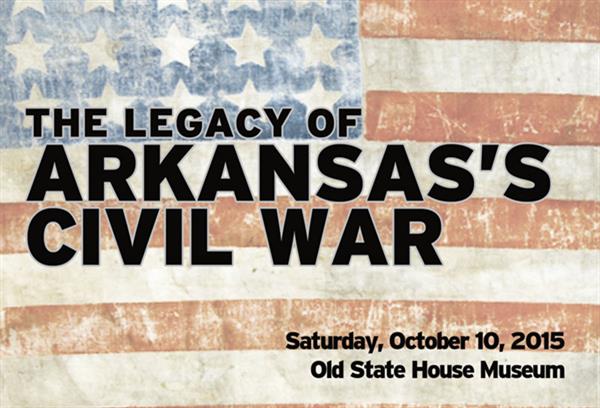
cw-seminarThe Arkansas Civil War Sesquicentennial Commission and the Old State House Museum are sponsoring a seminar on the legacy of the Civil War on Saturday, October 10.

ACWSC Chairman Tom Dupree described it thus: “As we near the end of the commemoration of the 150th anniversary of the Civil War, we wanted to address the lingering influences of the war,” Dupree said. “Each of our speakers will look at different aspects of the war and how they continue to affect us today.”

Speakers at the “Legacy of Arkansas’s Civil War” will be:

•Dr. Elliott West – University of Arkansas at Fayetteville on “Arkansas: Where One War’s Edge Was Another War’s Center”

•Dr. Carl Moneyhon – University of Arkansas at Little Rock on “Conflicting Civil War Memories and Cultural Divides in Arkansas”

•Dr. Jeannie Whayne – University of Arkansas at Fayetteville on “The Civil War and the Burden of Arkansas History”

•Dr. Cherisse Jones-Branch – Arkansas State University on “’How Free is Free?’: African Americans in Post-Civil War Arkansas”

•Dr. Kelly Houston Jones – Austin Peay University on “Women After the War: Profiles of Change and Continuity”

•Dr. Tom DeBlack – Arkansas Tech University on “’What Is to Become of Us?’: The Postwar Lives of Major Figures in Civil War Arkansas”

For more information on this and other sesquicentennial events, visit http://www.arkansascivilwar150.com/events/.

Arkansas Jazz Festival at Clinton Presidential Center Friday & Saturday

jazzheroThe Clinton Presidential Center celebrates Jazz Appreciation Month with the Arkansas Jazz Festival, featuring “Blue” Lou Marini. Held in partnership with the Arkansas Jazz Educators and the University of Arkansas at Monticello, this FREE, two-day festival will be held at the Clinton Center Park and will showcase the talent of jazz bands from around the state.

Featured artist, Lou Marini, has been a member of Blood, Sweat and Tears, The Saturday Night Live Band, and the Blues Brothers Band. He is an original member of the Blues Brothers Band, since the first appearances on Saturday Night Live, and appeared in both movies, as well as all recordings and tours.

Arkansas Jazz Festival
April 24 – 25, 2015
Clinton Presidential Center Park

Schedule of Performances:

Friday, April 24
3:30 p.m. Central High School Jazz II
4:30 p.m. West Memphis High School
5:30 p.m. Benton Junior High School
6:30 p.m. Harding University
7:30 p.m. Bryant High School

Saturday, April 25
9:00 a.m.  Central High School Jazz II
10:00 a.m. University of Arkansas at Little Rock
11:00 a.m. El Dorado High School
12:00 p.m. Arkansas Tech University
1:00 p.m.  Jonesboro High School
2:00 p.m.  Texarkana, Texas 8th Grade
3:00 p.m.  University of Arkansas at Pine Bluff
4:00 p.m.  Pea Ridge High School
5:00 p.m.  Texas High School
6:00 p.m.  University of Arkansas at Monticello, Featuring Lou Marini

“Arkansas and the Cold War: Titan II Missiles in Cow Pastures” explored at Old State House Museum today at noon

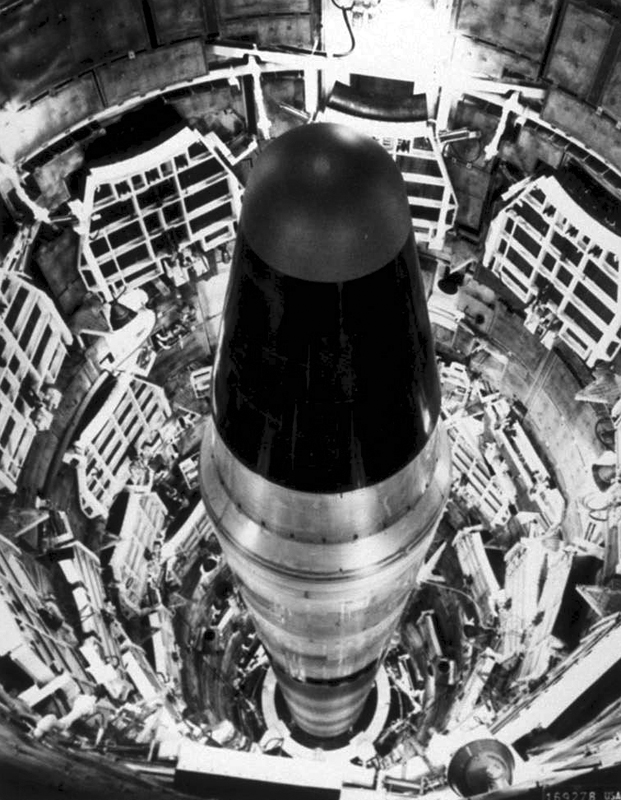
MK6_TITAN_IIDue largely to the political largess of Wilbur D. Mills, Arkansas was home to numerous Titan II missile silos throughout the Cold War era.

Today at noon at the Old State House Museum, John Rowley explores this little-known or largely-forgotten part of Arkansas history. “Arkansas and the Cold War: Titan II Missiles in Cow Pastures,” was the basis for his master’s thesis at Arkansas Tech.

During the Cold War era, the sparsely populated, agrarian state of Arkansas seemed far removed from the realm of nuclear proliferation. Washington D.C., Moscow, New York and Havana easily come to mind when considering nuclear threat or strategic defense. Damascus, Judsonia, Antioch, Blackwell, and Searcy seemed insignificant in comparison. However, Arkansas’s role in the Cold War was more significant than one might think, playing an integral role in national defense and the United States’s policies of communist containment.

Arkansas’s Cold War involvement became apparent when eighteen Titan II missiles were commissioned and activated within the state in the early 1960’s. The arrival of these weapons coupled with mismanagement by federal agencies changed both the physical landscape and the political atmosphere of the state.

Justice Jim and the Red Scare focus of Old State House Brown Bag talk today

Justice JimNovember’s Brown Bag Lunch Lecture is presented by Marie Williams.

Arkansas Senator and state Supreme Court Justice, James D. “Jim” Johnson has been portrayed as one of the most outspoken racist politicians of Arkansas’s history. His legacy includes an Amendment to the Arkansas Constitution that gave Arkansas the right to nullify federal law. He is also remembered for being a constant thorn in the side of Governor Orval Faubus.

A look at the evidence surrounding Johnson’s political career suggests that Johnson was not purely motivated by race. Johnson started the White Citizens’ Council of Arkansas in 1955 in response to the integration of the Hoxie School District. Hoxie became Johnson’s soapbox and the Citizens’ Council became his campaign vehicle. The tactics he used to fight integration in Hoxie were unlike those of other Arkansas segregationists. Instead of citing race as the reason for his campaign in Hoxie, Johnson brought the Second Red Scare to Arkansas. He appealed to a wider audience by accusing integrationists of being communists.

Using primary source information, this presentation outlines the methods used by Johnson in 1955 as he started his campaign for governor. Marie Williams is currently finishing her Master’s Degree in History from Arkansas Tech University. She is an Arkansas native who lives in Dover with her husband and their two children.