Black History Month Spotlight – Arkansas Studies Institute

ASI CALS UALRThe new Arkansas Civil Rights History Audio Tour was launched in November 2015. Produced by the City of Little Rock and the University of Arkansas at Little Rock allows the many places and stories of the City’s Civil Rights history to come to life an interactive tour.  This month, during Black History Month, the Culture Vulture looks at some of the stops on this tour which focus on African American history.

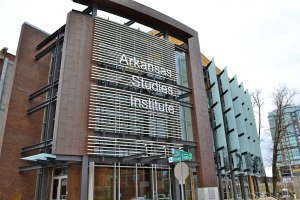
The Arkansas Studies Institute building is a Central Arkansas Library System (CALS) facility. It houses both the Butler Center for Arkansas Studies (a CALS department) and the Center for Arkansas History and Culture, a department of the University of Arkansas at Little Rock (UALR).

Exterior and interior panels are featured showing Arkansas African American life through historic photographs. Both archives offer genealogy and photography collections, and visual, audio and reference materials relating to African American history and civil rights topics in Arkansas. The Encyclopedia of Arkansas History and Culture, a Butler Center project, has many entries on African American history.

The Arkansas Sounds music collection contains materials relating to black musicians William Grant Still, Florence Price, Louis Jordan, Sister Rosetta Tharpe, and Al Bell. The Butler Center’s galleries feature local art, jewelry and crafts, many by Arkansas black artists.

The UALR Center for Arkansas History and Culture contains extensive archives, including virtual exhibits relating to the Civil War, Gov. Winthrop Rockefeller, and the city of Little Rock. Adding another dimension to the struggle for civil rights are documents and art from the World War II Japanese American Relocation Camps at Rohwer and Jerome, Arkansas, and two large Jewish history collections.

The app, funded by a generous grant from the Arkansas Humanities Council, was a collaboration among UALR’s Institute on Race and Ethnicity, the City of Little Rock, the Mayor’s Tourism Commission, and KUAR, UALR’s public radio station, with assistance from the Little Rock Convention and Visitors Bureau.

Black History Month Spotlight – Sue Cowan Williams Library

sue_cowan_williamsThe new Arkansas Civil Rights History Audio Tour was launched in November 2015. Produced by the City of Little Rock and the University of Arkansas at Little Rock allows the many places and stories of the City’s Civil Rights history to come to life an interactive tour.  This month, during Black History Month, the Culture Vulture looks at some of the stops on this tour which focus on African American history.

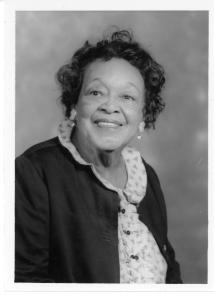
In 1945, Sue Cowan Williams successfully sued the Little Rock School District for equal pay for black and white teachers. The existing inequality in pay clearly did not meet the stipulation of “separate but equal” treatment of African Americans required by the law.

Williams was chair of the English Department at Dunbar High School. She had attended Spelman College in Atlanta, Talladega College in Alabama, and the University of Chicago. These impressive credentials made her an ideal standard bearer for the suit. Local lawyers, along with the NAACP’s Thurgood Marshall, successfully appealed Williams’ case to the Eighth Circuit Court of Appeals in St. Louis. In the meantime, however, Williams’ contract was not renewed at Dunbar.

After working several other jobs, she was eventually rehired in 1952. She remained at Dunbar until her retirement in 1974. Williams died in 1994. In 1997, the tenth library in the Central Arkansas Library System was dedicated as the Sue Cowan Williams Library in her honor.

The app, funded by a generous grant from the Arkansas Humanities Council, was a collaboration among UALR’s Institute on Race and Ethnicity, the City of Little Rock, the Mayor’s Tourism Commission, and KUAR, UALR’s public radio station, with assistance from the Little Rock Convention and Visitors Bureau.

DRIVING MISS DAISY at CALS Ron Robinson Theater tonight

RRT driving-miss-daisy-posterThe Oscars are later this month, but tonight is a chance to see the winner of the 1989 Best Picture Oscar – DRIVING MISS DAISY. It will screen tonight at 7pm at the CALS Ron Robinson Theater.

Tickets are $5.  Concessions are available for purchase.

Based on the 1988 Pulitzer Prize winning play, Driving Miss Daisy tells the story of a textile factory owner who insists on hiring an ever-patient chauffeur for his aging head-strong mother. The Jewish woman and her African American driver eventually build a relationship over many years.

In addition to winning the Oscar for Best Picture, star Jessica Tandy won the Oscar for Best Actress.  Morgan Freeman and Dan Aykroyd each earned Oscar nominations for their performances.  Others in the cast include Patti LuPone and Esther Rolle.

Directed by Bruce Beresford (who surprisingly did not pick up a nomination for Best Director), the film was adapted by Alfred Uhry from his original stage play. Uhry won an Oscar for his writing. The film also earned a fourth Oscar for Best Makeup.  In addition to the nominations for Freeman and Aykroyd’s performances, it picked up nominations for Art Direction, Costumes, and Editing.

2016 Arkansas Literary Festival dates and lineup announced

ALF 2016_textPrestigious award-winners, screenwriters, comedians, an expert witness, artists, and a Pulitzer Prize-winning poet are among the diverse roster of presenters who will be providing sessions at the thirteenth annual Arkansas Literary Festival, April 14-17, 2016. The Central Arkansas Library System’s Main Library campus and many other Little Rock venues are the sites for a stimulating mix of sessions, panels, special events, performances, workshops, presentations, opportunities to meet authors, book sales, and book signings. Most events are free and open to the public.
     The Arkansas Literary Festival, the premier gathering of readers and writers in Arkansas, will include more than 80 presenters including featured authors from approximately 24 different states and guests hailing from Canada, England, Russia, and Singapore. Each year, several of the attending authors have not visited Little Rock, Arkansas, or even the South.
     Presenters come from a wide range of backgrounds including: journalist, documentary filmmaker, economist, editor, microbiologist, national bank examiner, essayist, photographer, sports reporter, psychological examiner, musician, actress, reporter, and professor. One is co-producing Keanu Reeves’ new television show and writing an adaptation of his own book for Warner Bros. and Bradley Cooper.
     Special events for adults during the Festival include a cocktail reception with the authors, a tour of the Governor’s Mansion gardens with a wine and cheese reception, an escape room, and Readers’ Map of Arkansas launch party. Panels and sessions include genres and topics such as literary fiction, barbecue, Monopoly, female rocket scientists, travel, graphic novels, science fiction, classic literature, and a story told in playing cards.
     Children’s special events include a session by Nikki Grimes, activity hour, concert by the Kinders, and the play How the Camel Got His Hump. based on Rudyard Kipling’s Just So Stories. Festival sessions for children will take place at both the Hillary Rodham Clinton Children’s Library and Learning Center, 4800 10th Street, and the Youth Services Department at the Main Library, 100 Rock Street. Special events for teens include North Little Rock High School Readers Theater, a teen poetry competition, and a panel with three authors of books for young adults.
     Through the Writers In The Schools (WITS) initiative, the Festival will provide presentations by several authors for central Arkansas elementary, middle, and senior high schools and area colleges.
     Author! Author!, a cocktail reception with the authors, will be Friday, April 15, at 7 p.m. Tickets are $25 in advance and $40 at the door, and go on sale at ArkansasLiteraryFestival.org beginning Monday, March 15.
     This year’s Festival authors have won an impressive number and variety of distinguished awards and fellowships including: Pulitzer Prize, James Beard Award, PEN/Hemingway Award, Hugo Award, Coretta Scott King Award, Will Eisner Comic Industry Award, National Book Foundation “5 Under 35” Honoree, Coretta Scott King Illustrator Award, Dashiell Hammett Prize, Barnes & Noble Discover Great New Writers Selection, National Endowment for the Arts Fellowship, Fulbright Fellowship, Guggenheim Fellowship, Houghton Mifflen Literary Fellowship, Arkansas Arts Council Fellowship.
     The work of this year’s Festival authors has been featured in notable publications including: New York Times, Details, McSweeney’s Quarterly, Forbes, the Paris Review, theHuffington Post, Women’s Health, Gourmet Magazine, the New Republic, the Los Angeles Times, Smithsonian, the Daily Telegraph UK, VICE, the New Yorker, Harper’s, the Atlantic, Slate, Time, Popular Science, Salon, the Best American Travel Writing, Outside Magazine, Esquire, USA Today, Reader’s Digest, Best American Essays, Best American Short Stories, Penthouse, the Nation, Best American Poetry, the Washington Post, Town & Country, the Economist, the Christian Science Monitor, National Geographic, the Wall Street Journal, Bloomberg BusinessWeek, Rolling Stone, GQ, Sports Illustrated, and Vogue
     The Literary Festival is presented by the Central Arkansas Library System. Sponsors include Arkansas Humanities Council, Friends of Central Arkansas Library System (FOCAL), Clinton Presidential Center, Fred K. Darragh Jr. Foundation, KUAR FM 89.1, ProSmartPrinting.com, Rebsamen Fund, Arkansas Democrat-Gazette, Arkansas Times, Gibbs Elementary School, Hendrix-Murphy Foundation Programs in Literature and Language, MacArthur Museum of Arkansas Military History, Museum of Discovery, Otter Creek Elementary School, UALR Department of English, Windstream, Arkansas Library Association, Christ Episcopal Church, East Harding Construction, Hampton Inn, Hemingway-Pfeiffer Museum and Educational Center, Henderson State University, Hendrix College Project Pericles Program, University of Arkansas Clinton School of Public Service, Witt Stephens Jr. Central Arkansas Nature Center, Greater Little Rock Council of Garden Clubs, Capital Hotel, City of Little Rock, Et Alia Press, Consulate General of Israel to the Southwest, Literacy Action of Central Arkansas, Mayor Mark Stodola, Mollie Savage Memorial/CALS, North Little Rock High School, Plum Street Publishers, Inc., Pyramid Art Books & Custom Framing/Hearne Fine Art, Sibling Rivalry Press, Stickyz Rock ‘N’ Roll Chicken Shack, UALR Department of Rhetoric and Writing, and Whole Hog. The Arkansas Literary Festival is supported in part by funds from the Arkansas Humanities Council and the National Endowment for the Humanities.
     The Festival’s mission is to encourage the development of a more literate populace. A group of dedicated volunteers assists Festival Coordinator Brad Mooy with planning the Festival. Committee chairs include Kevin Brockmeier, Talent Committee; Susan Santa Cruz, Festival Guides; and Amy Bradley-Hole, Moderators.
     Visit the Festival Facebook and Twitter pages to get the latest news about the Festival. For more information about the 2016 Arkansas Literary Festival, visit ArkansasLiteraryFestival.org, or contact Brad Mooy at bmooy@cals.org or 918-3098. For information on volunteering at the Festival, contact Angela Delaney at adelaney@cals.org or 918-3095.

Arts+History Election Results – By The Numbers

Feb9electionlogoThe Culture Vulture loves crunching numbers almost as much as attending cultural events.

Here are some thoughts about the results from the February 9 MacArthur Park Bond election.  These bonds will pay for improvements to the Arkansas Arts Center, MacArthur Museum of Arkansas Military History and MacArthur Park.  Excess revenues from the bonds will be available for the Little Rock Zoo, Museum of Discovery, other Little Rock parks and other Little Rock cultural institutions.

There were 7,990 votes cast in the special election.  This was 6.61% of the electorate.  By comparison, there were 4,462 ballots cast in the July 2015 Central Arkansas Library System special election and 6,995 ballots cast in the December 2013 Robinson Center special election.  The latter election brought 6.14% of voters to the polls.

Comparing early and absentee voters to election day voters:

  • Robinson (December 2013) – 871 or 12.45% of all ballots cast
  • CALS (July 2015) – 750 or 16.81% of all ballots cast
  • MacArthur Park (February 2016) – 1,171 or 14.66% of all ballots cast

The top ten precincts for voter participation on February 9:

107 – LRFD Station #10 —– 23.66%
106 – LRFD Station #10 —– 22.85%
109 – Pulaski Heights Presbyterian —–  18.17%
91 – Cammack Village City Hall —– 17.43%
108 – Woodlawn Baptist —– 17.33%
90 – Second Presbyterian —– 15.86%
112 – Pulaski Heights Presbyterian —– 15.00%
96 –  St. Mark’s Episcopal —– 13.42%
70 – Pleasant Valley CoC —–  12.58%
92 – St. Paul UMC —–  12.27%

While most of these are in the midtown area of Little Rock, some are in the western portion of Little Rock.  They tend to have the highest percentage of voter turnout in primary, general and special elections regardless of what or who is on the ballot.


The top 10 precincts for number of voters were:
109 – Pulaski Heights Presbyterian —– 497
106 – LRFD Station #10 —– 351
107 – LRFD Station #10 —– 308
90 – Second Presbyterian —– 260
71 – Pulaski Academy —– 252
108 – Woodlawn Baptist —– 238
114 – Arkansas Arts Center —– 230
88 – St. James UMC —– 223
95 – Grace Presbyterian —– 211
68 – Chenal Valley Church —– 204

These results spread from downtown to midtown to west Little Rock and are fairly evenly distributed.


There were twelve precincts in which over 90% of the voters cast ballots in favor of the bonds.  Precinct 61 at Pilgrim Rest Baptist Church was 100% in favor of it. But there was only one ballot cast.  Of the remaining eleven precincts in which more than one vote was cast, here are the rankings by percentage:

112 – Pulaski Heights Presbyterian —– 96.97
118 – Dunbar Recreation Center —– 95.83
114 – Arkansas Arts Center —– 95.65
109 – Pulaski Heights Presbyterian —– 94.77
107 – LRFD Station #10 —– 94.16
108 – Woodlawn Baptist  —– 92.86
79 – Henderson UMC —– 92.59
128 – St. John Vision Center —– 92.37
90 – Second Presbyterian —– 91.54
110 – Woodlawn Baptist  —– 91.3
135 – Pilgrim Rest Baptist —– 91.18

Again, they are fairly evenly distributed from downtown to midtown to west Little Rock.

Arkansas and the Southern Manifesto explored at Butler Center’s Legacies & Lunch today

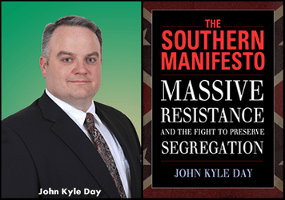
southern_manifestoAt Legacies & Lunch, John Kyle Day, associate professor of history at University of Arkansas at Monticello, will discuss the efforts of the United States Congress to delay desegregation in the 1950s and onward.  The program will take place today (February 3) at 12 noon at the Darragh Center on the CALS campus.

On March 13, 1956, ninety-nine members of the United States Congress promulgated the Declaration of Constitutional Principles, popularly known as the Southern Manifesto. This document formally stated opposition to the landmark United State Supreme Court decision Brown v. Board of Education, and the emergent civil rights movement. This allowed the white South to prevent Brown‘s immediate full-scale implementation and, for nearly two decades, set the slothful timetable and glacial pace of public school desegregation. The Southern Manifesto also provided the Southern Congressional Delegation with the means to stymie federal voting rights legislation, so that the dismantling of Jim Crow could be managed largely on white southern terms.

Day’s book, The Southern Manifesto: Massive Resistance and the Fight to Preserve Segregation, narrates this single worst episode of racial demagoguery in modern American political history and considers the statement’s impact upon both the struggle for black freedom and the larger racial dynamics of postwar America.

Legacies & Lunch is free, open to the public, and supported in part by the Arkansas Humanities Council. Programs are held from noon-1 p.m. on the first Wednesday of each month. Attendees are invited to bring a sack lunch; drinks and dessert are provided. For more information, contact 918-3033.

Little Rock Look Back: Little Rock Public Library opens in 1910

On February 2, 1910, the Little Rock Public Library officially opened its doors.  There had been an open house the night before, but this was the first day of acquiring a library card and checking out books.

Various private libraries had existed sporadically in Little Rock throughout the 19th Century.  In November 1900, a Little Rock School District committee made the first inquiry into the the creation of a Carnegie Library in Little Rock.  Over the next several years, numerous entreaties were made, but funding for the City’s portion was an obstacle.  On December 17, 1906, the Little Rock City Council passed an ordinance to move forward with building, furnishing and equipping a library.  Finally, in February 1908, the City approved acceptance of $88,100 from Andrew Carnegie.  The building would be designed by Edward Tilton, who designed Carnegie libraries, working with local architect Charles Thompson.

Mary Maud Pugsley was hired as the first librarian for Little Rock in May 1909. She began her duties on September 15, 1909, in order to get ready for the opening of the library at the southwest corner of 7th and Louisiana Streets.

On February 2, 1910, formal circulation of books began.  J. N. Heiskell was issued library card number 1.  He was secretary of the Library’s Board of Trustees and had long been an advocate for a public library in Little Rock.  He had often used his bully pulpit as editor of the Arkansas Gazette to advocate for a public library since arriving in Little Rock in 1902.  (Years later — he lived until 1972 — he received a replica of the library card made out of gold.)

That first day of operation, 500 people had applied for library cards. The application process required one to be a Little Rock property owner or to have a property owner sign the application.

Within the first year of operation, 2.5% of Little Rock’s population of 45,951 had applied for a library card.

For more on the history of the transformation of the Little Rock Public Library into the Central Arkansas Library System, read Shirley Schuette and Nathania Sawyer’s From Carnegie to Cyberspace — 100 Years at the Central Arkansas Library System, published by Butler Center Books.