Little Rock Look Back: Vogel Schwartz Sculpture Garden Expansion

Photo by Little Rock Convention and Visitors Bureau

On Sunday, October 1, 2017, the expansion of the Vogel Schwartz Sculpture Garden was dedicated.

The expansion more than doubled the area of the garden.  It also allowed for larger sculptures to be installed.

The construction took nearly a year. The design for the garden and the landscaping have all been done by the Little Rock Parks and Recreation Department.

A dozen new sculptures were part of the expansion, which brought the total to 66 pieces by 48 different artists.  (More have been added in the past year.)

The Vogel Schwartz Sculpture Garden was originally dedicated in 2009 at Riverfront Park.

MacArthur Museum of Arkansas Military History reopens after 5 months and $1.5 million in renovations

After several months of renovations to the building, the MacArthur Museum of Arkansas Military History reopens today.

The museum closed in March 2018 for five months of extensive structural work.  The $1.5 million renovation for the 178-year old structure included both interior and exterior upgrades.  The first phase of the project, which began last December, involved renovation to the north and south porches and was partially funded by a Historic Preservation Restoration Grant from the Department of Arkansas Heritage. The interior renovation includes upgrades to the heating and cooling systems, installation of new lighting, and repainting of interior gallery spaces.

Funding for the renovations came from proceeds of a hotel tax which was approved by Little Rock voters in February 2016.

The MacArthur Museum of Arkansas Military History was created to interpret our state’s military heritage from its territorial period to the present. It is a program of the City of Little Rock’s Department of Parks and Recreation.

Located in the historic Tower Building of the Little Rock Arsenal–the birthplace of General Douglas MacArthur–the museum preserves the contributions of Arkansas men and women who served in the armed forces.  Exhibits feature artifacts, photographs, weapons, documents, uniforms and other military items that vividly portray Arkansas’s military history at home and abroad.

In conjunction with the reopening, there will be a belated 125th birthday party for MacArthur Park. (The park actually opened on July 4, 1893.)  Originally known as Arsenal Park, it became known as City Park shortly thereafter. In 1942, it was renamed in honor of Gen. Douglas MacArthur, who was born there. At the time he was commanding US troops in the Pacific Theatre of Operations during World War II.

Activities include:

9:00 a.m. – 2:00 p.m. – Vintage Military Vehicle Show featuring military vehicles from the Arkansas Military Vehicle Preservation Association.

10:00 – 10:30 a.m.  –  Grand Re-opening of the MacArthur Museum of Arkansas Military History

  • Music provided by Five Star Brass Quintet of the 106th Army (Arkansas) Band
  • Remarks and Ribbon Cutting re-opening the military museum following a $1.55 million renovation

10:00 a.m. – 4:00 p.m.  –  MacArthur Park History Walk

Explore MacArthur Park using a “passport” to learn more about the park’s history during the territorial/Civil War periods, late 19th century/early 20th century periods, and World War II/Modern periods.  There will be eight “passport sites” in total, with other sites to visit as well. Passports and Park materials may be picked up at the MacPark Group Table.  Stamped passports to all eight sites may be turned in for raffle prizes from the Arkansas Arts Center, Little Rock Parks, Arkansas Paranormal Expo, MacArthur Museum of Arkansas Military History, Mac Park Group, Quapaw Quarter Association, and others.

  • AAC Friend Level Membership.
  • AAC Children’s Theatre Tickets (4).
  • Flat Screen Television- MacPark Group.
  • AAC class/workshop.
  • QQA- ticket to Spring Tour of Homes and ticket to Mother’s Day Brunch.
  • MMAMH- Gift basket and passes to the 8th Annual Paranormal Expo.
  • Parks and Rec- Round of Golf at Rebsamen Gold Course.

11:30 a.m. – 1:00 p.m. Woodmen Life will provide grilled hot dogs and chips to first 400 visitors.  Bottled water courtesy of Premium Refreshment Services.   Bluebell ice cream will be provided free.  Families are encouraged to bring picnic lunches.

12:00 – 2:00 p.m. – Concert by Funkle Sam of the 106th Army (Arkansas) Band on the North Plaza. Katie Sunshine will be hoop dancing with Funkle Sam.

4:00 – 8:00 p.m. – Evening German Biergarten.  Local breweries set up to sell beers. *Will have entry fee of $10 which will buy admission, three beer tokens, and a bratwurst plate.


Little Rock Look Back: First Meeting of Pulaski Heights City Council

The opening of the first minutes of the Pulaski Heights City Council.

On September 28, 1905, the first meeting of the Pulaski Heights City Council took place.  The newly elected Mayor was J. H. Joslyn, the Recorder was F. D. Leaming, and new Alderman present were E. E. Moss, Maxwell Coffin and C. C. Thompson.  Pulaski Heights had been incorporated on August 1, 1905.  At that time its population was estimated at between 300 and 400.

The first ordinance, which was offered by E. E. Moss, was to set a tax rate and give the City the ability to levy taxes.  Next was a motion to establish a committee to establish rules and procedures for the council. The final business before the Council was to allow the Recorder to order stationary, a seal and a record book (that record book is now in the vault at Little Rock City Hall).

The next meeting would be October 28.  At that meeting, two other Aldermen are mentioned in the minutes (Fauble and Paul) but were absent from that meeting as well.  Mr. C. M. Fauble was present at the third meeting.  Mr. R. O. Paul did not appear until the fifth meeting (December 13, 1905).

Interestingly the Recorder had a vote in the Council meetings (which was not a practice in the City of Little Rock at the time).

The Council did not have a permanent meeting place until the third meeting.  At that point in time, they used space in the offices of Dr. Hockersmith.  They later met in a building which is now part of the Pulaski Heights Baptist Church campus.

Pulaski Heights was a separate City until January 1916.  On January 4, 1916, Little Rock voters approved the annexation of Pulaski Heights by a ten-to-one margin, and the suburb became the city’s ninth ward.

This established a couple of precedents for the City of Little Rock which are in effect to this day.  The first is that Little Rock would not be a central city surrounded by a variety of small incorporated towns (in the manner that St. Louis and other cities are).  It was this thought process which has led the City to continue to annex properties.

In addition, this move to annex Pulaski Heights was the first time that the City grew toward the west.  Previous growth had been to the south.  By emphasizing western expansion, this has allowed Little Rock to continue to grow.

Little Rock Look Back: Roswell Beebe Gets the Deed to Little Rock in 1839

Map showing boundaries of original City of Little Rock

On September 25, 1839, businessman Roswell Beebe received title to all of the land in Little Rock.

Starting in the 1810s, there had been much dissension as to who had title to land in what would become Little Rock.  As the settlement developed into a town and city, these disagreements became greater. Often land speculators would sell land to settlers without having the right to do so.

Coming to Little Rock in 1835, Beebe was a witness to the continued uncertainty over land ownership.  In early 1839, he acquired 240 acres which had the only incontestable title in town. This acreage comprised most of Little Rock. He went to Washington DC in 1839 and, on September 25, received the original patent for the town of Little Rock, signed by President Martin Van Buren. It is recorded in the Pulaski County recorder’s office Book L, page 312.

Upon his return, Beebe gave all the people who had bought lots from a certain real estate developer, whom he considered to be fair and honest, title to their land for a dollar. In December 1839, he drew up a plan for Little Rock, laying off blocks and streets. He deeded the streets and alleys to the city for a dollar.

He gave the state the title for the land on Markham Street, where the new capitol building (now the Old State House Museum) was located.  He also donated part of the land for Mount Holly Cemetery, the other portion came from his brother-in-law Chester Ashley.

Little Rock Look Back: LR City Hall Suspends Operations in 1863

A few days after the defeat at the Battle of Little Rock, the City of Little Rock ceased operations on September 21, 1863.

Planning for this had started in August, which would suggest that civic leaders were none too confident in the ability of Confederate forces to hold on to the city.  At the August 24, 1863, City Council meeting it was reported that the City’s funds (presumably Confederate) had been “placed in the hands of a reliable party who is well known to the Council.”  The identity of this “reliable party” has never been disclosed.

On September 21, the Council met and took three votes.  The first was to suspend the operation of City police (which at the time was not an official police force, it was a constable and some volunteers). The second was to suspend the collection of City taxes.  The final vote was to adjourn.

There is no record of Mayor William Ashley being present at this meeting.  Recorder A. J. Smith (the equivalent of City Clerk today) was not present.  The minutes were signed by “J. Ash, Deputy.” Records do not indicate if that gentleman was officially Deputy Recorder or if he had simply been deputized to take minutes at the meeting.  The five City Council members present were C. P. Bertrand (a former mayor and step-son of Little Rock’s first Mayor, Matthew Cunningham), S. H. Tucker, W. B. Walt, I. A. Henry (would would also serve on the first City Council after the war in 1866), and Lou George.

Little Rock Look Back: First Meeting of the WEC

Vivion Brewer, Adolphine Terry, and Pat House with an award presented to the WEC around the time the group disbanded.

On Tuesday, September 16, 1958, the first meeting of the Women’s Emergency Committee to Open Our Schools took place at the Pike-Fletcher-Terry House in downtown Little Rock.  Fifty-eight women were in attendance at the initial meeting.

The group had been envisioned four days earlier, on September 12. At the time, Adolphine Fletcher Terry had invited Vivion Lenon Brewer and Velma Powell to her house to discuss the current school situation. Terry and Brewer were both daughters of former Little Rock mayors.  They were frustrated with the stalemate that was taking place with the Little Rock School District, the State, and the Federal Government.

In a conversation about the group with her friend Arkansas Gazette editor Harry Ashmore, Mrs. Terry stated, “The men have failed, it’s time to call out the women.”

The same day the trio met, an immediate concern superseded their general discontent.

On September 12, Governor Faubus had signed several segregationist bills into law. One of them gave him the authority to temporarily close schools in order to keep the from being integrated. After signing the bills, he issued an order closing Little Rock’s four high schools. He set October 2 as the election day for Little Rock voters to ratify or reject the closing.

The closure of the schools and impending election, gave an urgency and an immediate focus for the WEC. The women sprung into action.

The way the election law was written, keeping the schools open would require a majority of all registered voters — not just those voting in the election.  There were several other requirements written into the law that made it all but impossible to reject the closure.  Nonetheless the WEC went to work.  They wrote letters, made phone calls, made personal pleas, raised money, and placed newspaper ads.

Their need for a quick and efficient organization became even more paramount with the Governor moved the election forward to September 27.  His public reason was to remove the uncertainty; but privately he was likely concerned that there was organized opposition.

Though the voters approved keeping the high schools closed, the WEC was undaunted. They continued to work throughout the 1958-59 school year in a variety of ways. They backed candidates in the December 1958 school board elections, and succeeded in getting three moderates elected.  In May 1959, they were a crucial bloc in the campaign to recall of three segregationist school board members.

Following the reopening of the schools in 1959, the WEC continued to focus on social issues until disbanding in 1963.

The membership of the WEC was kept a secret. No official roll was kept.  With a membership which swelled to over 1,300, obviously not all attended meetings at once. There were well organized phone trees which quickly got the word out to the membership.  During elections, they would create files on all registered voters with codes for Saints, Sinners and Savable.

In an effort of intimidation (as if anyone could intimidate Adolphine Fletcher Terry), there were efforts to force the WEC to disclose membership lists. The officers and their legal counsel replied that there were no lists in existence, so there was nothing to disclose.

On March 13, 1998, the names of the WEC were made public for the first time when they were published in the Arkansas Democrat-Gazette.  This was done in conjunction with the 40th anniversary of the year of the founding.  Later in the year, the names were etched in glass in the solarium of the Pike-Fletcher-Terry House.  (In the 1970s, the house was given by the family to the City of Little Rock for use by the Arkansas Arts Center.)

A ceremony at the house in October 1998 celebrated the 40th anniversary and the names permanently etched there.  First Lady Hillary Rodham Clinton came back to Little Rock to deliver remarks at the ceremony.

Sara Murphy, a member of the WEC wrote a book about the organization which was published in 1997, shortly after her death.  Around the same time, Sandra Hubbard produced a documentary called The Giants Wore White Gloves.  A sold out screening of the film is scheduled today at the CALS Ron Robinson Theatre as a presentation of the Clinton School Speaker Series in conjunction with the Butler Center for Arkansas Studies.

Little Rock Look Back: Charles E. Taylor, born 150 years ago

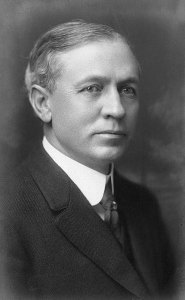
On September 15, 1868, future Little Rock Mayor Charles E. Taylor was born in Austin, Mississippi.  After locating to eastern Arkansas, his family moved to Little Rock around 1880.

Taylor graduated from Scott Street High School in Little Rock and proceeded to work for various hardware stores and other businesses.  In 1895 he married Belle Blackwood, with whom he would have four children.

In 1910, Taylor announced his intention to run for mayor of Little Rock.  Though he had never held elective office, he had been involved in several civic organizations.  Taylor was the main challenger to Alderman John Tuohey.  Seen as a reformer, Taylor initially lost to Tuohey.  But after an investigation of voter fraud and a subsequent runoff, Taylor was elected Mayor.

Upon taking office in August 1911, Mayor Taylor focused on improving health conditions in the city, upgrading the fire department and enhancing the overall moral tone of the city.

As a progressive of the era, he fought against gambling, drinking and prostitution.  He created a Health Department and enhanced the City Hospital.  His efforts led to a decrease in the death rate in Little Rock.  As mayor, Taylor introduced motorized vehicles to the Fire Department.  He also led the City Council to establish building and electrical codes.  Mayor Taylor also oversaw the construction of the 1913 Beaux Arts Central Fire Stations (which today serves as the City Hall West Wing).

Under his leadership, the City of Little Rock annexed Pulaski Heights. One of the selling points to Pulaski Heights residents was Mayor Taylor’s ability to provide modern services such as paved streets, water mains, fire hydrants and street lights.

Though neither his 1911 Parks Master Plan nor his dreams for a civic auditorium came to fruition, they paved the way for future successes in both of those areas.

Funding for projects continued to be a problem throughout Mayor Taylor’s four terms in office.  He believed that one obstacle to city funding was the prohibition by the state constitution against cities issuing bonds.  Though that ban has since been lifted, Taylor tried three times unsuccessfully to get it changed while he was Mayor.

In April 1919, Taylor left office after having served eight years.  He was the longest serving Mayor of Little Rock until Jim Dailey served in the 1990s and 2000s.  Following several business ventures, Taylor moved to Pine Bluff and led their chamber of commerce from 1923 through 1930.

Mayor Charles E. Taylor died in Pine Bluff in 1932. He was buried at Oakland Cemetery in Little Rock.

During his time in office, Mayor Taylor was presented with an unofficial flag of Little Rock by a group of citizens.  During Mayor Dailey’s tenure, that flag was restored by some private citizens and presented to the City.  It is framed on the 2nd Floor of Little Rock City Hall.