Little Rock Look Back: Election Day 1966

The Britts, Rockefellers and Hammerschmidts

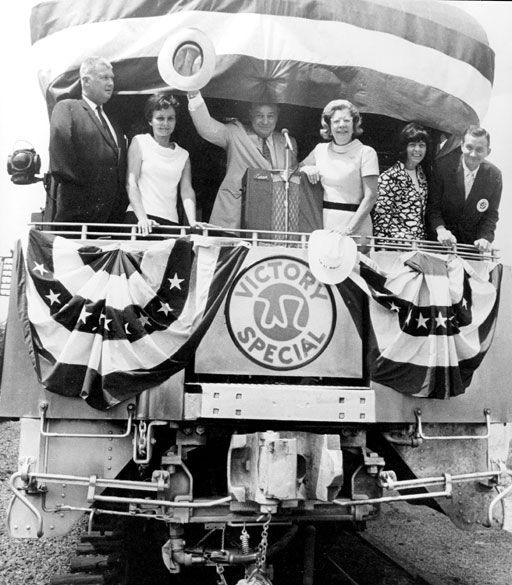
Fifty years ago today was Election Day 1966. It was a seismic election for Arkansas. Winthrop Rockefeller was chosen as Arkansas’ 37th Governor, defeating Jim Johnson. (An earlier version of this incorrectly listed Jim’s wife, Virginia.  She would run for the Democratic primary in 1968, losing to Marion Crank.) In addition, Maurice “Footsie” Britt was elected Lieutenant Governor, Joe Purcell was chosen as Attorney General, and John Paul Hammerschmidt & David Pryor were both new faces in the Arkansas congressional delegation.

Rockefeller, Britt, and Hammerschmidt made waves as the first Republicans to hold those offices since Reconstruction.  But perhaps more importantly, when joined by Pryor and Purcell, the five represented a new face and outlook on Arkansas politics. They were progressive and centrist. They saw a different role for government in social and moral questions.

This election set the stage for Arkansas of the 1970s and 1980s. It was a repudiation of the overtly racist Faubus-era political old guard.  It was certainly not the end, however. In the 1968, 1970 and 1972 elections, Faubus and his cronies would try to reassert themselves in statewide races and would continue to see allies win local races.

But it would be the 1966 election which marked a turning point in Arkansas politics.
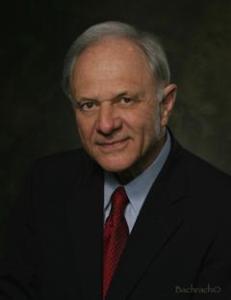
Senator David Pryor in conversation with Skip Rutherford at today’s Legacies & Lunch

CALS PryorLegacies & Lunch: Senator David Pryor
Senator David Pryor, founding dean of the University of Arkansas Clinton School of Public Service, will be interviewed by Skip Rutherford, current dean of the Clinton School. Topics will include Pryor’s interest in history including his founding of the Pryor Center at the University of Arkansas, his life in politics, and his work at the Kennedy School’s Institute of Politics at Harvard and at the Clinton School.  Senator Pryor will also discuss his late colleague Senator Dale Bumpers.

The conversation will take place today, January 6, at 12 noon at the CALS Ron Robinson Theater.

Pryor is the only person in Arkansas political history to have served in the Arkansas State Legislature, the United States House of Representatives, as governor of Arkansas, and in the U.S. Senate.
As a student at the University of Arkansas, Rutherford supported Pryor in his 1972 U.S. Senate campaign against Senator John McClellan. When Pryor was elected to the U.S. Senate in 1978, Rutherford joined his staff and served there for almost six years. When Pryor stepped down as dean of the Clinton School in 2006, Rutherford succeeded him.
Legacies & Lunch is free, open to the public, and sponsored in part by the Arkansas Humanities Council. Bring a sack lunch; drinks and dessert are provided.
They are expecting a large turnout for Legacies & Lunch . Parking at the CALS Main Library campus, where the Ron Robinson Theater is located, is very limited. Please plan to arrive early to allow ample time for parking and walking to the theater. Attendees may park for $2/hour per vehicle at the River Market Parking Deck, 500 East 2nd Street, which is operated by the City of Little Rock. This is the closest paid parking option. Attendees may also park for free at the Clinton School of Public Service and walk to the theater (approx. 0.5 mile, 10-15 min. walking distance).

2015 In Memoriam – Parker Westbrook

1515 WestbrookParker Westbrook WAS Mr. Preservation for Arkansas. But even though he is gone, it does not mean that preservation efforts in Arkansas are dormant.  Quite the contrary.  Like any good teacher, Parker used his knowledge to inspire others to share his interest in preservation.

It is no surprise that the organization he helped found, the Historic Preservation Alliance of Arkansas (now called Preserve Arkansas), names its lifetime achievement award after him.  He was not only the founding President of Preserve Arkansas, he was active in it until his final days.  It was not his only founding: he was a founder of Pioneer Washington Foundation (the oldest historic preservation organization in the state), the Main Street Arkansas Advisory Board, Historic Arkansas Museum Commission, the Arkansas State Capitol Association, and the Arkansas State Review Board for Historic Preservation. He served on the latter board from 1975 until his death this year, with the exception of five years from 2002 to 2007.  In recognition of his work in the field of heritage tourism, he was a 2007 inductee into the Arkansas Department of Parks and Tourism’s Hall of Fame.

His work was not limited by the boundaries of his home state.  He was an Advisor Emeritus to the National Trust for Historic Preservation and a 2001 recipient of a Preservation Honor Award from the Trust. Rep. Mike Ross declared him a “National Treasure” in the Congressional Record. He also served for two terms on the President’s Advisory Council on Historic Preservation and was named Chairman of the Committee on National Historic Landmarks on the National Park System Advisory Board.

A public servant, he worked for several federal officials from Arkansas, most notably Senator J. William Fulbright. He returned to Arkansas to work for Governor David Pryor.  But whether he worked in Washington DC; Little Rock; or his beloved hometown of Nashville, he was always interested in ensuring the past came alive. It might be through historic preservation, or it might be recounting a colorful moment of Arkansas history. Either way, Parker was a proponent of living history. He did not want it to be relegated to a musty, dusty book or building.
In 2007, he donated papers collected by his late sister Lucille and himself. The Lucille and Parker Westbrook Arkansas and Genealogy Collection is housed in the $20 million Arkansas Studies Institute, a joint project of the Central Arkansas Library System (CALS) and the University of Arkansas at Little Rock.  This collection has three parts: the first part focuses on Southwest Arkansas and contains genealogical sources and 3,000 historic photographs; the second highlights his public service and political career including much about the state’s architectural history; the third part consists of family papers, letters and photographs which document the Westbrooks’ deep roots in Arkansas.
He was the epitome of the Southern gentleman.  Not only did he look the part, he acted it. He was gracious in sharing credit with others; generous with his time, labor and talent; and did his best to keep up the lost art of writing letters and notes.

Heritage Month – Choctaw Station

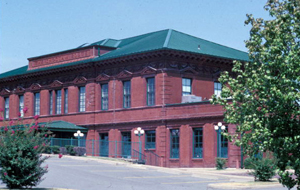
Choctaw StationForty years ago today, on May 6, 1975, Little Rock’s Choctaw Route Station was added to the National Register of Historic Places.

This turn-of-the-century railroad depot is one of the finest examples of railroad, architecture in Arkansas.  This red brick with terra cotta elements building is a two story rectangular structure with one story wings projecting from both the north and south elevations.  A long one story porch covers the passenger loading area along the entire east elevation, with a smaller porch over the entry on the west elevation.

The Choctaw Route Station was built between 1899 and 1901 (records vary) by the Choctaw, Oklahoma and Gulf Railroad.  This railroad amalgamated with many small lines in Oklahoma and extended into Arkansas in the early 1890’s.  Used as a passenger station, the Little Rock terminal building housed two waiting rooms, a baggage room, restaurant and dining room.

When the Choctaw, Oklahoma and Gulf Railroad was sold in 1902, the Choctaw Route Station became the property of the Rock Island Railroad.  Until the mid 1950’s it continued to serve as a passenger station for the Rock Island.  It later served as a warehouse, restaurant and nightclub.

Since 2004, it has been the home to the Clinton School for Public Service as well as Clinton Foundation offices.  Restoration was underwritten by the Roy and Christine Sturgis Foundation. In recognition of this, it is now known as Sturgis Hall.  Former Clinton School Dean David Pryor referred to it as “the little red school house.”

On Earth Day (April 22, 2015), it was announced that Sturgis Hall had received Gold LEED certification from the US Green Building Council.  In August 2009, the Clinton School received a stimulus grant from Governor Mike Beebe to implement sustainable and maintenance practices for reducing the environmental impact of the building. Utility bills costs have already been lowered by $38,000 annually and water usage has been significantly curtailed.

This designation made it the oldest building in Arkansas to be LEED certified and one of the oldest university buildings in the world.  The LEED certification had been a goal of Clinton School Dean Skip Rutherford and Clinton Foundation Executive Director Stephanie Streett.

Starting the Clinton School – A Look Back at Its First Decade

Clinton-School-of-Public-Service-LogoTo commemorate the tenth anniversary of the Clinton School’s inception, the Clinton School for Public Service will host a panel discussion on the founding of the school.

The first school in the nation to offer a Master of Public Service (MPS) degree, the University of Arkansas Clinton School of Public Service gives students the knowledge and experience to further their careers in the areas of nonprofit, governmental, volunteer or private sector service.  This panel discussion will take a look at the impact of Clinton School students public service projects, ranging from local work in Arkansas communities, to international projects on all of the world’s six inhabited continents.

The panel members include the founding Dean and former U.S. Senator David Pryor, Clinton School staff member Dianne Kelly, founding Associate Dean Dr. Tom Bruce, and Pat Torvestad, who led much of the school’s early planning effort for the University of Arkansas System.

The panel will take a look at the early planning efforts of the school, which opened in 2004.

The program will take place at noon today at Sturgis Hall, which Dean Pryor would lovingly call the “little red school house.”

Sen. David Pryor speaks, Mayor Stodola an honoree at Quapaw Quarter annual meeting tonight

QQAThe Quapaw Quarter Association will host its annual membership meeting on Wednesday, October 2 in the Ottenheimer Theater at Historic Arkansas Museum.  The evening will begin with a 5:30 p.m. reception in the atrium, the membership meeting will begin at 6:00 p.m.  Nonmembers of the organization are invited to join at the door.

Board members standing for re-election this year are:
Chuck Cliett
John Herzog
Gabe Holmstrom
Cheri Nichols
Shana Woodard

Following a short business meeting, the Greater Little Rock Preservation Awards will be presented to projects in SoMa, the Governor’s Mansion Historic District, MacArthur Park Historic District and Main Street Commercial Historic District.  Anthony Black will receive the Peg Smith Award for his many years of exemplary volunteer work on QQA projects and programs.  Mayor Mark Stodola will receive the Jimmy Strawn Award.  Since 1980, the QQA has presented its most prestigious award to “someone whose efforts on behalf of the preservation of Greater Little Rock’s architectural heritage are an inspiration to the entire community.”

Senator David Pryor will join the QQA as guest speaker to close out the evening.

The Quapaw Quarter Association’s mission is to promote the preservation of Little Rock’s architectural heritage through advocacy, marketing and education.

Incorporated in 1968, the QQA grew out of an effort to identify and protect significant historic structures in Little Rock during the urban renewal projects of the early 1960s. Throughout its existence, the QQA has been a driving force behind historic preservation in Greater Little Rock.

Rhea Roberts serves as the executive director.

Dr. Cal Ledbetter Collection opens at UALR Center for Arkansas History and Culture

The UALR Center for Arkansas History and Culture revealed its newest collection, donated by educator, scholar, and legislator Calvin R. Ledbetter Jr., at a reception held at the Arkansas Studies Institute Tuesday evening, April 30.

Calvin R. Ledbetter Jr.The 12-linear-foot collection covers Ledbetter’s life between 1964 and 1988. The papers document Ledbetter’s political career including the state’s legislative sessions from 1967 to 1977. A portion of the papers references his academic career at the University of Arkansas at Little Rock.

Ledbetter, 84, led an accomplished political and educational career.

In addition to the collection housed at ASI, there is an online exhibit at ualrexhibits.org/ledbetter. The digitized collection includes photographs, video clips, and a selected bibliography on articles and books written by Ledbetter.

In 1960, Ledbetter joined the faculty at Little Rock University, now the University of Arkansas at Little Rock. He has served as chair of the Department of Political Science and dean of the College of Liberal Arts, now the College of Arts, Humanities, and Social Sciences. After retiring in 1997, Ledbetter was named professor emeritus of political science.

The gift of Dr. Ledbetter is not just his collection, ever the visionary, he has an eye on the future. In addition to donating his papers for research, Ledbetter has established the Cal Ledbetter Arkansas Legislative Institute Endowment to promote a better understanding of Arkansas through the scholarly study of legislators and legislative process.

Ledbetter served for five terms in the Arkansas House of Representatives between 1967 and 1977. In the course of his political career, he served three Arkansas’ governors, Winthrop Rockefeller, Dale Bumpers, and David Pryor. CAHC holds the collections of both Rockefeller and Bumpers.

The UALR Center for Arkansas History and Culture is housed in the Arkansas Studies Institute, a partnership between UALR and the Central Arkansas Library System. For more information, go to ualr.edu/cahc.

In recognition of his contributions, the Arkansas House of Representatives passed HR1045 this session. It was sponsored by Rep. Ann V. Clemmer, a member of the UALR Political Science faculty.