Little Rock Look Back: Ben Piazza – actor, author, Little Rock native

BDP LRHS

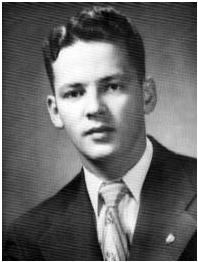
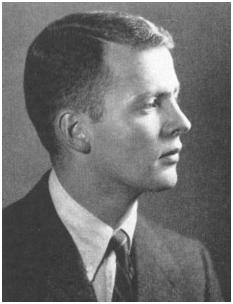
Actor-director-playwright-author Ben Piazza was born on July 30, 1933, in Little Rock.  Piazza graduated from Little Rock High School in 1951 as valedictorian. He also had starred in the senior play that year (The Man Who Came to Dinner) and edited the literary magazine.

Keeping the Tiger as his mascot, Piazza attended college at Princeton University.  While there he continued acting, including an appearance in a Theatre Intime production of Othello.  Following his 1955 graduation, he moved to New York City and studied at the Actor’s Studio.
BDP PU

Piazza was an understudy in the 1956 play, Too Late the Phalarope at the Belasco Theatre.  In February 1958, he starred in Winesburg, Ohio sharing the National (now Nederlander) Theatre stage with James Whitmore, Dorothy McGuire, and Leon Ames. Other cast members included Claudia McNeil (who originated the part of Lena in A Raisin in the Sun) and Sandra Church (who originated the part of Gypsy Rose Lee in Gypsy).

In April 1959, Piazza starred in Kataki at the Ambassador Theatre. This two actor play also featured Sessue Hayakawa, who played a Japanese soldier who spoke only his native language.  Therefore, Piazza’s part was largely a very lengthy monologue.  For his performance, Piazza received one of the 1959 Theatre World Awards.

As the 1960s dawned, Piazza joined a small cadre of actors who had achieved status on Broadway who then also returned to acting Off Broadway.  Colleen Dewhurst, George C. Scott, and James Earl Jones were others in this select group who helped establish Off Broadway as an entity in itself, instead of being just a farm team for Broadway.

Piazza started the 1960s on Broadway starring at the Eugene O’Neill Theatre in A Second String with Shirley Booth, Jean-Pierre Aumont, Nina Foch, Cathleen Nesbitt, and Carrie Nye.   Following that, he started his association with Edward Albee by appearing as the title character in The American Dream.  That play opened at the York Playhouse in January 1961.  Later that year, he appeared in Albee’s The Zoo Story opposite original cast member William Daniels at the East End Theatre.

piazza

Also in 1961 Piazza starred in several plays during a South American tour sponsored by the American Repertory Company.  He played Christopher Isherwood in I Am a Cameraand Chance Wayne in Sweet Bird of Youth.  In 1962, he starred in a series of plays at the Cherry Lane Theatre.  Piazza returned to Broadway to star along with Jane Fonda and Dyan Cannon in The Fun Couple at the Lyceum Theatre. This play had a troubled rehearsal period, which was documented in a short film about Jane Fonda.

Ben Piazza stayed on Broadway and returned to Albee in February 1963.  He took over the role of Nick in the original run of Who’s Afraid of Virginia Woolf? when original actor George Grizzard left to play Hamlet at the Guthrie Theatre.  (He had participated in earlier readings of the play prior to it being mounted on Broadway.)

This play was at the Billy Rose Theatre, which marked a return for Piazza. He had acted at this theatre when it was the National while appearing in Winesburg. Piazza played Nick for the remainder of the run and acted with Uta Hagen, Arthur Hill, fellow Arkansan Melinda Dillon, Eileen Fulton, Nancy Kelly, Mercedes McCambridge, Rochelle Oliver and Sheppard Strudwick.
Exact and Very Strange cover

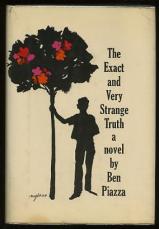
During the run of this show, Piazza’s novel The Exact and Very Strange Truth was published.  It is a fictionalized account of his growing up in Little Rock during the 1930s and 1940s.  The book is filled with references to Centennial Elementary, Westside Junior High, Central High School, Immanuel Baptist Church and various stores and shops in Little Rock during that era.  The Piazza Shoe Store, located on Main Street, was called Gallanti’s.

Following Virginia Woolf, he starred in The Zoo Story at the Cherry Lane Theatre in 1965.  In August of 1967, his play The Sunday Agreement premiered at LaMaMa.  This was Piazza’s first playwright output to be professionally staged.

As Sunday Agreement was opening, Piazza was in rehearsal for his next Broadway opening. He appeared with Alfred Drake in The Song of the Grasshopper in September 1967.  In 1968, he returned to Albee and starred in The Death of Bessie Smith and The Zoo Story in repertory on Broadway at the Billy Rose Theatre.

Later that season, in March 1969, a double bill of his one-acts: Lime Green/Khaki Blue opened at the Provincetown Playhouse.  It was directed by future Tony nominee Peter Masterson and starred Louise Lasser, Robert Walden (who starred in the 2013 production of Death of a Salesman at Arkansas Repertory Theatre), Clinton Allmon and Dolores Dorn-Heft, to whom Piazza was married at the time.

Throughout the 1960s and early 1970s, Piazza toured in many plays nationally and internationally. He also appeared in major regional theatres as an actor and a director.  During this time period he was in productions of Bus Stop, Who’s Afraid of Virginia Woolf?, You Know I Can’t Hear You when the Water’s Running  and Savages.  In 1970, he starred as Stanley Kowalski in a production of A Streetcar Named Desire in New Orleans.  As the 1970s progressed, he turned his focus to television and movies.
BDP early

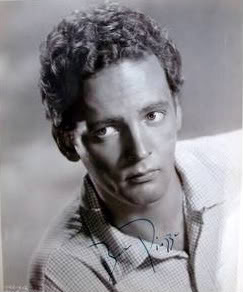
Piazza’s film debut was in a 1959 Canadian film called The Dangerous Age. That same year, his Hollywood film debut came opposite Gary Cooper, Karl Malden, Maria Schell and George C. Scott in The Hanging Tree.  Though he received positive reviews for his performances, Piazza chose to return to New York and perform in stage and TV productions.

Throughout the 1950s and 1960s, he appeared in a number of TV shows including Studio One, Kraft Theatre, Zane Grey Theatre, The Naked City and Dick Powell Theatre.  He had a recurring role during one season of Ben Casey and appeared on the soap opera Love of Life.

In the 1970s, he starred in the films Tell Me That You Love Me, Junie Moon; The Candy Snatchers and I Never Promised You a Rose Garden.  He also starred as the City Councilman who recruits Walter Matthau to coach a baseball team inThe Bad News Bears.

Among his numerous TV appearances in the 1970s were The Waltons, Mannix, Switch, Barnaby Jones, Gunsmoke, Mod Squad and Lou Grant (where he was reunited with Walden).

BDP final

In the 1980s, he appeared in The Blues Brothers, The Rockford Files, Barney Miller, Hart to Hart, Family Ties, The Winds of War, Dallas, Dynasty, Too Close for Comfort, The A Team, Saint Elsewhere, Santa Barbara, The Facts of Life, Mr. Belvedere, Moonlighting and Matlock.

Piazza’s final big screen appearance was in the 1991 film Guilty by Suspicion.  He played studio head Darryl Zanuck in this Robert DeNiro-Annette Bening tale of Hollywood during the Red scare.

Ben Piazza died on September 7, 1991.
Little Rock Look Back: Mrs. Ruth May Wassell Gibb

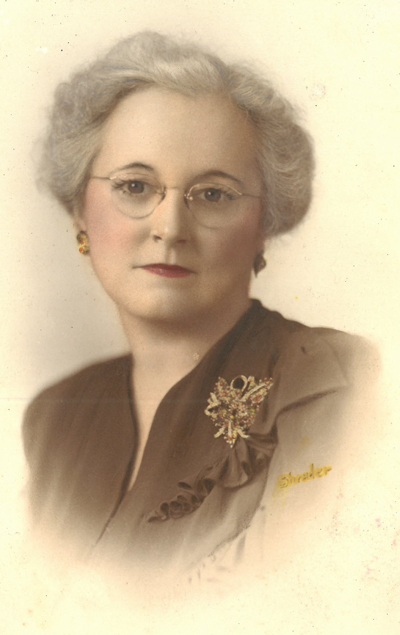
Ruth-May-Wassell-GibbOn August 27, 1944, Ruth May Wassell shattered a bottle on the hull of a new ship and christened it the U.S.S. Little Rock.  Mrs. Wassell, whose husband was Little Rock alderman Sam Wassell, had been designated as the official sponsor for the City of Little Rock by Mayor Charles Moyer.

Details are vague as to why Mayor Moyer designated Mrs. Wassell for the honor.  Her husband was a first cousin of World War II hero Dr. Corydon Wassell, which might have had something to do with it.

Ruth May Wassell was more than the wife of a local political leader.  The daughter of Dr. and Mrs. Wiley Singleton May, she moved from Gurdon to Little Rock with her family and graduated from Little Rock High School. She later graduated from Henderson-Brown College and received a law degree from the University of Arkansas.  In 1932, she was admitted to the Arkansas Bar and later was admitted to practice before the Arkansas Supreme Court, one of the first women to receive this designation.

Mrs. Wassell was active in business, serving as president of the Arkansas Lumber Company  and owner of a citrus farm in Texas.  She was also active in civic affairs through involvement with the Arkansas Democratic Women, Boys Club and Second Presbyterian Church.  From 1947 until 1951 she was First Lady of Little Rock when Sam Wassell was elected as Mayor.

Following the December 1954 death of Mayor Wassell, she subsequently married E. W. “Bud” Gibb.  She died in 1964.

Local Live tonight features QNote at South on Main at 7:30pm

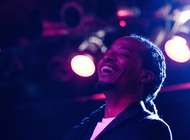
llsom qnoteTonight at 7:30pm, join the Oxford American magazine for this week’s Local Live concert at South on Main, featuring QNote!

As always, Local Live is free and open to the public. To guarantee a table/seat for this popular series, call ahead at (501) 244-9660. Local Live is made possible by the generous sponsorship of the Ben and Jane Hunt Meade.

Quincy “QNote” Watson is a Little Rock native with global awareness. He combines his Southern background and his many travels into songwriting, rapping, producing, engineering, and playing various musical instruments. He’s played nationally as well as locally, including at his Alma Mater Philander Smith College.

In addition to his technical aptitude for music, he is also a performer, a part of the rap duo Griff and QNote. Several of the songs from Soul South Age were performed on the historic steps of Little Rock Central High School to honor the Little Rock Nine and their sacrifices for social justice. He is also a member of TP and the Feel, fusing the genres of Jazz, Contemporary, Hip Hop, and R&B. As a solo artist and producer, QNote remains in that vein, using his craft for a purpose, employing music as a healing agent for truth and justice.

Tony Awards Week – Will Trice

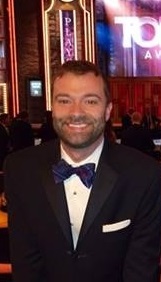
Trice at the 2014 Tony Awards

Trice at the 2014 Tony Awards

Though he has been referenced in every Tony Awards Week story this week, today’s entry is devoted to three time Tony winning producer Will Trice.

It is fitting he is a young, Tony winning Broadway producer.  When his mother, Little Rock actress and teacher Judy Trice, was pregnant with him, she was directing the Hall High production of The Pajama Game.  The original Broadway production of that title was produced by another young, Tony winner – Hal Prince.

Will Trice literally grew up on stage and backstage. In addition to his mother, his late father Bill Trice and his sister Kathryn Pryor have graced every conceivable stage in Central Arkansas.  Will, himself, has been an actor and entertainer.  Most recently, he and Kathryn performed their cabaret act for patrons at the Arkansas Arts Center’s Tabriz earlier this year.

Trice’s Tony Awards came for the 2014 Best Play All the Way, 2013 Best Play Revival Who’s Afraid of Virginia Woolf? and the 2012 Best Musical Revival Porgy and Bess.  He also received a nomination for 2012 Best Play Revival for The Best Man.  At the 2014 Tonys, of the 26 awards presented, seven went to shows produced by Trice and his producing partner Jeffrey Richards.

This year Trice is nominated for producing Best Play nominee: Wolf Hall Parts One and Two and Best Play Revival nominee: You Can’t Take It with You.  Between those two productions and a revival of The Heidi Chronicles, Trice-produced projects earned fourteen Tony nominations this season.

Not ones to rest on their laurels, Richards and Trice have already announced revivals of Fiddler on the Roof and Sylvia for the 2015-2016 season.

It was fitting that Trice, a 1997 graduate of Central High, was a producer of the Tony-winning 50th anniversary revival of Who’s Afraid of Virginia Woolf? in 2012/2013.  Ben Piazza, a 1951 graduate of then-Little Rock High School, was involved in the development of the play in 1962 and performed in the original Broadway production over 500 performances.

Legacies & Lunch Commemorates Roosevelt Thompson

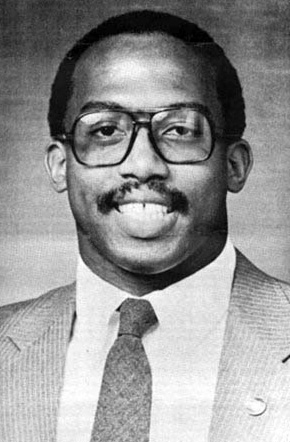
roosevelt_thompson_fRoosevelt Thompson was a gifted young man who had a bright future in public service before his death in an automobile accident in 1984. In honor of the 35th anniversary of Thompson’s graduation from Little Rock Central High School, the Butler Center, a department of the Central Arkansas Library System (CALS), will present a special Legacies & Lunch program, co-hosted by the Clinton School of Public Service, on Wednesday, June 3, from noon-1 p.m. at the CALS Ron Robinson Theater, 100 River Market Ave.

At Central High School, Thompson was student body president, an All-Star football player, and a National Merit Scholar. Thompson went on to attend Yale University, which has established a prestigious prize in his honor. While at Yale, he was selected as a Rhodes Scholar.

At this special Legacies & Lunch program, co-hosted by the Clinton School of Public Service, historic video footage featuring Thompson, Bill and Hillary Clinton, and others, will be shown. A panel, including Elaine Dumas, one of his teachers and mentors; Lee Thompson, his brother; and Beth Felton, his classmate at Central and a staff member at the CALS Roosevelt Thompson Branch Library, will discuss how his memory lives on today. Following this discussion, attendees may share memories and ask questions. After the program, all are invited to send their thoughts to RememberingRosey@cals.org.

Legacies & Lunch is free, open to the public, and sponsored in part by the Arkansas Humanities Council. Attendees are invited to bring a sack lunch; drinks and dessert are provided. For more information, call 501-918-3033.

Heritage Month – Paul Laurence Dunbar High School

dunbarNow known as Dunbar Middle School, this building originally house students from junior high to junior college.  For years the Paul Laurence Dunbar High School was known throughout Arkansas and the south as an outstanding school for African American students.

From 1929 until 1955, Dunbar High School provided a high-quality education for African American students, not only within Little Rock but also from far-reaching corners of the state.   Today the National Dunbar Alumni Association is a well-organized network of former students with active chapters throughout the United States. 

The school is located in a residential area south of downtown Little Rock. George H. Wittenburg and Lawson L. Delony designed the edifice, built on a southeast-northwest axis. Both architects contributed to the design of Little Rock Central High School (1927; listed on the National Register in 1977), which is nine blocks west of Dunbar.

Dunbar was designed to accommodate an academic curriculum as well as the more traditional vocational programs often considered the limit of education for blacks. In 1980, Dunbar Junior and Senior High School and Junior College was listed on the National Register.

The significance of Dunbar Junior High School derives both from the unique place it occupies in the history of education in Arkansas and from the modern architectural concepts with which it was designed. Dunbar was a center of quality education for black Arkansans in the state’s segregated public school system, functioning as a junior high school, high school, and junior college until its last high-school and junior-college classes graduated in 1955.

It had further distinction as one of only two industrial arts schools in the south to attain junior college rating, also in 1931-1932, as well as the recognition and acceptance of the Dunbar curriculum as the basis for admission to colleges and universities throughout the United States. In 1943 the school was involved in a controversy concerning equal pay for black and white teachers in the Little Rock School System, which was resolved in Morris v. Williams, 149 F. 2d 703, heard before the 8th U.S. Circuit Court of Appeals. This was a landmark case in establishing the principle of “equal pay based on professional qualifications and services rendered.”

The architects’ achievement in designing an architecturally eminent setting for this progressive passage in Arkansas history is also noteworthy. With an eye toward form following function, the plan of the building promotes maximum use of space and expedient circulation. Aesthetically, the building is decidedly modern, with decorative brick and stone work and striking towers reflecting an interest in the Art Deco style of the period.

Little Rock Look Back: Rabbi Ira Sanders

SandersIraE_fOn May 6, 1894, Ira Eugene Sanders was born in Missouri.  After receiving an undergraduate degree and rabbinate degree in Cincinnati, he was ordained a rabbi in 1919.  He served congregations in Pennyslvania and New York before coming to Little Rock in September 1926.

Shortly after arriving to lead the B’nai Israel congregation, Rabbi Sanders became active in the Little Rock community.  Among his projects were the Little Rock Community Fund, Little Rock School of Social Work (which he founded), Central Council of Social Agencies, and University of Arkansas Extension Department. During the Great Depression, he helped organize the Pulaski County Public Welfare Commission.  Other areas of involvement over his career included the Arkansas Human Betterment League, Urban League of Greater Little Rock and Arkansas Lighthouse for the Blind.  On November 3, 1930, Rabbi Sanders debated Clarence Darrow about the existence of God in front of a packed house at Little Rock High School.

For his many involvements, he received an honorary Doctor of Humanities degree in 1951 from the University of Arkansas.  Three years later he received an honorary Doctor of Divinity degree from Hebrew Union College’s Jewish Institute of Religion.

A lifelong supporter of a Jewish state, he participated in nineteen bond drives for the state of Israel.  In August 1963, he retired as the leader of B’nai Israel after over 35 years. He would remain as Rabbi Emeritus until his deal in 1985.

In January 1978, Rabbi Sanders tendered his resignation from the Central Arkansas Library board of directors.  The City Board of Directors passed resolution 5873 which noted that he had served for 51 years on the Library Board. He was first appointed in 1926.  He served during 19 different Mayoral administrations from Charles Moyer’s first term through Donald Mehlburger’s.

On April 8, 1985, Rabbi Ira Eugene Sanders died of natural causes.  He is buried in the City’s Oakland Jewish Cemetery.  The Central Arkansas Library System honors his memory with an annual distinguished lecture series.