Little Rock Look Back: Orval Eugene Faubus

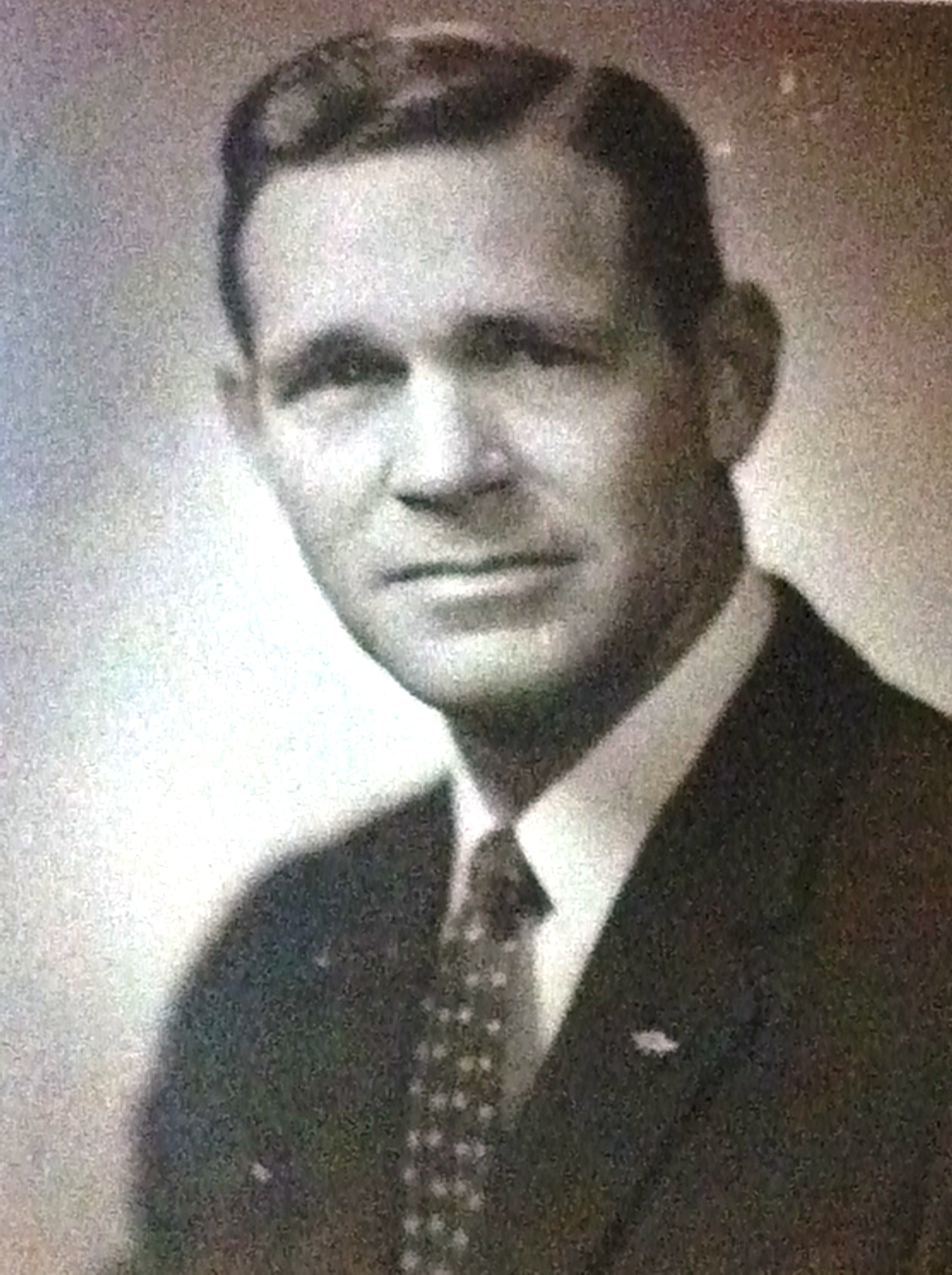
FaubusOrval_fOn January 7, 1910, one of the most controversial figures in Arkansas history was born: future Governor Orval Eugene Faubus.

Faubus is today remembered for his role fighting for the continued segregation of the Little Rock public schools.  Raised in a socialist family, his staunch embrace of segregation was a surprise to many who viewed him as more of a moderate on the issue.  At the time, and later, it was viewed as more of an opportunistic move to head off a political challenge from segregationists such as Jim Johnson.  However, throughout the rest of his lifetime, as others such as George Wallace would recant and repent, Faubus continued to maintain he was “merely” upholding the law of the land (the Supreme Court striking down the law a few years earlier, notwithstanding).

Interestingly, Faubus was also known for hiring African Americans in state government for more than menial tasks. He worked to increase funding to historically black colleges and universities in Arkansas. He fought to abolish the predatory poll tax.

His segregation efforts curtailed Arkansas’ business recruitment for a few years in the late 50s and early 60s.  But a few years earlier, in 1955 Faubus had created the Arkansas Industrial Development Commission and appointed Winthrop Rockefeller to lead it.  He also increased teacher pay, overhauled the State Hospital, created the Arkansas Children’s Colony, expanded state parks, and stopped the Army Corps of Engineers from damming the Buffalo River.

In late 1965, by executive order, he created the Arkansas Arts and Humanities Council and funded it with his discretionary funds until the legislature would appropriate money in 1967. He also oversaw the creation of the state’s historic preservation program.

Certainly his efforts to flout federal law have tarnished his image. Looking at his accomplishments in the areas of industry, education reform and culture – one wonders what he could have accomplished if he had exerted even more efforts in those areas instead of fighting Eisenhower.  It is all moot, because he did not.  And the reality is that, yes had he supported Eisenhower, he might well have lost in 1958 to someone like Jim Johnson who would have continued fighting for segregation even more vehemently and would have been unlikely to champion these other issues.

Little Rock Look Back: School Children Sing Christmas Carols at Robinson Auditorium

Christmas Carols

Photo from Arkansas Gazette

Right now, music is silenced at Robinson Center.  During the renovation, violins and tubas have been replaced by saws and heavy equipment.

Similarly, 75 years ago, the halls of that building were alive with only the sounds of construction.  But out front, on December 18, 1939, the sounds of Christmas carols filled the air.

That afternoon, 500 school children from elementary schools were joined by the A Capella Choir of Little Rock High School as they sang Christmas carols on the front steps of the auditorium on a weekday afternoon.  The singers were accompanied by the Little Rock High School Brass Sextet.  The invocation for the event, which was sponsored by the Little Rock Council of Parents and Teachers, was delivered by the Right Reverend Richard Bland Mitchell, the Episcopal Bishop of Arkansas.

A Christmas tree in front of City Hall was lit up as part of the ceremony as well.  Media coverage noted that the audience witnessing the program stood on the front steps of the Pulaski County Courthouse, the side lawn of City Hall and in front of the steps of Robinson Auditorium.  It was also noted that most windows in the nearby government buildings were filled with people watching the ceremony.

Little Rock Look Back: Woodrow Mann, LR’s 53rd Mayor

IMG_3231Future Little Rock Mayor Woodrow Wilson Mann was born on November 13, 1916, in Little Rock.

In 1955, he ran as the Democratic nominee for Mayor of Little Rock and defeated two term incumbent Pratt C. Remmel, a Republican.  He took office in January 1956 and immediately set about to make a lot of changes.  In addition to revitalizing the City’s bus system, and removing some color barriers at City Hall, he oversaw the dismantling of the copper dome on top of Little Rock City Hall (as opposed to the repair of the dome championed by Mayor Remmel).

Mayor Mann was caught up in a grand jury investigation into purchasing practices at City Hall as well as within the City government in North Little Rock.  Partially in response to this, Little Rock voters approved a new form of government in late 1956.  Mayor Mann opposed the switch to the City Manager form and refused to set the election for the new officials but was ultimately compelled to do so.

He was also Mayor during the 1957 integration of Little Rock Central High School.  He sought to keep the peace and to broker a deal between President Dwight Eisenhower and Governor Orval Faubus.  His powers within the city were, no doubt, hampered because of his lame duck status as Mayor.  In November 1957 following the election of the new City Board of Directors, he chaired his last City Council meeting and left office.

In January of 1958, a series of articles written by Mayor Mann detailed his perspective on the events at Central High. These were carried by newspapers throughout the US.

Because of ill will toward him due to the Central High crisis and grand jury investigation, Mayor Mann felt it would be difficult to maintain his insurance business in Little Rock. He moved to Texas in 1959 and remained there the rest of his life.  He died in Houston on August 6, 2002.

“Racial Redistricting in Little Rock, Arkansas” is the focus of tonight’s UALR Evenings with History

Slum-AreaswebTonight Dr. John Kirk and Dr. Jess Porter discuss racial separation in Little Rock’s history as part of the 2014-2015 UALR Evening’s with History series.

This year marks the 24th year for the History Institutes’ Evenings with History.  This nationally recognized series has featured a variety of subjects.  The sessions take place at the Ottenheimer Auditorium of Historic Arkansas Museum. Refreshments are served at 7 with the program beginning at 7:30 pm. The cost is $50 for admission to all six programs.

The contemporary urban landscape of Little Rock evokes questions of racial separation because of the persistently high rates of ethnic separation in housing and a public-private race cleavage in the local schools. How can these patterns be explained? Has it always been this way? Is the 1957 desegregation crisis at Central High School a reason for the persistent patterns of geographic separation between African Americans and whites within the city?

In fact, the story of ethnic separation in Little Rock begins prior to the Central High Crisis. This talk begins with an examination of spatial patterns of racial segregation in the first half of the 20th century. It then discusses these patterns as they evolved in Little Rock and shows, in particular, the role of urban renewal in the mid-century decades in producing the separation of races that came into existence.

John A. Kirk joined the department as Chair and Donaghey Professor of History in 2010. He was born in Rochdale, Lancashire, in the United Kingdom, and holds an undergraduate degree in American Studies from the University of Nottingham and a PhD in American History from the University of Newcastle upon Tyne. Dr. Kirk taught at the University of Wales, Lampeter (1994-99) and Royal Holloway, University of London (1999-2010) before coming to UALR.

Dr. Kirk’s research focuses on the history of the civil rights movement in the United States, the South, and Arkansas, and the history of post-New Deal southern politics, society and culture. He has published five books and written in a wide variety of journals, edited book collections, and popular history magazines including BBC History, History Today and Historically Speaking. He has won a number of awards for his research including the F. Hampton Roy Award (1993) from the Pulaski County Historical Association, and the Walter L. Brown Award (1994), the J. G. Ragsdale Book Award (2003), and the Lucille Westbrook Award (2005) from the Arkansas Historical Association.

Jess Porter came to UALR in 2009 and holds a PhD from Oklahoma State University where he was awarded with the Susan Shaull Medal for Excellence in Teaching Geography. Prior to UALR, Dr. Porter taught at Oklahoma State University, developed and implemented geospatial curriculum for rural schools, worked as an environmental analyst and mapping specialist in the oil and gas industry, and was employed by an adventure tourism company in Colorado.

Dr. Porter’s research interests include the American Dust Bowl, geospatial technology education, and urban geography. His research on the Dust Bowl was featured in an episode of The Weather Channel’s When Weather Changed History. He has published four, interactive textbooks in the Encounter Geography series.

Friday, Eldredge, & Clark and the Union Pacific Railroad help make these lectures possible. Other sponsors are the Ottenheimer Library, University of Arkansas at Little Rock; Historic Arkansas Museum, a museum of the Department of Arkansas Heritage; UALR Public Radio—KUAR-KLRE; UALR public television; and Grapevine Spirits.

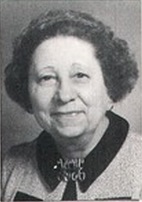
LR Cultural Touchstone: Marguerite Pearce Metcalf

MP MetcalfMarguerite Pearce Metcalf was the dean of speech and drama education in the state of Arkansas.  She taught speech and debate, first at Central, then Hall and later at Parkview from which she retired.  As a teacher and mentor, she influenced most of today’s speech, drama and debate teachers working in Arkansas today.  Though most of her colleagues and former student-teachers have now retired, the students they taught have taken Mrs. Metcalf’s influence to the third, fourth and fifth generations.

Mrs. Metcalf was nationally known for leading Little Rock and the nation in speech education and theatre.  She served as the national president of the speech organization during the 1967-68 school year.  The organization was scheduled to have their meeting in Memphis, TN but it was called off because of the assassination of Martin Luther King.  She also held many leadership roles in statewide and regional speech and education organizations.

Many of Little Rock’s political and business leaders were taught the proper ways to write and deliver speeches by Mrs. Metcalf. To start listing them all would be an exercise in futility.  It is, however, not uncommon to still hear her former students speak of her with a hushed, reverential tone.

She was also an expert in Parliamentary Procedure. As such, it is fitting that the Arkansas Student Congress award for outstanding use of Parliamentary Procedure (which includes not only knowledge about it, but also the grace and skill to be polite) is named in her honor.

LR Cultural Touchstone: Dr. Sybil Jordan Hampton

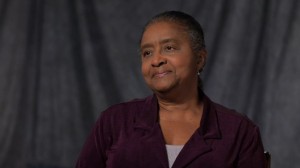
sybilDr. Sybil Jordan Hampton made history as the first African American student to attend each high school year at and graduate from Little Rock Central High School.  But her impact on history exceeds that and extends into classrooms throughout Arkansas.

After a career which took her from elementary classrooms to corporate boardrooms, Dr. Hampton returned to Little Rock in 1996 to become the Executive Director of the Winthrop Rockefeller Foundation.  In that capacity, she oversaw many opportunities to broaden the ways the arts and humanities were used in classrooms and outside of classrooms.  Dr. Hampton led the WRF until her retirement in 2006.  Through her vision and leadership, many tens of thousands of dollars of support went to cultural institutions and organizations during her decade at the helm.

Following the untimely death of the Arkansas Symphony Orchestra’s executive director, Dr. Hampton served as acting executive director of the ASO while a national search could be conducted.  She had long been a supporter of the ASO and other cultural institutions as a patron.

Currently serving on the State Ethics Commission and the LR CENT Committee, Dr. Hampton continues to be involved with Little Rock’s cultural life through her involvement in the Mount Holly Cemetery Association. She is a tireless advocate for this living museum of Little Rock’s past.

LR Cultural Touchstone: Jeane M. Hamilton

Photo taken for SOIREE

Photo taken for SOIREE

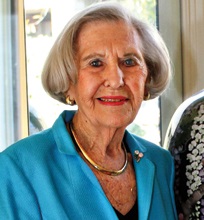
Jeane M. Hamilton is not a native Arkansan. But it was Little Rock and Arkansas’ good fortune that she married a Little Rock native and came here.

Arriving in Little Rock a young wife in 1952, she immediately set about to become involved in her new community as she and her husband James set up a household.  In the mid-1950s, the Junior League of Little Rock tapped her to chair the initiative to create a new art museum for Little Rock.  The two decades old Museum of Fine Arts was threadbare through years of neglect and unfocused programming and collecting.

Hamilton, along with Junior League President Carrie Remmel Dickinson and Vice President Martha McHaney, approached Winthrop Rockefeller (then a relatively new resident) to lead the fundraising effort for the new museum.  He agreed on a few conditions: one was that a base amount had to be raised in Little Rock first, and second that the museum would be for the entire State of Arkansas and not just Little Rock.

Hamilton and her colleagues set about to raise the funds. They raised $645,000 at the same time Little Rock’s business climate was stymied by the aftereffects of the Central High crisis.

Now a lifetime honorary member of the Arkansas Arts Center Board, Hamilton has spent much of her life working on Arkansas Arts Center projects since that visit in 1959.  She has served on the Board, chaired committees, chaired special events, served hot dogs, helped kids paint and danced the night away at countless fundraisers.  She was on the committee which hired Townsend Wolfe as executive director and chief curator.  Jeane has led art tours for the Arts Center to a number of countries over the years.

When she is not at the Arts Center, she is often seen at the Rep, the Symphony or any number of other cultural institutions.  While she enjoys seeing old friends at these events, she also loves to see a room full of strangers – because that means that new people have become engaged in the cultural life of Little Rock.