Little Rock Look Back: New City Hall approved in 1906

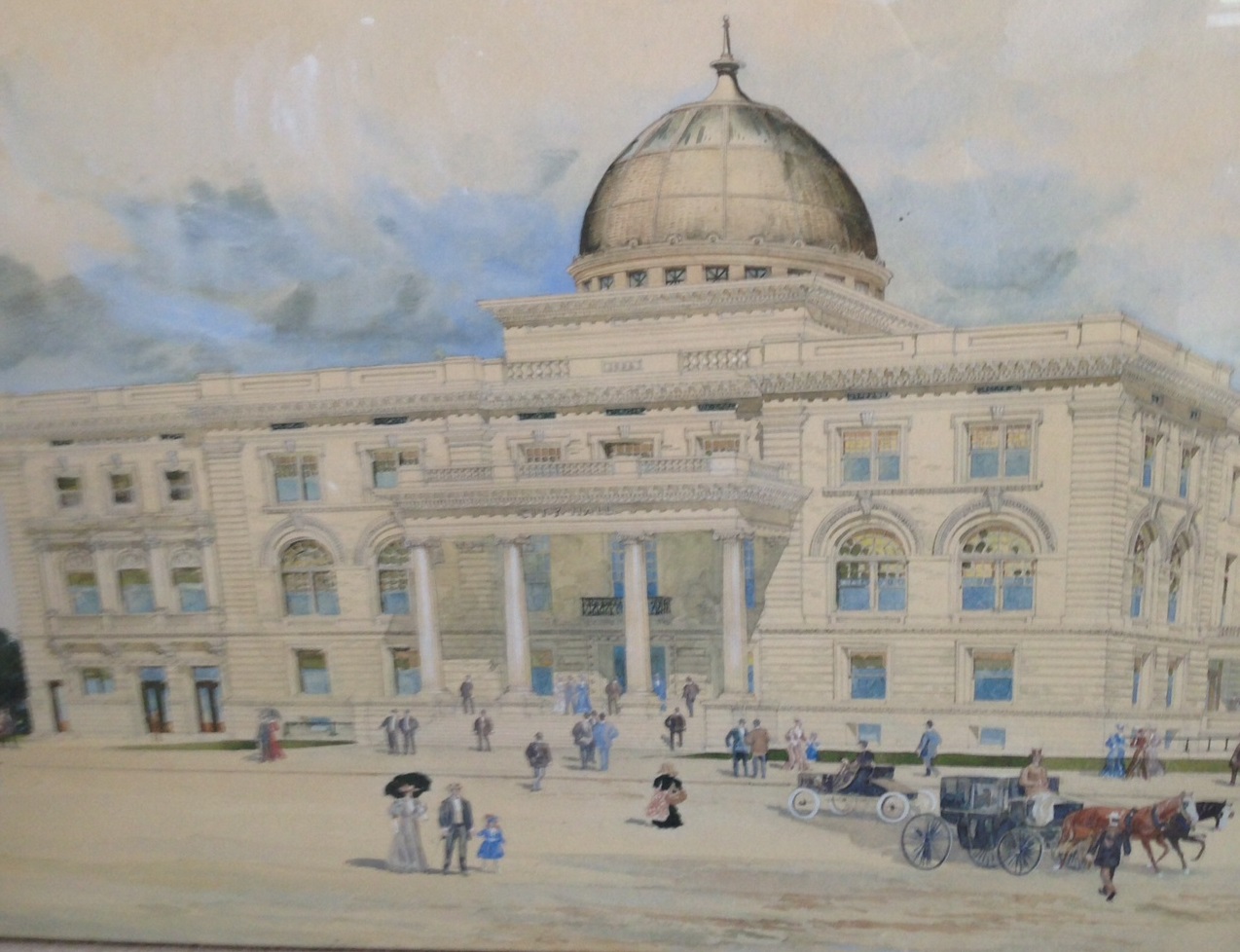
The 1906 plans for City Hall with the Municipal Auditorium on the left portion.

The 1906 plans for City Hall with the Municipal Auditorium on the left portion.

On July 9, 1906, the Little Rock City Council approved Resolution 281 and Ordinance 1,295. These actions approved the plans for a new City Hall complex to be constructed on land at the northwest corner of Markham and Broadway Streets.  A few days later, the contract was awarded for the construction of the new building.

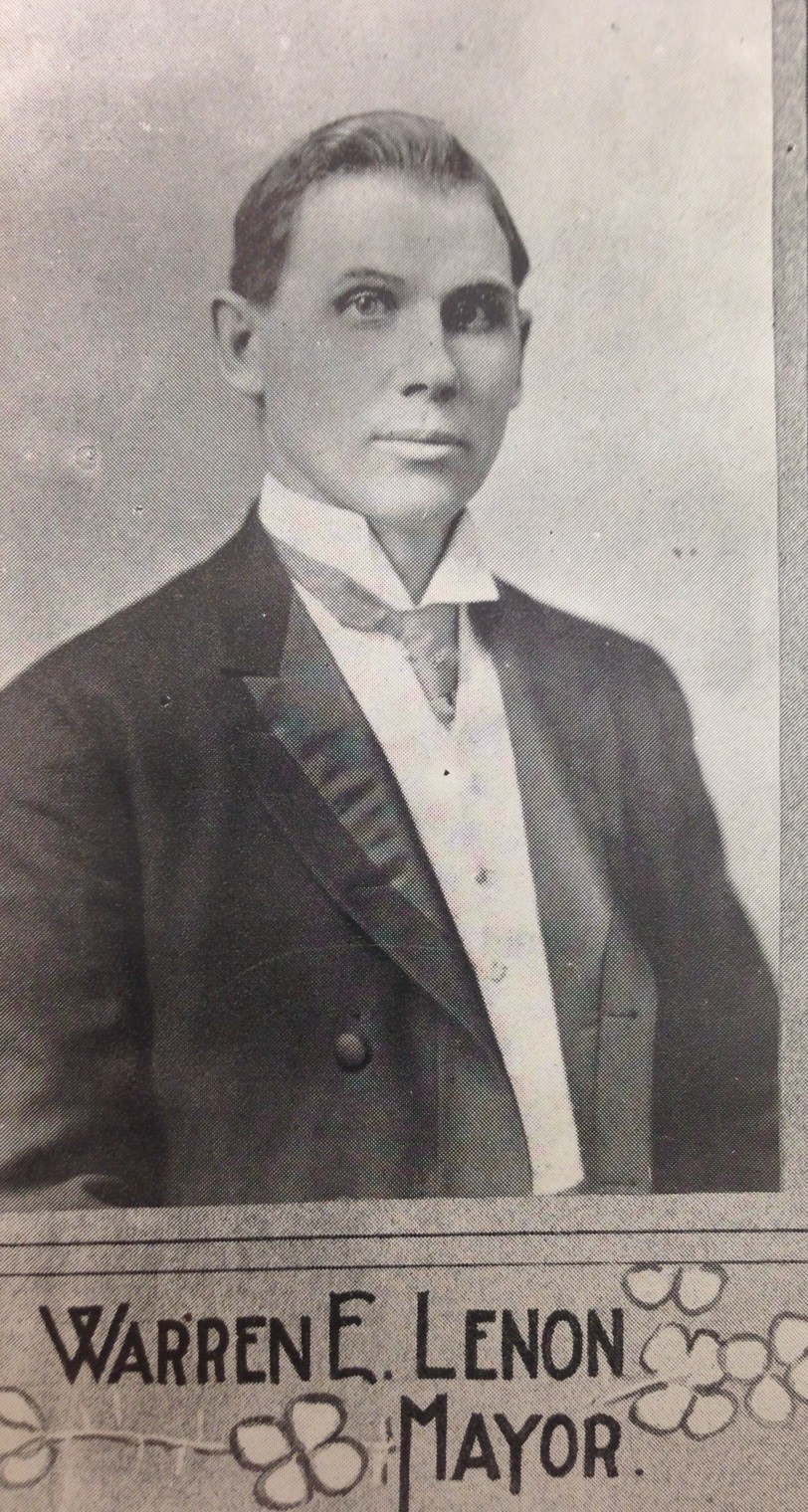
Mayor Warren E. Lenon had first called for a new city hall complex in his annual address in April 1904. He repeated his request in April 1905.   The City Council took up Mayor Lenon’s quest for a new city hall in December of 1905.  The Council appropriated money for the purchase of land for a city hall, jail and auditorium.

In response to this, the Arkansas Gazette daily newspaper ran a story featuring the viewpoints of a few civic leaders weighing in on the need for a new city hall complex which would also include a new jail and a city auditorium.  Two of the respondents, L. B. Leigh and P. Raleigh, stressed the need for paved streets and better sewers instead of a new city hall and auditorium.

The other three businessmen interviewed were more favorable to Mayor Lenon’s proposal.  Morris M. Cohn, a former Little Rock City Attorney, stated “I do not think we can make a better investment than in a fine city hall and auditorium.”  (Mr. Cohn, though an M. M. Cohn, was not related the M. M. Cohn who was the namesake for the longtime Little Rock department store.) County Judge William Marmaduke Kavanaugh offered his satisfaction with the action of the City Council on that matter.  R. E. Walt, a banker, opined that he thought $150,000 was not enough; he suggested $200,000 should be spent.

Later that month the Gazette reported that a site had been selected for the city hall and auditorium complex.  The proposed location was most of a city block located at the corner of Markham and Broadway Streets.  Mayor Lenon was vague as to the details of the deal because negotiations were still underway with the property owners

As 1906 dawned, Mayor Lenon and other city leaders continued to take steps to build the new city hall and auditorium.  They invited three local architects to make presentations for the chance to design the new complex.  The three were Charles L. Thompson, Frank W. Gibb and George R. Mann.  Mr. Thompson was chosen to receive the assignment.

On February 5, 1906, Mayor Lenon announced the creation of a special committee to work on the planning for a future city hall complex.  This committee consisted of Aldermen Louis Walther, A. B. Poe, L. N. Whitcomb, Christopher Ledwidge, and John A. Adams.

Mayor Lenon further stated that the new city hall complex and several private developments would “put us in that march of progress with which nothing can prevent us from having a 100,000 population in a few years.”

The saga to get the building built was just starting.

Heritage Month – U.S. Arsenal Tower Building

MacPark ArsenalToday is Armed Forces Day.  It is an appropriate day to look at the U. S. Arsenal Tower Building.  Construction on the Little Rock Arsenal began in 1838 and was completed in 1840.  The complex grew to include more than thirty buildings. The arsenal building itself was a two story brick building with an unusual central octagonal tower between two wings. The tower was actually used to move munitions between floors of the building. Other buildings included office buildings, a storehouse, a magazine, a guardhouse, a hospital and other service structures. The hospital and service structures were built of wood.

On 25 Jul 1873 the Little Rock Arsenal became the Little Rock Barracks and remained that until the facility was abandoned 25 Sep 1890. The tower building was converted into married officer quarters. Douglas MacArthur was born 26 Jan 1880, in the tower building at the Little Rock Barracks to then Captain Arthur MacArthur, Jr. and his wife.

The site was turned over to the city 23 Apr 1892, stipulated for use as a city park. In return, the City of Little Rock gave the U.S. Government 1,000 acres  on which Fort Logan H. Roots was established by the U.S. Congress on the same date, 23 Apr 1892. All of the remaining buildings on the original site were sold or destroyed except the Arsenal Tower building.

The land became known as City Park and later MacArthur Park.  The Tower Building remained empty and in deteriorating condition until the late 1930s, when the City of Little Rock renovated the building.  For many years, the Aesthetic Club met in the building as the only tenant.  When others refused to pay the utilities, the Aesthetic Club members did.  The organization continues to meet in the building.

In 1942, the Museum of Natural History and Antiquities opened in the building; it had previously been located in Little Rock’s City Hall. The name of the museum changed in 1964 to the Museum of Science and Natural History, and again in 1983 to the Arkansas Museum of Science and History. In 1997, the museum moved to a new location in the River Market, where it now is known as the Museum of Discovery.

In May 2001, the MacArthur Museum of Arkansas Military History opened in the building.

The structure was listed in National Register of Historic Places on July 28, 1970.  It was designated a National Historic Landmark on April 19, 1994.

Little Rock Look Back: Mayor Lottie Shackelford

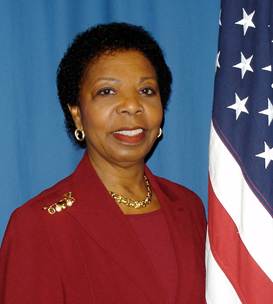
Mayor Lottie_ShackelfordOn April 30, 1941, future Little Rock Mayor Lottie Shackelford was born. Throughout her career in public service she has been a trailblazer.

Active in community activities and politics, she ran for the City Board in 1974 and lost.  But she was appointed to the Little Rock City Board in September 1978 to fill a vacancy.  This made her the first African American woman to serve on he City Board, and indeed on any governing board for the City (during Reconstruction, there were at least three African Americans on the City Council, but they were all men.) She was subsequently elected to a full-term on the City Board in 1980 winning 55% of the vote over three male candidates.

She was subsequently re-elected in 1984 (unopposed) and in 1988 (with 60% of the vote).

In January 1987, Shackelford became the first female mayor of Little Rock when she was chosen by her colleagues on the City Board to serve in that position. She was Mayor until December 1988.

From 1982 until 1992, she served as Executive Director of the Arkansas Regional Minority Purchasing Council.  She left that position to serve as Deputy Campaign Manager of Clinton for President.  She subsequently served on the Clinton/Gore transition team. She later served on the Overseas Private Investment Corporation from 1993 to 2003. She was the first African American to be in that position.

A graduate of Philander Smith College, she has also studied at the Arkansas Institute of Politics at Hendrix College and the Kennedy School of Government at Harvard University.

Mayor Shackelford has also served on numerous boards including the Little Rock Airport Commission, Philander Smith College, Chapman Funds (Maryland) and Medicis Pharmaceutical Corporation (Arizona).  She has been the longest serving Vice-Chair of the Democratic National Committee.

Mayor Shackelford was in the first class of inductees for the Arkansas Black Hall of Fame.

Little Rock Look Back: LR Mayor Charles Moyer

Mayor MoyerOn April 18, 1880, future Little Rock Mayor Charles E. Moyer was born in Glenwood, Minnesota. A man of contradictions, he was both a candidate backed by (and probably personally involved in) the Ku Klux Klan, yet he also brought the Goodwill Industries organization to Little Rock and Arkansas to help those less fortunate.

He came to Little Rock shortly after the turn of the 20th century as a clerk in the Post Office, and later served as a mail carrier. He then worked for Plunkett-Jarrell Wholesale Grocer Company in Little Rock. On January 1, 1921, he took office as County Judge for Pulaski County. In 1924, he ran against incumbent mayor Ben Brickhouse in the Democratic primary. Since Brickhouse had displeased the Klan, which was an active part of Democratic politics in Little Rock and throughout the nation at the time, Moyer won the primary.

Mayor Moyer led the City of Little Rock from April 1925 through April 1929. In 1927, the last lynching in Little Rock took place. While race-baiting crowds were surrounding City Hall demanding an African American prisoner be released to them for vigilante justice, Mayor Moyer was in hiding at an undisclosed location. Not able to get the prisoner they wanted, they took out their venom on another man who had assaulted a white woman and her daughter.

After leaving office in 1929, Moyer moved for a time to Batesville. He returned to Little Rock and was a chief deputy sheriff. From 1937 to 1941, he served as Pulaski County Assessor. In 1941, he returned to the office of Little Rock Mayor after J. V. Satterfield opted to serve only one term and did not seek re-election. Mayor Moyer led Little Rock through most of World War II. He left office in April 1945 and died on May 29, 1945, barely only one month after leaving City Hall.

Little Rock Look Back: 107 years of City Hall at Markham & Broadway

CityHa78107 years ago today, Little Rock City Hall officially opened at the corner of Markham and Broadway.

On April 15, 1908, the Italian Renaissance Revival style building, which had been designed by local architect Charles Thompson, played host to an open house. Staff had started moving into the building in March of that year.   This was, as often is the case, behind schedule.  The date in the cornice toward the top of the building is 1907, but the building was not completed until 1908.

In 1903, W. E. Lenon became Mayor of Little Rock. Back then, the terms were two-year terms.  By the start of his second term in 1905, he realized that the City was outgrowing City Hall, which was, at the time, on the northeast corner of Markham and Louisiana – where part of the Statehouse Convention Center sits today.

In February 1906, Mayor Lenon appointed a committee of five aldermen to over see the planning for the building of a new City Hall. In July 1906, the City Council approved plans, which called for a City Hall with an municipal auditorium wing. There was some hue and cry about wasteful spending and a resulting lawsuit, so, in September 1906, those plans were scrapped and a simpler City Hall was approved for the cost of $175,000.

The last resolution in the old City Hall called for the banning of smoking in the new Council Chambers – while the Council was in session. This may well have been the first smoking ban in a public government building in the history of Arkansas.

When the building opened, the third floor was not finished out. The space was not needed. When the Museum of Natural History and Antiquities (now the Museum of Discovery) moved into City Hall in 1929, they had to finish out their space.

In 1913, the new Central Fire Station, designed in the Beaux Arts style, was constructed adjacent to City Hall. During the 1930s, as the City grew, more space was needed. A garage, designed in the “austere, utilitarian” style was built in 1936 and a City Jail Annex, built by the WPA in the modified Art Deco style was built in 1938.

City Hall prior to 1912

By 1955, the copper-clad dome which sat on top of City Hall needed severe repairs. The wooden supports and the copper cladding were both in dire shape. Mayor Pratt Remmel set aside money for the dome to be repaired. After defeating Remmel in his bid for a third term, Mayor Woodrow Mann scrapped plans for the repair and, indeed, scrapped the dome.

Following the lead of County Judge Arch Campbell who had removed the tower at the County Courthouse, Mann proposed removal of the dome. He had an informal survey which had three options: repair the dome, replace the dome with an aluminum one, or remove it. This was open to anyone to respond – voting eligibility or Little Rock residency did not matter. By a slim margin, remove the dome won – so the dome was removed.

In 1960, as air conditioning was installed, windows were bricked in to promote energy efficiency. At the time, the feeling was that a new City Hall would be constructed in the 1970s somewhere more central to the growing city. Relocation talk persisted throughout the 1970s and early 1980s. By that time, City Hall had been modified a great deal – with no thought about historic preservation. When the Police and Fire Department had moved out into their new facilities, their old spaces had become storage.

By 1984, the decision was made to stay at Markham and Broadway. An extensive renovation and restoration effort was undertaken. In 1988, the building reopened, and the interior had been restored to its 1908 appearance.

Little Rock Look Back: First proposal for a municipal auditorium

On April 12, 1904, Mayor W. E. Lenon made what was the first official proposal for a municipal auditorium in Little Rock.  Little did he know at the time that it would take from April 1904 until February 1940 to make this dream a reality.

Elected as a progressive, Lenon was focused on not just providing city services, but also had an interest in initiatives which would move the city forward.  With that background it is not surprising that Mayor Lenon would be a champion for the construction of both a new city hall as well as a municipal auditorium building.  During his first annual address to the City Council in April 1904 he noted:

Recently a number of our citizens have taken an active interest in building an auditorium in our city.  This being a project of such worthy consideration should not go unnoticed by us.  Apparently this is one of the greatest needs.  Our business, social, commercial and financial interests, in fact, our entire city, would be benefitted by the building of same.  It has therefore occurred to me that an auditorium might be built in conjunction with a new city hall.

The mayor further discussed that these new structures could either be built on the site of the current City Hall or at a new location.  He also touched on possible financing options including the collection of a one percent assessment.

The mayor would bring this up again in his 1905 annual address.  It would not be until December 1905 that the City Council would officially take any action on the plan.


What about BREAKFAST AT TIFFANY’S? See it tonight at 7 at the CALS Ron Robinson Theater

215px-Breakfast_at_TiffanysYou can’t eat breakfast at Tiffany’s, but you can enjoy the classic film tonight at the Ron Robinson Theater which presents the 1961 classic Blake Edwards film. (Be sure and pay attention to a passing reference to Arkansas, too.)

Based on Truman Capote’s novella, the film was one of Audrey Hepburn’s iconic roles.  Joining her in the cast were George Peppard, Patricia Neal, Martin Balsam, Buddy Ebsen and Mickey Rooney.  The film features the famous song “Moon River” which Hepburn sings at one point in the movie.  The film was nominated for five Academy Awards including Best Actress (Hepburn), Best Adapted Screenplay (George Axelrod) and Best Art Direction. It won the Oscars for Best Song – “Moon River” (Johnny Mercer and Henry Mancini) and Best Score (Mancini again).

The movie starts at 7pm tonight. Admission is $5. Concessions are available for purchase as well.

(You may not be able to shop at a Tiffany & Co. in person in Little Rock, but you can see Tiffany stained glass at City Hall and the State Capitol, as well as other Tiffany furnishings at the latter.)