Film CHOCTAW CODE TALKERS shown tonight at MacArthur Museum of Arkansas Military History

MacMus Code TalkTonight from 6:30 to 9:30 pm, in celebration of Native American Heritage Month and in commemoration of the beginning of World War I, the MacArthur Museum of Arkansas Military History will host a free film event, showing Choctaw Code Talkers, a PBS documentary that explores the military history legacy of Native American code talkers during World War I.

The free event is in partnership with the Sequoyah National Research Center at the University of Arkansas at Little Rock.  Light refreshments will be provided. Click here to watch a trailer for Choctaw Code Talkers

The MacArthur Museum of Arkansas Military History is a program of the City of Little Rock’s Parks & Recreation Department.

“Racial Redistricting in Little Rock, Arkansas” is the focus of tonight’s UALR Evenings with History

Slum-AreaswebTonight Dr. John Kirk and Dr. Jess Porter discuss racial separation in Little Rock’s history as part of the 2014-2015 UALR Evening’s with History series.

This year marks the 24th year for the History Institutes’ Evenings with History.  This nationally recognized series has featured a variety of subjects.  The sessions take place at the Ottenheimer Auditorium of Historic Arkansas Museum. Refreshments are served at 7 with the program beginning at 7:30 pm. The cost is $50 for admission to all six programs.

The contemporary urban landscape of Little Rock evokes questions of racial separation because of the persistently high rates of ethnic separation in housing and a public-private race cleavage in the local schools. How can these patterns be explained? Has it always been this way? Is the 1957 desegregation crisis at Central High School a reason for the persistent patterns of geographic separation between African Americans and whites within the city?

In fact, the story of ethnic separation in Little Rock begins prior to the Central High Crisis. This talk begins with an examination of spatial patterns of racial segregation in the first half of the 20th century. It then discusses these patterns as they evolved in Little Rock and shows, in particular, the role of urban renewal in the mid-century decades in producing the separation of races that came into existence.

John A. Kirk joined the department as Chair and Donaghey Professor of History in 2010. He was born in Rochdale, Lancashire, in the United Kingdom, and holds an undergraduate degree in American Studies from the University of Nottingham and a PhD in American History from the University of Newcastle upon Tyne. Dr. Kirk taught at the University of Wales, Lampeter (1994-99) and Royal Holloway, University of London (1999-2010) before coming to UALR.

Dr. Kirk’s research focuses on the history of the civil rights movement in the United States, the South, and Arkansas, and the history of post-New Deal southern politics, society and culture. He has published five books and written in a wide variety of journals, edited book collections, and popular history magazines including BBC History, History Today and Historically Speaking. He has won a number of awards for his research including the F. Hampton Roy Award (1993) from the Pulaski County Historical Association, and the Walter L. Brown Award (1994), the J. G. Ragsdale Book Award (2003), and the Lucille Westbrook Award (2005) from the Arkansas Historical Association.

Jess Porter came to UALR in 2009 and holds a PhD from Oklahoma State University where he was awarded with the Susan Shaull Medal for Excellence in Teaching Geography. Prior to UALR, Dr. Porter taught at Oklahoma State University, developed and implemented geospatial curriculum for rural schools, worked as an environmental analyst and mapping specialist in the oil and gas industry, and was employed by an adventure tourism company in Colorado.

Dr. Porter’s research interests include the American Dust Bowl, geospatial technology education, and urban geography. His research on the Dust Bowl was featured in an episode of The Weather Channel’s When Weather Changed History. He has published four, interactive textbooks in the Encounter Geography series.

Friday, Eldredge, & Clark and the Union Pacific Railroad help make these lectures possible. Other sponsors are the Ottenheimer Library, University of Arkansas at Little Rock; Historic Arkansas Museum, a museum of the Department of Arkansas Heritage; UALR Public Radio—KUAR-KLRE; UALR public television; and Grapevine Spirits.

LR Cultural Touchstone: Mary Fletcher Worthen

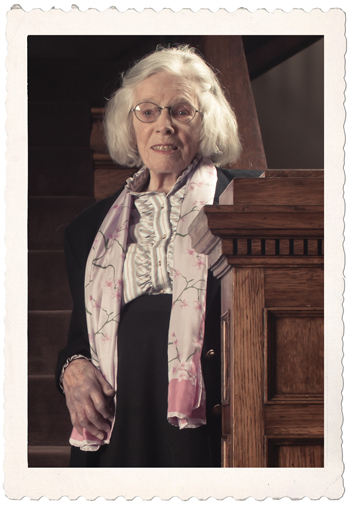
JJLR-MaryWorthen-MayMary Fletcher Worthen has cultivated history and music with the same grace and skill as she has cultivated gardens.

Born outside of Scott, she attended Vassar and Little Rock Junior College. After marrying banker Booker Worthen, she has devoted her life to improving Little Rock. Together with Stella Boyle and George Smith, she and Booker helped found the precursor to the Arkansas Symphony Orchestra.  Through its many iterations, she has been a steadfast supporter and is now a life member of the ASO Board.  She has also been a supporter of many other music organizations in Little Rock including the Chamber Music Society of Little Rock, of which she was a founder.

Another hallmark of her involvement is Mount Holly Cemetery Association.  For over 50 years she has served on the board of this body.  Without notes, she can recite the history of practically every resident buried there.  The tours she would lead with the late Peg Newton Smith were hot commodities when auctioned at fundraisers.  These two loving and lifelong friends would sometimes remember things differently. They playfully prodded and needled each other as they wended and winded their way through the headstones and history regaling rapt audiences with yarns of yore, quips and quotes, plus an anecdote or two.  In the decade since Peg passed, Mary has continued to entertain and engage visitors to the cemetery, especially at the annual Mount Holly Rest in Perpetuity (RIP) picnic.

She has also served on the Old State House Museum Board and the Pulaski County Historical Society Board.  As a historian, she literally wrote the book on Trinity Episcopal Cathedral.  She combined her interest in herb gardening and history with the creation of the Medicinal Garden at Historic Arkansas Museum, which is now named in her honor.

Born in 1917, Mary Worthen continues to learn new facts, share her love of history and music, and works to cultivate the next generations of cultural enthusiasts.


LR Cultural Touchstone: Stella Boyle Smith

stellaStella Boyle Smith, who died at the age of 100 in 1994, was well known for her love of music and philanthropy. The Stella Boyle Smith Trust, a trust with a longtime history of supporting the arts and music at the University of Arkansas, has made a $200,000 gift to fund student scholarships.

Stella Boyle Smith was a Little Rock philanthropist and founder of the Arkansas Symphony Orchestra. She lived to be 100, but ensured that her legacy would continue.  In her lifetime, she donated more than $2.5 million to organizations in the music and medical fields.  Since her death, the Stella Boyle Smith Trust has donated more than $5 million.

She was born in Farmington, Mo., into a large, musically inclined family, which moved to Arkansas when she was two. She began singing at the age of three and graduated from high school at 14. In 1922, she moved to Little Rock with her first husband, Dandridge Perry Compton, who died in 1935. Her second husband, George Smith, held various business interests and extensive farms in Woodruff and Arkansas counties, which allowed them to engage in philanthropy. Mr. Smith died in 1946.

In 1923, Smith’s love for music inspired her to start The Musical Group in her living room of her residence at 102 Ridgeway Drive in Little Rock, where she lived until she died. Through several iterations, the group eventually became the Arkansas Symphony Orchestra in 1966. Her initial objective was to establish the symphony as an educational tool for children, and, in 1968, she helped establish the Youth Orchestra. In 1972, the symphony board of directors named her an honorary life member. Smith established a trust fund for the symphony’s permanent endowment in 1985. A loyal friend of music and the symphony, she attended nearly every performance and most rehearsals.

Smith was also a pianist. In 1988, she gave UALR a grand piano as well as an endowed trust of $500,000. UALR renamed its concert hall the Stella Boyle Smith Concert Hall as a tribute to her. That year the university also gave her an honorary doctor of humane letters degree. Interest from the trust provides scholarships each year for music students studying string instruments, piano or voice.

Smith enabled many students around the state to attend college through the more than 200 scholarships that she financed.

Other organizations that have benefited from her generosity include Arkansas Arts Center and Historic Arkansas Museum as well as the University of Arkansas.

LR Cultural Touchstone: Peg Newton Smith

peg_3While the Culture Vulture remains a huge fan of Peg Newton Smith, it is better for this entry to be taken from a tribute written by her longtime friend Bill Worthen.

Peg Newton Smith was a pioneer in the field of history and historic preservation.  A founder of both the Arkansas Museums Association and the Quapaw Quarter Association, Little Rock’s historic preservation organization, she served as a significant resource for many local history researchers and historians.

Born February 10, 1915, Peg Smith came from a family deeply engaged in Arkansas history. Two Arkansas counties – Newton and Hempstead – are named after ancestors.  She married George Rose Smith, himself from a prominent Arkansas family, in 1938. Peg Smith became his most vigorous supporter as George Rose Smith was elected and  reelected to the State Supreme Court, ultimately offering 38 years of service as Associate Justice.

She  enjoyed a sixty-two year career as a volunteer at the Historic Arkansas Museum, where she served as Commission Chair from 1978 to 1983. On the museum’s first day, she was dressed in period garb as a volunteer.  She was named Chair Emerita of the Commission in 2002. Her commitment to history has also included decades of service on the Mount Holly Cemetery Association Board of Directors, where she was famous with Mary Worthen for tours of the cemetery, often hot items at charity auctions.

Because of her instrumental work for the Arkansas Museums Association and the Quapaw Quarter Association, both organizations named significant annual awards after her. She was appointed to the inaugural Review Committee of the State Historic Preservation Program and with architect Edwin Cromwell was the first Arkansan named to the Board of Advisors of the National Trust for Historic Preservation. She was appointed to the Arkansas Bicentennial Commission, was elected president of the Junior League of Little Rock, was a founding member of the Board of the Historic Preservation
Alliance of Arkansas, and was active in the Pulaski County Historical Society.  She also was an early supporter of the MacArthur Museum of Arkansas Military History.

She was honored by many groups, being named 1967 Greater Little Rock Woman of the Year by the Arkansas Democrat, Shield of the Trojan Award winner from the UALR Alumni Association in 1979, Fellow of the Museum of Science and History in 1981, and Candlelight Gala Honoree of the Historic Arkansas Museum in 1994. She became the first recipient of the Lifetime Achievement Award from the Arkansas Museums Association in 2003.

Peg Newton Smith died on July 20, 2003.

Because of her love of Arkansas history and Arkansas art, the Historic Arkansas Museum commissioned the pARTy for Peg sculpture which dances near the north entrance to the museum.  pARTy for Peg is not a portrait of our dear friend—it is a sculpture inspired by her spirit. It had been her brainchild for the museum to have a separate gallery devoted to contemporary Arkansas artists. She also founded the Museum Store, filled with Arkansas crafts.


Healthcare Pioneers focus of this year’s Civil Rights Heritage Trail

crht-banner-2014-thru-banner32Drs. Thomas A. Bruce, M. Joycelyn Elders, Henry Foster Jr., Edith Irby Jones, and Billy Ray Thomas, and five posthumous honorees will be recognized for their efforts to provide quality healthcare to all citizens at 2 p.m. Friday, Oct. 24, in the Little Rock River Market District at the entrance of the St. Vincent Medical Mile.

Posthumous honors will be bestowed upon Drs. Cleon A. Flowers Sr., Samuel Lee Kountz, and John Marshall Robinson; registered nurse Lena Lowe Jordan; and scientist and educator Phillip Leon Rayford, Ph.D., during the fourth annual Arkansas Civil Rights Heritage Trail Commemoration.

Commemorative markers will be added to the Heritage Trail in honor of pioneers in health care, individuals who were either first of their race to graduate from medical school, or who have shared their professional talents generously in ways that have championed racial equity in Arkansas.

“This year, the Institute turned to healthcare because even though it is a profession by which African Americans in particular have been grossly underrepresented and underserved, Arkansas has a rich tradition of producing some of the nation’s best and brightest medical professionals,” said Dr. Michael R. Twyman, director of the UALR Institute on Race and Ethnicity.

The Institute is partnering with the University of Arkansas for Medical Sciences Center for Diversity Affairs to honor these healthcare professionals. The center specializes in encouraging young persons of color to seek careers in health and STEM professions.

“I am honored to be recognized with such accomplished people,” said Thomas, vice chancellor for diversity affairs at the University of Arkansas for Medical Sciences. “It is also a very humbling experience because many of the other honorees are also my mentors.”

Like Thomas, the other nine honorees have made significant contributions toward social and racial equity in Arkansas – most of whom received their professional education and training during the the Civil Rights Movement era, during a time of deep civil unrest in the country and state.

“It is not lost on us that this year marks the 60th anniversary of the Brown vs. Board of Education court decision that prohibited public institutions from discriminating on the basis of race,” said Twyman.

“Access to quality education and healthcare have become the predominant civil rights issues of our time,” he added.

Learn more about each honoree at  arkansascivilrightsheritage.org supported in part by a grant from the Arkansas Humanities Council and the National Endowment for the Humanities.

In addition to the Center for Diversity Affairs at UAMS, the Central Arkansas Planning and Development District; East Harding Inc.; Arkansas Medical, Dental, and Pharmaceutical Association; Just Communities of Arkansas; the Little Rock Alumnae Chapter of Delta Sigma Theta Sorority, Inc.; and the Little Rock Alumni Chapter of Kappa Alpha Psi Fraternity, Inc. are sponsors for the event.


About the Civil Rights Heritage Trail

The Arkansas Civil Rights Heritage Trail was created in 2011 to acknowledge the sacrifices and achievements made by those who have fought for racial justice in the state. The Heritage Trail begins at the Old State House and currently stretches to the front of the Little Rock Regional Chamber of Commerce. As commemorative bronze markers are added each year, it will continue toward the William J. Clinton Presidential Center and beyond.     


About the UALR Institute on Race and Ethnicity

The UALR Institute on Race and Ethnicity was founded in July 2011. With a vision to make Arkansas the best state in the country for promoting and celebrating racial and ethnic diversity, the Institute conducts research, promotes scholarship and provides programs that address racial inequities. It does so by facilitating open and honest dialogue aimed at empowering communities and informing public policy to achieve more equitable outcomes.

LR Cultural Touchstone: Ann Nicholson

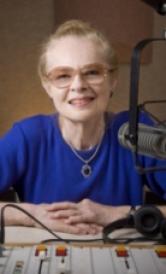
ann_nicholsonAnn Nicholson has been in Little Rock since the 1970s. She maintains the distinctive accent of her native Great Britain, which she puts to use as the “voice of UALR Public Radio” and the host of the weekly interview show “Art Scene.”

For more than 25 years, Ann Nicholson has shared the news and promoted cultural events in Central Arkansas via the KLRE/KUAR airwaves.  Host of “The Arts Scene,” an in-depth interview program that features local and international artists in all genres and a weekly arts calendar, Nicholson has loyal listeners who have enjoyed her interviews, her soothing and inviting British accent and her tireless enthusiasm for the arts. Those at KLRE/KUAR often refer to her as “the heart of Little Rock public radio.”

Being featured on Arts Scene has been a boon to many emerging organizations and institutions.  But more than that, her insightful and engaging interview style allows listeners to learn more about the artists and the artistic process.  The program feels less like an interview and more like a chance to eavesdrop on an entertaining conversation.

In addition to hosting the weekly interview program, she has been an active supporter of Little Rock’s arts community since her arrival.  She has been on the Board of Ballet Arkansas and UALR Friends of the Arts. She is often in the opening night audience at the Arkansas Rep.  She also rarely misses a performance of the Arkansas Symphony Orchestra.  Ann was a longtime member of the Little Rock Arts and Humanities Promotion Commission. She is a supporter of the Little Rock Musical Coterie and the National Federation of Music Clubs. When that organization’s national meeting was in Little Rock in 2002, she was involved in the planning of the meeting.