Happy New Year! Here are a double dozen of the Culture Vulture’s Cultural Milestones from 2012 (in no definitive order but a rough chronilogical order).
 1 – The year kicked off with the reopening of the Museum of Discovery. In 2011, the museum was gutted and redone from top to bottom. The result is three new galleries with 85 interactive exhibits as well as a high profile streetfront entrance. A $9.2 million grant from Donald W. Reynolds Foundation provided the primary underwriting for the renovations, which also brought a subtitling of the museum as the Donald W. Reynolds Science Center.

Hupp
2 – Arkansas Rep Producing Artistic Director Robert M. Hupp received two honors in the first quarter of the year. In February, he was named Arkansas Business Non-Profit Executive of the Year. The next month Hupp received the Diamond Award from the Arkansas Chapter of the Public Relations Society of America. Hupp has been at Arkansas Rep since 1999. He currently serves on the board of the Theatre Communications Group, the national service organization for non-profit theatres.
Landesman
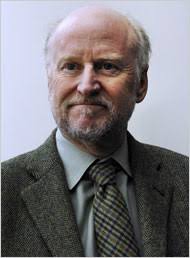
3 – Rocco Landesman, the Chairman of the National Endowment for the Arts, visited Arkansas in March. While in Little Rock, he participated in a panel discussion with Bob Hupp of the Arkansas Rep, Warwick Sabin of the Oxford American, Joy Pennington of the Arkansas Arts Council and Beth Wiedower of the National Trust for Historic Preservation. Landesman, a Tony winning Broadway producer, was named the 10th chair of the NEA in 2009. He announced his plans to retire later in the year.
 4 – Polk Stanley Wilcox architectural firm was awarded the American Architecture Award for its design of the Heifer International Murphy Keller Education Center in March. It is the third American Architecture Award the firm has won in the last five years. The firm also won for designing the Acxiom Data Center and the Heifer International Headquarters, also in Little Rock. Heifer broke ground in the $7.5 million Keller Education Center in 2007. The building provides a place for visitors, staff, volunteers and the international development community to come together to learn about world hunger and poverty and current solutions to these problems.

Kaiser
5 – Michael Kaiser, president of the John F. Kennedy Center for the Performing Arts, presided over the 2012 Arkansas Arts Summit in April at the Clinton Presidential Center. The programmatic arm of the conference was developed and presented by the John F. Kennedy Center for the Performing Arts and the DeVos Institute of Arts Management at the Kennedy Center, and provided practical training for board members and arts administrators. The event was sponsored by the Arkansas Arts Council. Little Rock designer and business owner Kaki Hockersmith, who serves on the President’s Advisory Committee on the Arts for the the Kennedy Center, was instrumental in organizing the event.

Rockefeller
6 – May 1 marked the 100th birthday of former Arkansas Governor Winthrop Rockefeller. In addition to being a political leader, he was a cultural and philanthropic leader. Perhaps his most obvious impact was helping to transform the provincial Little Rock Museum of Fine Arts into the first rate Arkansas Arts Center. He and his family were generous donors of money and art to this effort. Through the effort of the Winthrop Rockefeller Foundation, many cultural institutions have received funds for programming which has reached into every county and every corner of this state. For instance, one of the Arkansas Symphony Orchestra’s string quartets is the Rockefeller Quartet.

Sabin
7 – Later in May, Oxford American publisher Warwick Sabin won a primary for the Democratic nomination for District 33 of the Arkansas House of Representatives. He was unopposed in the November election and will take office in January 2013.
 8 – As May ended, Riverfest turned 35. Among the headliners were Boyz II Men, Lynard Skynard, Staind, Third Eye Blind, Joe Walsh, Snoop Dogg, Rodney Block, and Trout Fishing in America. Since beginning, Riverfest has contributed over $1 million to promote and upgrade parks in Central Arkansas. Approximately 250,000 festival-goers attended the 2012 event, with an estimated economic impact of $33 million on the community.
 9 – In June, the Oxford American received a $290,000 ArtPlace Grant for its “South on Main” Project. The space will include a restaurant that will celebrate Southern culinary culture. Accompanying the food will be nightly cultural programming that will feature the best of Southern arts and culture across a variety of formats including literature, music, film, art and drama. The Oxford American will focus on community-oriented programming developed through partnerships with local organizations and institutions. It is slated to open in the first quarter of 2013.

Selz
10 – Also in June, Nan Selz, who has led the Museum of Discovery since 2004 and revitalized the once-struggling museum announced her intention to retire at the end of 2012. Since joining the Museum in February 2004, Selz used her leadership to ensure that the Museum has become central Arkansas’s premier math, science and technology center. She has nearly 50 years executive, development and teaching experience having worked in corporate, non-profit and education sectors. In December, Kelley Bass was named to succeed Selz.
 11 – Ann Richards’ Texas a documentary about the colorful former Governor of Texas won the WGA Documentary Screenplay Award at the AFI SilverDocs festival in June. The brainchild of Keith Patterson and Arkansans Jack Lofton, Susan Altrui, Eric Wilson and Dr. Jordan Cooper, the documentary received a screening at the Paley Center in New York City in October.
 12 – The Laura P. Nichols Cheetah Outpost was officially dedicated at the Little Rock Zoo in July. Mayor Mark Stodola and City Manager Bruce Moore were in attendance for the opening remarks and ribbon cutting ceremony. Zoo Director Mike Blakely introduced special guest, Anne Schmidt-Kuentzel, research geneticist and assistant director for animal health and research at the Cheetah Conservation Fund, a world-wide non profit dedicated to saving the wild cheetah and its habitat. She thanked the zoo for supporting the cheetahs. The cheetahs, Zazi and her daughter Maggie, come from the Smithsonian Conservation Biology Institute in Virginia.

Hodge
13 – Roger D. Hodge, former editor of Harper’s was named as the new editor of the Oxford American magazine. Mr. Hodge is the author of The Mendacity of Hope a critique of President Obama published by HarperCollins in 2010, and is currently working on another book focusing on life in the borderlands of West Texas. A native of Texas, he studied comparative literature at Sewanee in Tennessee, and began his career as a freelance writer in North Carolina.
 14 – Opera in the Rock launched and hosted its first event – “Opera on the Rocks” out at Wildwood Park for the Arts. Opera in the Rock is focused on returning live opera performances to Little Rock on a regular basis. The company has announced plans for a performance in February at the Clinton Presidential Center.
 15 – The Central Arkansas Library System’s Butler Center for Arkansas Studies launched Arkansas Sounds, a music festival, in September. The festival featured over twenty events (concerts, lectures and other special programs) over an extended weekend. Focusing on Arkansas music and musicians both past and present, Arkansas Sounds will also work to get musicians and songwriters involved in local schools, create songwriting workshops for kids and adults, and host related performances and events throughout the state. Arkansas Sounds is the second festival sponsored by the Butler Center. They also produce the Arkansas Literary Festival in the spring.

Mann
16 – Philip Mann, music director of the Arkansas Symphony Orchestra, was honored by the Arkansas chapter of the International Association of Business Communicators honored Arkansas communicators in October. He received the IABC/Arkansas 2012 Communicator of the Year, honoring Mann for his innovative communication in creating connections between music and audience. Mann is in his third season as director of the symphony, which has seen audience and artistic growth and financial health under his leadership.
 17 – Construction began on the new Arcade Building in Little Rock’s River Market district. This three story building will be home to the Little Rock Film Festival offices as well as additional space for the Central Arkansas Library System and the Clinton School of Public Service. One major focus of the building will be the 325-seat theatre auditorium for film and lectures. A restuarant and office space will also be in the building. The Arcade Building was designed by architect Rick Redden not long before he died earlier in 2012. A statue of Redden will be placed in front of the building.

Brent, Craig Renaud
18 – Also in October, two of the co-founders of the Little Rock Film Festival – Craig and Brent Renaud received an Edward R. Murrow Award for their work in Haiti for the New York Times. he Renaud Brothers produced a series of reports for the Times beginning days after the earthquake in Port-au-Prince, and followed the story of survivors for more than a year.

Cole
19 – Sericia Cole, who had been serving as interim director of Mosaic Templars Cultural Center, was named the permanent director in November. Before joining the museum, Cole served as director of minority affairs for Gov. Mike Beebe’s office for two years. Prior to that, she was director of public relations at Philander Smith College. She has extensive experience in public relations and non-profit work. Since joining the museum in March, she has introduced several new programs and secured a major grant from the Institute of Museum and Library Services (IMLS) in Washington, D.C.

Worthen
20 – In November, Bill Worthen celebrated 40 years as Director of Historic Arkansas Museum. When he started at the institution, it was known as the Arkansas Territorial Restoration and took up roughly half a city block. Under his leadership, the museum has expanded into permanent galleries as well as increased its historic structures and demostrations. HAM now takes up one whole city block and two partial blocks. He is the longest serving musem director in Little Rock history.

Matthews
21 – Also in November, Cathie Matthews announced her upcoming retirement from the Department of Arkansas Heritage. She has led that state agency for fifteen years and is the longest-serving director. A Little Rock native (and daughter of former LR Mayor Pratt C. Remmel), she has led the department through the opening of two new museums, the renovation of two existing museums and the creation of new programs in the other agencies. Matthews oversees the Arkansas Arts Council, Arkansas Historic Preservation Program, Arkansas Natural Heritage Commission, Delta Cultural Center, Historic Arkansas Museum, Mosaic Templars Cultural Center, and Old State House Museum.

Belew
22 – Late in November, Arkansan Cody Belew was eliminated from the TV show “The Voice.” Born and raised on back country roads, Cody Belew grew up singing in rodeo arenas and gospel church houses. Pulling influence from his southern roots, Cody’s voice is a mix of southern rock, R&B, gospel, soul, and a little mountain twang. He’s been on enough stages, and in front of enough county fair crowds to understand what it takes to entertain an audience. Before moving to Nashville in 2011, he was a fixture on the Little Rock music scene; he still comes back to perform from time to time. His most recent appearance was at Robinson Center Music Hall last weekend.

Stodola
23 – In December, Little Rock Mayor Mark Stodola together with the Downtown Little Rock Partnership hosted a meeting to discuss plans for “The Creative Corridor – A Main Stree Revitalization.” The plan was developed by the University of Arkansas Community Design Center working with Marlon Blackwell Architect for Little Rock. It was a fulfillment of a National Endowment for the Arts Our Town grant.
 24 – Plans for upgrading and renovating Robinson Center Music Hall are moving forward. Following presentations by four firms in November, the Advertising and Promotion Commission narrowed it down to Ennead Architects of New York, partnered with Polk Stanley Wilcox of Little Rock and Witsell Evans Rasco of Little Rock, partnered with LMN of Seattle. The concept, which was first unveiled in June, could cost around $65 million. Presentations by the final two firms will be made in January. Once completed, the renovated Robinson Center will benefit numerous organizations including the Arkansas Symphony Orchestra, Ballet Arkansas, Little Rock Convention and Visitors Bureau and Celebrity Attractions. In related performance space news, First Security Bank made a contribution toward the renovation and reconstruction of the amphitheatre in Riverfront Park.




 Jack Becker, who has a long and distinguished career in the field of public art, is scheduled to speak tonight at the Arkansas Arts Center. His talk, “Artists, Architects and Community: The Public Art Equation”, is the third in the Architecture and Design Network’s Art of Architecture lecture series, now in its ninth season.
 Little Rock Culture Vulture