Tonight from 5pm to 8pm Historic Arkansas Museum will host the 10th Ever Nog-off. And it’s free!
Monthly Archives: December 2014
Little Rock Look Back: Gordon N. Peay, LR’s 23rd Mayor
Your chance to see Art created by LR Zoo animals tonight
The animals of the Little Rock Zoo have been artistic of late. Tonight from 6pm to 9pm, the public will have a chance to see this handiwork and perhaps purchase it.
The event will be at the Boswell Mourot Fine Art gallery at 5815 Kavanaugh Blvd.
The public is invited for a viewing and silent auction of art work created by Little Rock’s very own Zoo animals at the Little Rock Zoo! Along with the silent auction there will be ornaments and wine glasses for sale that are also decorated by the animals! Light snacks and refreshments will be served.
Admission to this event is free.
Red Octopus Theater annual Pagans on Bobsled! continues through this weekend

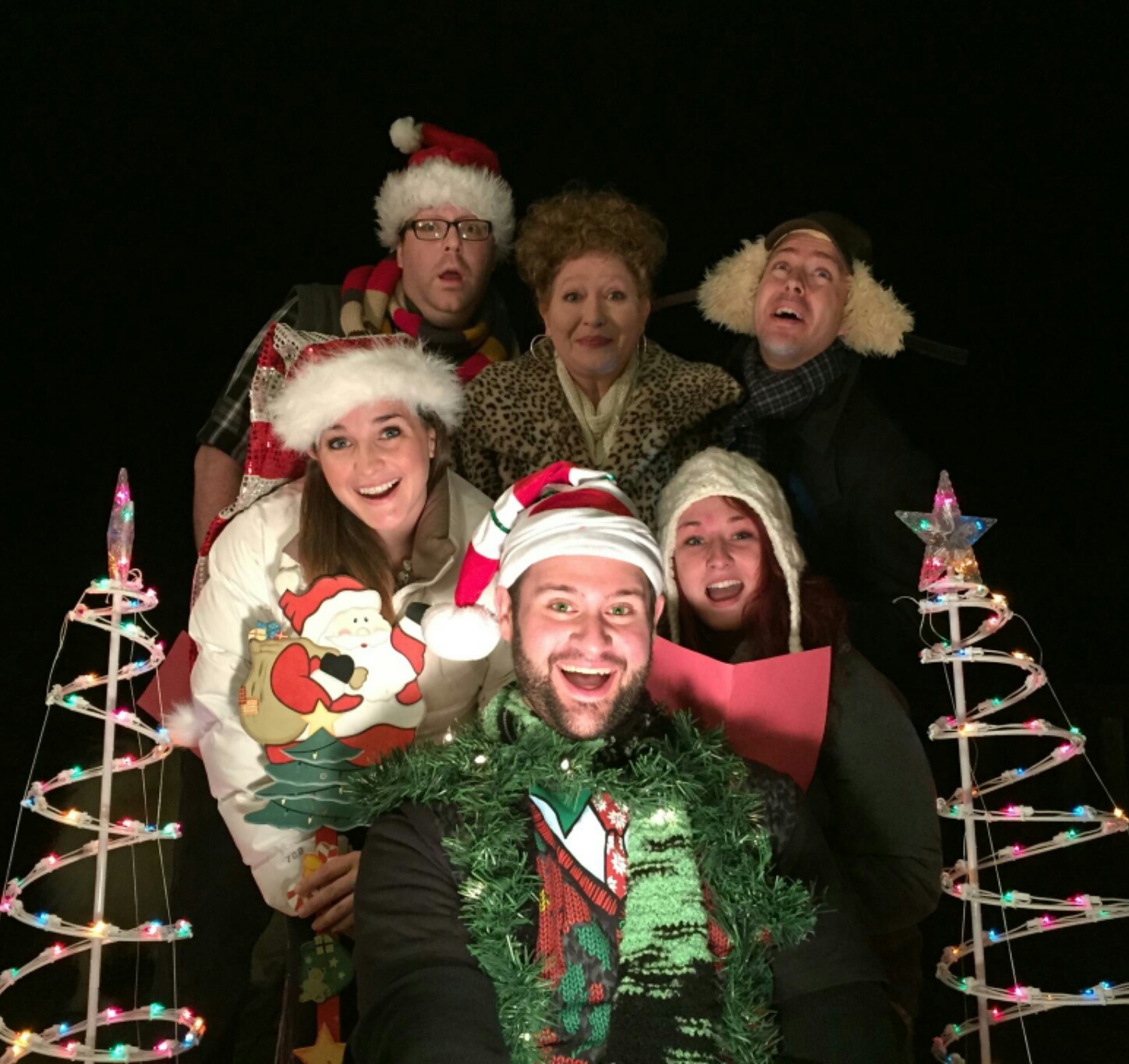
David Weatherly, Sandy Baskin, Evan Tanner, Alli Clark, Desiree Blair and Michael Goodbar practicing their choral workings for Red Octopus’ Pagans On Bobsleds!
Pagans On Bobsleds!,an all original sketch comedy show by Red Octopus Theater, runs December 10th, 11th, 12th, and 13th at The PUBLIC Theatre, located at 616 Center Street, in downtown Little Rock, AR. Doors will open at 7:30PM and the show will start at 8:00PM. Tickets are $10 for adults and $8 for senior citizens, military and students. No reservations are accepted and there will be refreshments available. The show is recommended for mature audiences.
Tonight’s Local Live at South on Main – Kevin Kerby and colleagues!
Join the Oxford American and Landers FIAT of Benton for this week’s free Local Live concert!
Little Rock songwriter Kevin Kerby takes the stage with a cadre of colleagues at 7:30 pm. Call ahead at 501-244-9660 to ensure a reservation at a table.
Kevin Kerby writes songs. Sometime around the fourth grade Kerby became obsessed with his dad’s record collection; a delicate balance of country, soul, and comedy. Make any connections you would like at this point.
As his friend’s formed bands, Kerby stayed on the sidelines – sort of pretending he was a drummer while secretly borrowing neglected guitars and teaching himself to play enough chords to write songs.
Soon after, Kerby started a two-man “Black Grass” band called Sad Monkey Railroad; a reference to a train that takes tourists around Paliduro Canyon State Park in Amarillo, TX. It was in Sad Monkey Railroad that Kerby really started writing. Traditional chord progressions were discovered and more than one “public domain” song was parted out and repurposed. Kerby went off to the same college his brother (and older sister) had attended in Arkansas. It was here that Kerby met a girl, joined a couple of bands, got signed to a major label, got dropped from a major label, and eventually started the regionally popular band, Mulehead.
Mulehead played weekends and made a lot of records before calling it quits in 2004. Kerby started making solo records shortly after. A couple of his songs found their way onto other folks records.
Though relatively popular, Kerby kept trying to become a better songwriter. Turning his old formula on it’s head (make songs as general as possible so that more people can relate), he now writes about specific events and people in his life, banking on the fact that everyone shares the same feelings and experiences just to different degrees. The observant artist will feel things more than the partying frat boy, but both will feel it. And perhaps share a high-five. Kevin Kerby writes songs.
“Arkansas and the Cold War: Titan II Missiles in Cow Pastures” explored at Old State House Museum today at noon
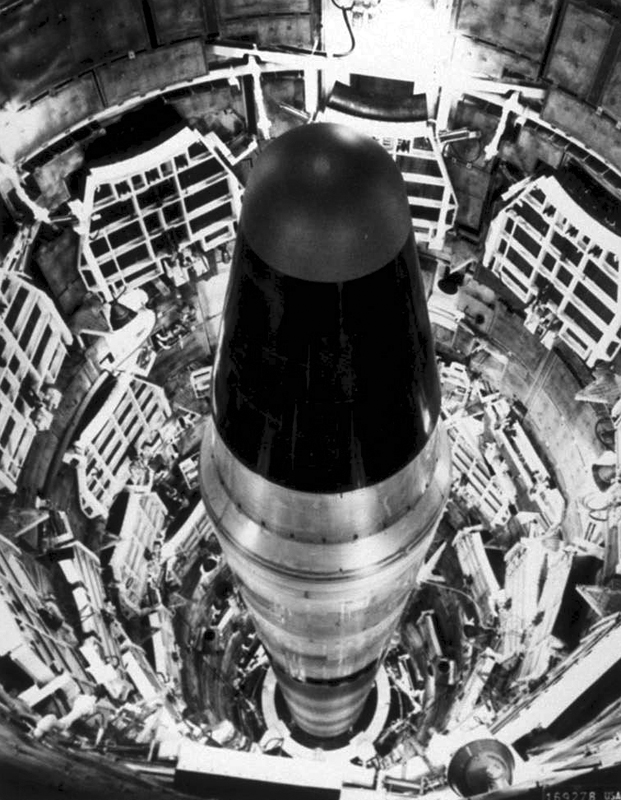
Due largely to the political largess of Wilbur D. Mills, Arkansas was home to numerous Titan II missile silos throughout the Cold War era.
Today at noon at the Old State House Museum, John Rowley explores this little-known or largely-forgotten part of Arkansas history. “Arkansas and the Cold War: Titan II Missiles in Cow Pastures,” was the basis for his master’s thesis at Arkansas Tech.
During the Cold War era, the sparsely populated, agrarian state of Arkansas seemed far removed from the realm of nuclear proliferation. Washington D.C., Moscow, New York and Havana easily come to mind when considering nuclear threat or strategic defense. Damascus, Judsonia, Antioch, Blackwell, and Searcy seemed insignificant in comparison. However, Arkansas’s role in the Cold War was more significant than one might think, playing an integral role in national defense and the United States’s policies of communist containment.
Arkansas’s Cold War involvement became apparent when eighteen Titan II missiles were commissioned and activated within the state in the early 1960’s. The arrival of these weapons coupled with mismanagement by federal agencies changed both the physical landscape and the political atmosphere of the state.
Photographing Everyday Arkansas Architecture the focus of talk tonight by Prof. Geoff Winningham
WORKING IN THE EYE OF THE SUN: Photographing the Vernacular Architecture of Arkansas is the title of remarks this evening by Geoff Winningham a Professor at Rice University and holder of the Lynette S. Aubrey Chair in the Humanities.
Arkansas has its share of vernacular architecture, everyday structures built by and for ordinary people, architecture without architects, so to speak. Working in the early eighties with Professor Cy Sutherland of the University of Arkansas School of Architecture, Geoff Winningham traveled throughout the state, identifying and photographing vernacular forms – houses, barns, silos, churches, schools, stores and more. Winningham will share a number of those images with his audience when he talks about Arkansas’s vernacular architecture.
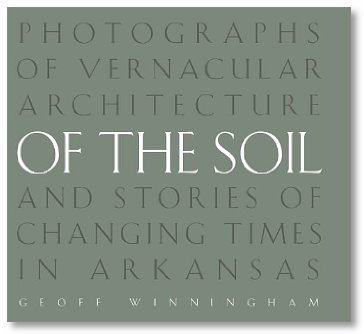
Selections from his collection of black and white images of those structures, plus interviews with people long familiar with them, are the makings of “OF THE SOIL”, a book just published by the University of Arkansas Press. Professor Jeff Shannon of the Fay Jones School of Architecture, served as its editor.
Professor Winningham is presented by the Architecture & Design Network as part of their monthly lecture series. The talk will take place this evening, Tuesday, December 9, 2014 at 6pm. It will be preceded by a reception at 5:30 pm at the Arkansas Arts Center lecture hall.
Supporters of the Architecture and Design Network (ADN) include the Arkansas Arts Center, UA’s Fay Jones School of Architecture, the Central Arkansas Section of the Arkansas Chapter of the American Institute of Architecture. All ADN lectures are free and open to the public. For additional information contact ardenetwork@mac.com. This project is supported in part by a grant from the Arkansas Humanities Council and the National Endowment for the Humanities.
On this date in 1819 future Little Rock Mayor Gordon Neill Peay was born. The Peay family arrived in Arkansas from Kentucky in 1825. They quickly became one of Little Rock’s leading families. Mayor Peay’s father, Nicholas Peay served on the Little Rock Board of Trustees (which existed before the town was incorporated) and later served on the City Council and was acting mayor.