What about BREAKFAST AT TIFFANY’S? See it tonight at 7 at the CALS Ron Robinson Theater

215px-Breakfast_at_TiffanysYou can’t eat breakfast at Tiffany’s, but you can enjoy the classic film tonight at the Ron Robinson Theater which presents the 1961 classic Blake Edwards film. (Be sure and pay attention to a passing reference to Arkansas, too.)

Based on Truman Capote’s novella, the film was one of Audrey Hepburn’s iconic roles.  Joining her in the cast were George Peppard, Patricia Neal, Martin Balsam, Buddy Ebsen and Mickey Rooney.  The film features the famous song “Moon River” which Hepburn sings at one point in the movie.  The film was nominated for five Academy Awards including Best Actress (Hepburn), Best Adapted Screenplay (George Axelrod) and Best Art Direction. It won the Oscars for Best Song – “Moon River” (Johnny Mercer and Henry Mancini) and Best Score (Mancini again).

The movie starts at 7pm tonight. Admission is $5. Concessions are available for purchase as well.

(You may not be able to shop at a Tiffany & Co. in person in Little Rock, but you can see Tiffany stained glass at City Hall and the State Capitol, as well as other Tiffany furnishings at the latter.)

The 2nd decade of 2nd Friday Art Night begins tonight!

2nd Friday Art Night2nd Friday Art Night starts its 2nd decade tonight.

Among the highlights are:

Historic Arkansas Museum (5-8 pm)

Two Exhibit Openings:

  • Suggin Territory:  The Marvelous World of Folklorist Josephine Graham opens in the Arkansas Made Gallery.
  • Suyao Tian: Entangled Beauty opens in the 2nd Floor Gallery

The Year of Arkansas Beer, sponsored by Historic Arkansas Museum Foundation and presented by Arkansas Brewers Guild, continues in April with Lost Forty Brewing’s Belgian Blonde.


Old State House Museum (5 – 8pm)

Join violinists Geoff Robson and Ryan Mooney and cellist Felice Farrell for a performance of works for string trios by Boccherini, Schubert, Mozart, Dohnanyi, and Beethoven. The event is free and music will be performed on an informal schedule starting at 5 p.m. The museum will remain open until 8:00. This is a casual event and guests are welcome to drop in and seat themselves after the music has started.


Butler Center Galleries  (5 – 8pm)

Opening exhibition – White River Memoirs: An Exhibition by Chris Engholm

The White River and its tributaries represent the most ecologically intact watershed in the continental United States. Over a million people inhabit it, living in 234 communities in 60 counties. For the past two years, Chris Engholm has traveled the White River in a cedar strip canoe, listening to people connected to it and collecting the artwork of 25 fine artists who maintain a special relationship with it. This artwork, photographs, and information about the river are presented in White River Memoirs. 

Featured artist: Sheliah Halderman 

Sheliah Halderman is a retired teacher who now paints pastels full time. Her paintings have won local and national awards, and she is very active in the Arkansas Pastel Society.

Featured musician: The Arkansas Weather

This band comprises graduates of the UALR music program who play an unpredictable combination of jazz, soul, R&B, funk, and pop.

30 Americans exhibit now open at Arkansas Arts Center

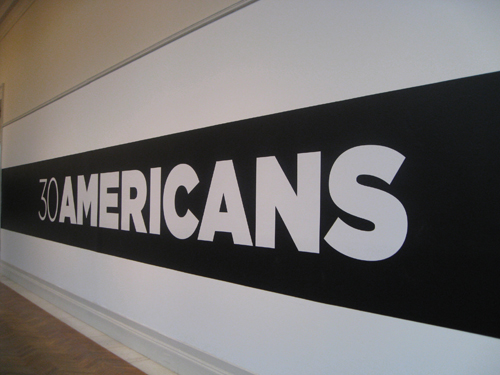
30americans30 Americans, the newest exhibit at the Arkansas Arts Center, opens today.  It will be on display there until June 21.

30 Americans showcases works by many of the most important African American artists of the last three decades. This provocative exhibition focuses on issues of racial, sexual, and historical identity in contemporary culture while exploring the powerful influence of artistic legacy and community across generations.

“This exhibition presents a sweeping survey of artwork by many of the most influential African-American artists of the last four decades,” said Arkansas Arts Center executive director Todd Herman. “For years, I’ve searched for an exhibition of this kind but couldn’t quite find what I was looking for – an exhibition with powerful interpretations of cultural identity and artistic legacy. When I came across 30 Americans, I knew this was exactly what I wanted patrons and visitors of the Arts Center to experience. These themes are universal in nature and speak to the larger human experience.”

30 Americans features work by such early and influential artists as Barkley L. Hendricks, Robert Colescott and Jean-Michel Basquiat, and those of younger and emerging artists, such as Kehinde Wiley, Wangechi Mutu and Shinique Smith. Often provocative and challenging, 30 Americans explores what it means to be a contemporary artist through an African-American point of view – whether addressing issues of race, gender, sexuality, politics or history.

Drawn from the collection of Mera and Don Rubell, 30 Americans contains 41 works in a variety of media – paintings, drawings, sculptures, installations, digital videos and photographs – by 30 of the leading contemporary African American artists. The Rubells began acquiring contemporary art in the late 1960s, often forging close friendships with living artists, particularly young artists.

The Rubells collected both backwards and forward, out of which emerged a pattern of intergenerational influence. Consequently, the works that comprise the exhibition afford viewers the opportunity to observe a stylistic dialogue among artists working throughout the past four decades. Now in collaboration with their two grown children, the Rubells continue to assemble one of the largest private collections of contemporary art in the world, which they currently house in a 45,000 square foot former DEA warehouse-turned-museum in Miami, Florida.

Previous institutions that have hosted variations of the exhibition include: the North Carolina Museum of Art, Raleigh, North Carolina (March 19, 2011 – September 4, 2011); the Corcoran Gallery of Art, Washington, D.C. (October 1, 2011 – February 12, 2012); the Chrysler Museum of Art, Norfolk, Virginia (March 16, 2012 – July 15, 2012); the Milwaukee Art Museum, Milwaukee, Wisconsin (June 14, 2013 – September 8, 2013); Frist Center for the Visual Arts, Nashville, Tennessee (October 11, 2013 – January 12, 2014); and the Contemporary Arts Center, New Orleans, Louisiana (February 8, 2014 – June 15, 2014).

Little Rock Look Back: Ben Piazza’s Broadway Debut

kataki-playbill-cover1Though he had been an understudy in the short-lived Too Late the Phalarope, Little Rock native Ben Piazza never went on in the production.  He made his Broadway debut in Kataki, which opened 56 years ago today at the Ambassador Theatre on April 9, 1959.

Piazza was the valedictorian of the Little Rock High School class of 1951. While there, he was recognized for his acting and writing abilities.  After being a Little Rock High School Tiger, he became a Princeton Tiger and graduated in 1955 before moving to New York City.

Written by Shimon Wincelberg, Kataki concerned an older Japanese pilot and a young American soldier stranded on an island at the end of World War II.  As was the case of many plays in the late 1950s, it had originally been a television play.  The title is the Japanese word for “enemy.”

Kataki starred Sessue Hayakawa and Piazza. Most of Hayakawa’s dialogue was in Japanese, so in some ways, Piazza acted in a two-character, one-person play – since he was the only one talking for most of the play.  The play was produced by Jay Garon and Bob Sokoler, with Richard Randall serving as associate producer.  David Amram provided the incidental music.  Peter Dohanos designed the island scenery.  Anne Graham provided the costume design, and Paul Morrison was the lighting designer.

The actors received high praise for their performances, but the play’s dramatic structure was criticized as being plodding and trite.  The play was directed by Alan Schneider, who would reunite with Piazza in the original production of Who’s Afraid of Virginia Woolf?  a few years later.  The play would run only 20 performances, but Piazza was recognized with a Theatre World Award for his portrayal of Alvin, the young soldier.

The play was revived in Los Angeles in 2010 to good reviews.

Tonight at Ron Robinson Theater: FIGHT CLUB

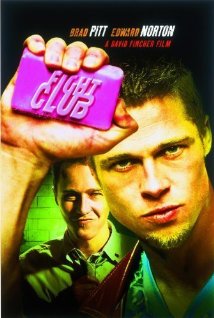
fight clubThe first rule about watching Fight Club is that you DO talk about going to see the movie.  Tonight, the CALS Ron Robinson Theater will be screening this modern iconic film starring Oscar winner Brad Pitt and Oscar nominee Edward Norton.  (Hard to believe the film is 16  years old in 2015.)

Directed by David Fincher, it also starred Meat Loaf and Helena Bonham Carter.  Fight Club concerns an insomniac office worker looking for a way to change his life.  He crosses paths with a devil-may-care soap maker and they form an underground fight club that evolves into something much, much more…

The movie starts at 7pm tonight. Admission is $5. Concessions are available for purchase, as well.

“Art. Race. Identity. Bringing ’30 Americans’ to Little Rock” – An Arts Center discussion at Clinton School today

The Arkansas Arts Center premieres a new exhibit tomorrow – “30 Americans.”  Today at noon at the Clinton School, Dr. Todd Herman will discuss the exhibit.

“30 Americans” presents a sweeping survey of artwork by many of the most important African American artists of the last four decades. Organized by the Rubell Family Collection in Miami, the exhibition features work by such early and influential artists as Barkley L. Hendricks, Robert Colescott and Jean-Michel Basquiat, and those of younger and emerging artists, like Kehinde Wiley, Wangechi Mutu, and Shinique Smith. Often provocative and challenging, “30 Americans” explores what it means to be a contemporary artist and an African American today. Whether addressing issues of race, gender, sexuality, politics, or history—or the seeming lack thereof—the works in the exhibition offer powerful interpretations of cultural identity and artistic legacy.

Dr. Herman, executive director of the Arkansas Arts Center will discuss the steps taken to bring a nationally recognized exhibition to Little Rock and the impact it will have.

Little Rock Look Back: LaHarpe Sees a Rock

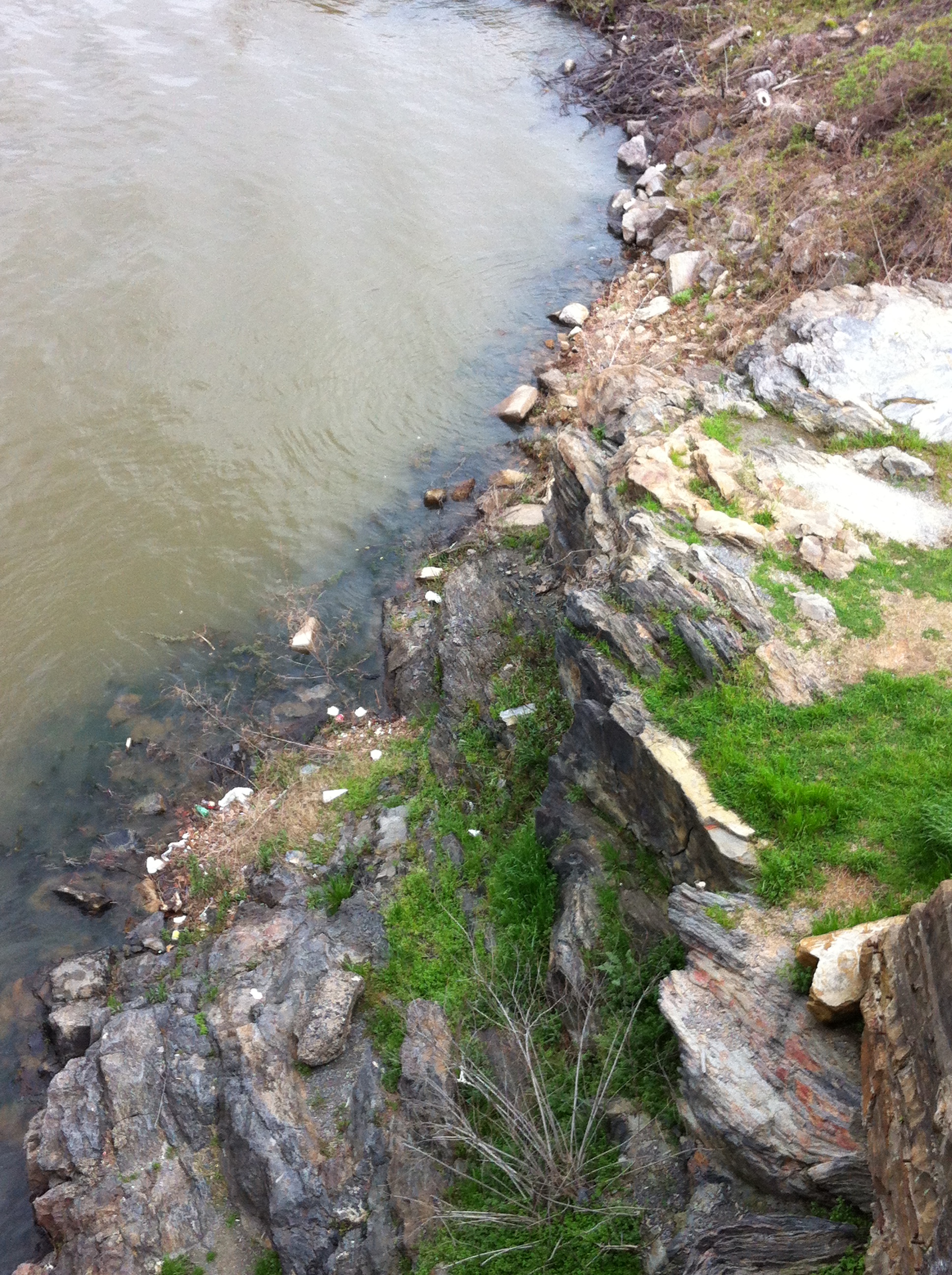
IMG_4805On April 9, 1722, French explorer Jean-Baptiste Bénard de La Harpe rounded the bend of the Arkansas River and saw La Petite Roche and Le Rocher Français.  He had entered the mouth of the Arkansas River on February 27 after traveling up the Mississippi River from New Orleans.

Though La Harpe and his expedition are the first Europeans documented to have seen La Petite Roche, the outcropping of rocks was well-known to the Quapaw Indians in the area.  The outcropping jutted out in the Arkansas River and created a natural harbor which provided a perfect place for boats to land.

The rock outcropping is the first one visible along the banks of the Arkansas River.  It marks the place where the Mississippi Delta meets the Ouachita Mountains.  Geologists now believe that the Little Rock is not the same type of rock as the Ouachita Mountains and more closely matches the composition and age of mountains in the western US.

In 1813, William Lewis became the first European settler to live near La Petite Roche but only stayed a few months.  Speculators and trappers continued to visit the area throughout the 1810s. During that time, the outcropping became known informally as the Little Rock.

La Petite Roche had become a well-known crossing when the Arkansas Territory was established in 1819. The permanent settlement of ‘The Rock’ began in the spring of 1820, and the first building has been described as a cabin, or shanty, and was built on the bank of the river near the ‘Rock.’ In March 1820, a Post Office was established at the ‘Rock’ with the name “Little Rock.”

Over the years, La Petite Roche was altered.  In 1872, Congress authorized the building of a railroad bridge. A pier for the bridge was built at the location of the La Petite Roche which caused the removal of several tons of rock.  The bridge was never built.  When the Junction Bridge was built in 1899, even more rock was removed in the process of erecting part of the bridge on top of the rock.  It was not viewed as being disrespectful of the City’s namesake at the time.  Indeed, it was viewed as a testament to the sturdiness of the rock.

In 2010, La Petite Roche plaza opened in Riverfront Park.  It celebrates the history of La Petite Roche and explores its importance to various aspects of Little Rock’s history and geography.