Celebrate Arkansas’ Quest for Statehood at Old State House and Historic Arkansas Museum today

OSH logohamlogoTomorrow is Arkansas’ 178th birthday.  Two state museums are helping people get in the mood by giving them a one day head-start on festivities.

The Old State House Museum and Historic Arkansas Museum are partnering to mark Arkansas’s 178th birthday with the annual Arkansas Statehood celebration, The Quest for Statehood, on Saturday, June 14, from 10 a.m. to 4 p.m.

Visitors will be given a chance to view and participate in a living history of  1836 Arkansas. Costumed interpreters will transform The Old State House and Historic Arkansas Museum to portray Arkansas as it was 178 years ago.

Several games and activities will be offered, including a large-scale game of commerce and trade that will provide an immersive experience. Living historians will portray the townspeople of 1836. These include a tavern keeper, phrenologist, carpenter, shop keeper, owner of a ladies’ emporium, silhouette artist and more.

The Old State House Museum and Historic Arkansas Museum are agencies of the Department of Arkansas Heritage.


Pulitzer Prize winning historian Joseph J. Ellis at Clinton Presidential Center tonight

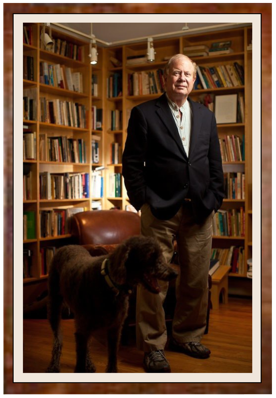
JJEPortThe Clinton Presidential Center will host a public program at 6 p.m. Tuesday, June 10, featuring Pulitzer Prize-winning historian Joseph J. Ellis, author of “Revolutionary Summer,” which he will be signing copies of afterward.

Joseph Ellis Lecture & Book-Signing
Tuesday, June 10
Great Hall
Program: 6-7 p.m. (Doors open at 5:30 p.m.)
Book-signing: 7-8 p.m.

Joseph J. Ellis is one of the nation’s leading scholars of American history. The author of eight books, Ellis was awarded the Pulitzer Prize for Founding Brothers: the Revolutionary Generation and won the National Book Award for American Sphinx, a biography of Thomas Jefferson. His in-depth chronicle of the life of our first President, His Excellency: George Washington, was a New York Times bestseller.

Ellis’ newest book, Revolutionary Summer: The Birth of American Independence was released by Random House in June 2013.

Ellis’ essays and book reviews appear regularly in national publications, such as The New York Times, The Los Angeles Times, The Wall Street Journal, The Chicago Tribune, The New Republic, and The New Yorker. Ellis’s commentaries have been featured on CBS, CSPAN, CNN, and the PBS’s The News Hour with Jim Lehrer, and he has appeared in several PBS documentaries on early America, including “John and Abigail [Adams]” for PBS’s The American Experience and a History Channel documentary on George Washington

Ellis currently teaches at the Commonwealth Honors College at the University of Massachusetts at Amherst. He previously taught at Mount Holyoke College and at the United States Military Academy at West Point.

He lives in Amherst, Massachusetts with his wife, Ellen Wilkins Ellis, two dogs and a stray cat. He is father of three sons. The youngest, Alex is a student at the University of Mississippi.

To pre-order “Revolutionary Summer,” contact Michelle Ross at the Clinton Museum Store by emailing mross@clintonfoundation.org or calling (501) 748-0400.

The program is FREE and open to the public; however, reservations are required. To RSVP, please email operationslr@clintonfoundationn.org  or call (501) 748-0425.

Little Rock Look Back: Ben D. Brickhouse, LR’s 43rd Mayor

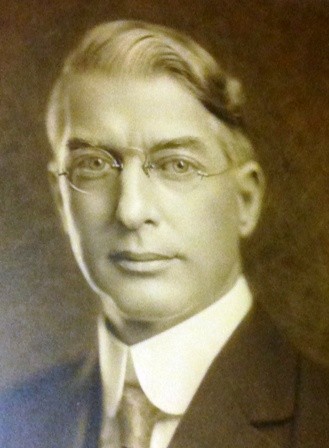
BrickhouseOn June 8, 1873, future Little Rock Mayor Ben D. Brickhouse was born in Virginia.  He moved to Texas as a child before his family settled in Arkansas.

His first job was with the Missouri Pacific Railroad.  He eventually attended law school at the University of Arkansas.  As an attorney, he remained interested in labor relations throughout the rest of his life.

In 1914, Brickhouse was elected to the Little Rock City Council.  He was reelected in 1916.  In 1918, he was appointed Labor Commissioner for the State of Arkansas by Governor Charles Brough.

Brickhouse was elected Mayor of Little Rock in 1919.  He was relected twice (1921 and 1923).  Prior to the change to the City Manager form of government in 1957, other Mayors would seek a third consecutive term, but none would be successful.

Mayor Brickhouse ran for a fourth term as Mayor but was defeated.  In 1923, he had openly opposed the Ku Klux Klan, which was then a major player in Democratic politics in Little Rock, in Arkansas and in the nation. The Klan had wanted to build a civic auditorium for Little Rock. The Mayor opposed it on the grounds that not all Little Rock residents would feel welcome there.  In the next Democratic primary for Mayor, Brickhouse did not secure the nomination.

During Mayor Brickhouse’s tenure the City purchased the land to make Fair Park (now War Memorial Park).  He also served as chair of the State Fairgrounds. Brickhouse remained active in civic affairs, often speaking out in favor or opposition to local issues.

Brickhouse retired from public life in 1925 but returned in 1938 when he was elected to the Arkansas House of Representatives.  He was reelected in 1940.  On June 1, 1941, not long after the conclusion of the legislative session, Brickhouse died.

Architects of Little Rock the focus of June’s Legacies & Lunch

Architects of LR bookCharles Witsell and Gordon Wittenberg, retired principals of Little Rock architecture firms and co-authors of the newly released Architects of Little Rock: 1833-1950, will discuss Little Rock’s architectural history at Legacies & Lunch on Wednesday, June 4, noon-1 p.m. in the CALS Main Library’s Darragh Center, 100 Rock Street.

Witsell and Wittenberg are retired principals of WER Architects/Planners (Witsell, Evans and Rasco) and WD&D (Wittenberg, Delony and Davidson). Architects of Little Rock: 1833-1950 profiles thirty-five architects, including George R. Mann, Thomas Harding, Charles L. Thompson, and more. Famous buildings such as the Arkansas State Capitol, St. Andrews Cathedral, the Pulaski County Court House, Central High School, and Robinson Auditorium are showcased as well. Copies of the book will be available for purchase; Wittenberg and Witsell will sign copies after their talk.

Legacies & Lunch, the Butler Center’s monthly lecture series, is free, open to the public, and supported in part by the Arkansas Humanities Council. Programs are held from noon-1 p.m. on the first Wednesday of each month. Attendees are invited to bring a sack lunch; drinks and dessert are provided. For more information, contact 918-3033.

Final weekend of Carroll Cloar Exhibit at Arkansas Arts Center

 Carroll Cloar, The Smiling Moon Cafe, 1965, casein tempera on Masonite, 25 in. x 36 in., Private Collection, ©Estate of Carroll Cloar

There are only three days remaining to experience (or experience again) The Crossroads of Memory: Carroll Cloar and the American South exhibit at the Arkansas Arts Center.  It runs through June 1.

The paintings of Carroll Cloar (1913-1993), rank among the most haunting and beautiful evocations ever made of the American South. Drawing upon family stories, photographs of ancestors, rural scenery, small town life, and memories of his childhood on an Arkansas farm, Cloar captured the quiet richness of a simpler world.

Marking the centenary of the artist’s birth, The Crossroads of Memory: Carroll Cloar and the American South will include approximately seventy paintings, ranging from early Realist masterpieces to the poignant pictures of his later career.

An exhibition organized by the Memphis Brooks Museum of Art and the Arkansas Arts Center curated by Stanton Thomas, Curator of European and Decorative Art at the Memphis Brooks Museum of Art, the exhibition will feature works from major public collections as well as rarely seen pictures still in private hands.

Presented in Arkansas by: Arkansas Democrat-Gazette; Lisenne Rockefeller; Stella Boyle Smith Trust.

Sponsored in Arkansas by: Anonymous; Bailey Foundation; Sandra and Bob Connor; Terri and Chuck Erwin; Friday, Eldredge & Clark, LLP; Eileen and Ricardo Sotomora; John Tyson & Tyson Foods, Inc.; Arkansas Farm Bureau/Agriculture Council of Arkansas; Capital Hotel; Cindy and Greg Feltus; Munro Foundation; J.D. Simpson; Don Tilton; Gus and Ellis Walton.

Book on LR Architects celebrated tonight

Architects of LR bookTonight, the Historic Arkansas Museum will be hosting a lecture and book signing for the recently released Architects of Little Rock: 1833–1950, penned by Little Rock architects, Charles Witsell and Gordon Wittenberg.

The evening will begin at 5:30 with a special presentation and lecture discussing the book. Speakers will include Bill Worthen, Historic Arkansas Museum; Tom Adams, WD&D; John Greer, WER Architects/Planners; Bobby Roberts, Central Arkansas Library and a special presentation will be given by Wesley Walls, President AIA Arkansas.

A reception and book signing will begin immediately following the lecture. All are invited to attend this special evening. “There are many ways of knowing the built environment. In their Architects of Little Rock, Mr. Witsell and Mr. Wittenberg explore the always complex relationship between buildings and the visionary thinkers—sometimes ordinary craftsman— who produced them. In so doing, they not only have uncovered the design rationales and circumstances of production that influenced a wide spectrum of Little Rock architecture but moreover have written a significant work of architectural scholarship that addresses the history of the architect’s profession,” Ethel Goodstein-Murphree, architectural historian and professor of architecture, University of Arkansas.

Architects of Little Rock: 1833–1950, is being released this month. The book is co-written by Little Rock architects, Charles Witsell and Gordon Wittenberg and edited by Marylyn Jackson Parins. Architects of Little Rock provides biographical and historical sketches of the architects at work in Little Rock from 1833 to 1950. It is the story of the people behind the city’s most important buildings. Thirty-five architects are profiled, including George R. Mann, Thomas Harding, Charles L. Thompson, Max F. Mayer, Edwin B. Cromwell, George H. Wittenberg, Lawson L. Delony, and others. Famous buildings, including the Historic Arkansas Museum, the Old State House, the Arkansas State Capitol, St. Andrews Cathedral, Little Rock City Hall, the Pulaski County Court House, Little Rock Central High School and Robinson Auditorium are showcased, bringing attention to and encouraging appreciation of the city’s historic buildings.

Charles Witsell and Gordon Wittenberg are retired principals of the Little Rock architecture firms WER Architects/Planners (Witsell, Evans and Rasco) and WD&D (Wittenberg, Delony and Davidson), respectively.

Visit Veterans at Mount Holly Cemetery this Memorial Day

MountHolly Memorial DayToday is Memorial Day – a time to pay tribute to the men and women in uniform who died in service to their country.

As a way to give this recognition, today would be a good day to visit a cemetery. One of Little Rock’s most storied cemeteries is Mount Holly Cemetery. There are veterans from all wars: Revolutionary, War of 1812, Mexican, Civil War, Spanish-American, World War I and II, Korean, Vietnam and Desert Storm.

Founded in 1843, Mount Holly has been called “The Westminster Abbey of Arkansas.” Thousands of visitors come each year. Those interested in history come to see the resting places of the territorial citizens of the state, including governors, senators, generals, black artisans, and even a Cherokee princess. For others the cemetery is an open air museum of artistic eras: Classical, Victorian, Art Deco, Modern––expressed in gravestone styles from simple to elaborate. Some come to read the epitaphs that range from heartbreaking to humorous to mysterious.

Though a City of Little Rock facility, the cemetery is maintained by the Mount Holly Cemetery Association, a non-profit organization with a volunteer Board of Directors. The cemetery is located at 1200 South Broadway in Little Rock. Gates are open from 8 a.m. until 5 p.m. in the summer and from 8 a.m. until 4 p.m. in the winter.

Interred within the rock walls of Mount Holly are 11 state governors, 15 state Supreme Court justices, four Confederate generals, seven United States senators and 22 Little Rock mayors, two Pulitzer Prize recipients, as well as doctors, attorneys, prominent families and military heroes.  Proving that death is the great equalizer (and the J. N. Heiskell lived a very long time) longtime Gazette owner and publisher J. N. Heiskell is buried near two different nemeses: Senator, Governor and demagogue Jeff Davis; and segregationist Congressman Dr. Dale Alford.