Little Rock Look Back: Creation of War Memorial Stadium approved

On March 18, 1947, Governor Ben T. Laney signed the bill into law which authorized the construction of War Memorial Stadium.

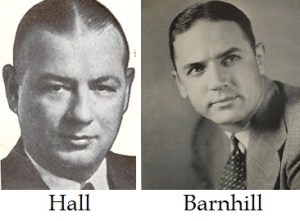
The plans for the stadium were the brainchild of Arkansas Secretary of State C.G. “Crip” Hall and University of Arkansas Athletic Director John Barnhill.

Apparently the Southwest Conference was threatening to kick Arkansas out because of an inadequate football facility. Since the University did not have the funds to build a new one on its campus, Barnhill and Hall decided that the state should build one. Many other states were building War Memorial facilities of a variety of natures. The duo decided that the new football facility could be a War Memorial Stadium to pay tribute to the men who died in the recently concluded World War II.  While the stadium was touted as being of use to all colleges in the state and a variety of other types of activities, it was very much designed to be a home for the Arkansas Razorbacks.

Getting the stadium through the Arkansas General Assembly was not easy.  The bill to create the stadium commission sailed through both houses. But even some who voted for it said they would oppose any funding bills.  When time came to vote for the funding, the bill fell far short of the three-quarters vote that was needed in the House for an appropriation bill.

WWII veterans were on both sides of the issue.  Some felt it was an appropriate way to honor those who died.  Others felt it was a gimmick to get the stadium approved.  Some of the opponents felt that a new state hospital for UAMS would be the more appropriate way to honor those who died during the war.  The debates were often heated and personal.

Overnight a new bill was created. It would pay for the stadium through the issuing of bonds. In addition to the state issuing bonds, any city which wished to bid for it would have to put up money for it as well as provide land.  This new bill would require only 51 votes to pass the House.  It was able to pass that threshold.  The Senate made a few amendments (mostly dealing with the composition of the stadium commission and the amount of dollars that the host city had to pledge).  Finally the House agreed to the Senate amendments and it went to Governor Laney.

The next hurdle for the stadium was choosing a location. That process would occupy stadium proponents throughout the spring and summer of 1947.

Cultural Spring Break in Little Rock

Image result for spring break kids

It is Spring Break week! Several Little Rock museums have special activities planned.

Museum of Discovery
March 18 – March 22 • 10 am to 4 pm
Monday, March 18 – Meet and have your photo taken with Jet Propulsion from “Ready Jet Go!”  Enjoy hands-on activities that teach about space and more.
Tuesday, March 19 – Meet and have your photo taken with Nature Cat, the star o PBS Kids’ “Nature Cat”!  Enjoy hands-on activities about the wonderful outdoors and meet some of nature’s coolest animals!
All Days
Tesla Shows: 11 a.m., 12 p.m., 1 p.m., 2 p.m. & 3 p.m.
Awesome Science Demos: 10:30 a.m., 11:30 a.m., 12:30 p.m., 1:30 p.m. & 2:30 p.m.
Meet Museum Animals: 10 a.m., 12 p.m., 2 p.m. & 4 p.m.

Historic Arkansas Museum
Spring Break 2019: Settling in Arkansas
March 18 – March 22 • 10 am to 4 pm
In celebration of Arkansas’s Territorial Bicentennial, our Spring Break activities will focus on settling this state. The museum’s historic block has countless stories of making a life in early Arkansas, from just after becoming a territory to a decade after Statehood. Visitors can spend each day learning about a different person’s path to Arkansas. We will cook Pioneer food, make hands-on crafts, and share a few pioneer skills.

Little Rock Zoo

March 18 – March 22 • 9:30am to 4:00pm
See daily feedings of the penguins, interact with education exhibits, attend a meet and greet with animals, go to the Party in the Plaza, have a special meet and greet at the Arkansas Heritage Farm, and chat with animal keepers.

Clinton Presidential Center
March 18 – March 22 • 10:00am to 2:00pm
The Clinton Presidential Center invites children of all ages to enjoy FREE Spring Break activities on March 18 – 22, between 10 a.m. and 2 p.m. Join us for FREE craft activities for the entire family! We’ll offer an instructional glass fusion project, led by Little Rock School District art specialist Sharon Boyd-Struthers, in conjunction with our White House Collection of American Crafts: 25th Anniversary Exhibit. Spring Break activities are FREE; however, admission fees to tour the Museum apply.


Arkansas Arts Center Children’s Theatre

March 19 – March 22 • 2:00pm
Special Spring Break matinee performances of Charlotte’s Web on Tuesday, Wednesday, Thursday and Friday of this week.

Wilbur the piglet is the runt of his litter. But under the loving care of eight-year-old Fern Arable—and due in no small part to the delicious and plentiful slops on her Uncle Homer’s farm—Wilbur grows up into a fine specimen of a pig.  Wilbur is no ordinary pig, and thanks to the acrobatic web-writing of his friend Charlotte, a kindly barn spider, the world soon learns just how “terrific” and “radiant” he is. Come join in this heart-warming barnyard adventure and marvel at the wonder of Charlotte’s web.

Women Making History – Louise Loughborough

Louise Loughborough was the first woman to serve on the Little Rock Planning Commission.  Not only was the she first woman to serve on this body, she was the first to serve on any City commission other than the Board of Censors or Library Board.

Born Louisa Watkins Wright in Little Rock 1881, her ancestors included many early Arkansas leaders including Little Rock Mayor David Fulton, who had been born in Ireland.

In 1935, Loughborough was appointed to the Little Rock Planning Commission, and it was in this role that she first heard about the plan to condemn the half-block of houses that she had grown up admiring on Cumberland and East Third streets. Although the neighborhood had fallen on hard times, becoming a red-light district and slum, Loughborough feared the loss of several historic structures, including the Hinderliter House, the oldest building in Little Rock and thought to be Arkansas’s last territorial capitol. She mobilized a group of civic leaders to save these buildings. She enlisted the aid of prominent architect Max Mayer and coined the term “town of three capitols” to try to capture the imagination of potential supporters, grouping the “Territorial Capitol” with the Old State House and the State Capitol.

The Arkansas Territorial Restoration opened on July 19, 1941. The project was the first Arkansas agency committed to both the restoration of structures and the interpretation of their history, and it served as a model and inspiration for historic preservation in the state. Around the same time, she was a moving force behind the creation of a museum at the Old State House as well.  Today both Historic Arkansas Museum (as the Territorial Restoration is now known) and the Old State House Museum are agencies of the Department of Arkansas Heritage.

As founding Chairman of the Arkansas Territorial Restoration Commission, Louise Loughborough provided daily direction for the museum house complex through the first twenty years of its existence. She died in Little Rock on December 10, 1962 and was buried at Mount Holly Cemetery.

Documentary on preserving county courthouses today at 3pm at CALS Ron Robinson Theater

Image may contain: sky, house and outdoorJoin the Ron Robinson Theater for a FREE public screening of AETN’s newest documentary, History on the Line: Preserving County Courthouses! Doors open at 2:00 p.m.  The movie starts at 3:00 p.m.

Historic county courthouses stand as iconic symbols of Arkansas’s development as a state, elegant testaments to justice and important sentries to the history of the state.

History on the Line: Preserving County Courthouses introduces unsung preservationists and architects who travel the state finding ways to rehabilitate a building or, at the very least, fix a leaky roof to save the precious records inside. Also featured are county judges who deal with the financial burden of the historic buildings’ maintenance needs.

“The state is fortunate that the Arkansas Historic Preservation Program has helped to restore 79 historic county courthouses since a grant system was put in place to support restoration needs,” AETN Executive Director Courtney Pledger said. “The community pride and local history these structures represent cannot be lost to disrepair.”

The film visits the pristine, stately and recently restored Desha County courthouse in Arkansas City, shares stories from the record room in Madison County, and follows Mississippi County’s political and legal struggle over the viability of maintaining their split judicial district and their two historic county courthouses in Blytheville and Osceola. The documentary follows their struggles while telling stories of preservation and the importance of the historic county courthouses of Arkansas.

Counties featured in the film include Desha County, Madison County, Calhoun County, and Mississippi County.

The screening is sponsored by AETN and the Arkansas Humanities Council.

St. Pat’s Day with Pat Robinson, LR’s 45th mayor

Robinson

On St. Patrick’s Day in 1900, future Little Rock Mayor Pat L. Robinson was born.  He was born in a community outside of Arkadelphia, but moved to Little Rock with his parents.

By the 1920s, Robinson was a rising star of Little Rock Democratic politics.  In April 1929, just weeks after his 29th birthday, he was elected Mayor.  He had twice been elected as City Attorney (1926 and 1928) and was one of the youngest to serve in that position.

During Mayor Robinson’s tenure, he announced plans to construct a new airport.  That project led to the creation of what is now the Bill and Hillary Clinton National Airport.  Mayor Robinson was also involved in helping Philander Smith College secure the property where it is now located.  In addition, during his tenure, what is now the Museum of Discovery was folded into the City of Little Rock.  Shortly after taking office, he championed several projects for approval by Little Rock voters. The projects he supported were approved; the ones he did not support did not pass.

Mayor Robinson ran afoul of some of the Democratic party leaders. While the extent of the discord is not exactly known, it IS known that shortly after taking office he confronted the City Council over a special election.  Mayor Robinson sat silently while the City Council voted to approve a special election with a variety of options for voters. Only after the Council approved it did he disclose he only supported three of the initiatives.  In a bit of political brinkmanship, the Council subsequently voted to cancel the election. The Mayor vetoed their vote.  The aldermen chose not to attempt an override (though they had the votes based on disclosures made to the public and the press).  It appears that the relationship between the Mayor and the City Council never recovered.

IMG_4532During this era in Little Rock, it was customary for an incumbent mayor to be given a second term. But City Clerk Horace Knowlton challenged Robinson in the primary.  It was a bitter campaign with Robinson linking Knowlton to disreputable denizens and Knowlton charging Robinson with “an orgy of spending.”  Robinson initially came out 17 votes ahead. But after a review and a lawsuit, it was found that Knowlton ended up with 10 more votes and became the nominee.  At the time, being the Democratic nominee was tantamount to election.

After he left office, Robinson practiced law for a few years in Little Rock and then left the city.  He married a woman from England, Arkansas in the 1930s, but by the 1940 census, he was listed as divorced and living as a lodger.  He later served in the Army during World War II.  Robinson died in June 1958, and is buried in Clark County.

Women Making History – Jimmie Lou Fisher

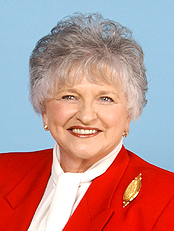
Image result for jimmie lou fisherJimmie Lou Fisher served as a Constitutional officer in Arkansas longer than any other woman in the state’s history (twenty-four years).  Her twenty-two years as Treasurer is also the longest any person has served in that post. (And unless the term limits rules for Constitutional officers are changed, it is a record that is likely to stand.)

Born in Delight, she grew up in Paragould and graduated from high school in Vilonia. (Her father was a coach and school administrator who moved the family around as he took new jobs.)  She attended what is now Arkansas State University.

Interested in politics from an early age, in 1970, she was elected Greene County Treasurer. She held that position until 1979 when she was appointed by Governor Bill Clinton to be the Auditor of Arkansas. (He had appointed longtime Auditor Jimmie “Red” Jones to be Adjutant General of the Arkansas National Guard.)

Gov. Clinton had hardly picked her from obscurity.  She had been active in his successful race for governor in 1978. Previously she was vice chair of the Democratic State Committee and a member of the Democratic National Committee from 1976 to 1978 and a member of the Credentials Committee of the National Convention in 1976.

Since Fisher had been appointed, she could not run to succeed herself.  When longtime Treasurer Nancy Hall announced she would not seek re-election, Fisher jumped into that race. She easily won the race and was re-elected each time until term limits took effect in 2002.

After announcing her retirement from politics (where she had been respected by both Democrats and Republicans for her handling of state finances), Fisher was pressed into service to be the Democratic Party standard bearer in the race for governor against incumbent Mike Huckabee.

Though not the first woman to seek a major party’s nomination for governor, she was the first to be a major party nominee.  She ran a close election, but was defeated by Huckabee.

In 2013, she moved back to Greene County to be closer to some family members there.

21st Wine & Food Feastival tonight at Wildwood Park

FEASTival 2019 features wine, spirits, beers, and artful edibles from central Arkansas’ best culinary creators, a silent auction and raffle.

The band Greasy Greens will join the party to provide music for onstage dancing!

The fun starts at 6:30pm tonight at Wildwood Park.  Ticket information is here.  Proceeds go to support Wildwood’s gardens, art exhibitions, the Wildwood Academy of Music and the Arts and Wildwood’s educational programs.

Join Wildwood Park as it celebrates a diversity of culinary delights from central Arkansas, including:

Arthur’s Prime Steakhouse / Oceans at Arthur’s

Bonefish Grill

Blue Cake Company

The Capital Hotel

Diamond Bear Brewing Company

The Faded Rose

Moe’s Southwest Grill

Red Lobster

Bravo

Nothing Bundt Cakes

Taziki’s Mediterranean Cafe

Petit and Keet

YaYa’s Euro Bistro

Table 28

The Vintage Kitchen

The Rusty Tractor Vineyards