
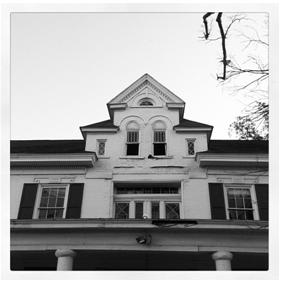
Cleanup day at William E. Woodruff House announced for Saturday, Aug 8

The historic Woodruff house.

The historic Woodruff house.

The QQA acquired the William E. Woodruff Housein December 2014 with the help of the City of Little Rock and the Arkansas Historic Preservation Program.   The QQA has donated interior and façade easements to protect the house in perpetuity, and we continue to work with the City and AHPP to stabilize the house and make repairs before selling it for development.

On Saturday, August 8 from 8am to 12 noon, join other volunteers at the Woodruff House (1017 East 8th Street) for a cleanup day.

The main task is basic landscape cleanup surrounding the house.  Before the house can be treated for termite damage and repaired, weeds and shrubs surrounding the foundation must be removed.  There is also trash on the property that needs to be picked up.

Volunteers must sign a waiver before working, they will be available on site.  Volunteers should wear old clothes, sturdy closed-toe shoes, and bring work gloves. If you would like to be involved but can’t join us on the 8th, you can help by donating cold drinks, snacks, or lunch to our volunteers. Contact the QQA office at qqa@quapaw.com or 501-371-0075 to make arrangements. If you have supplies you would be willing to let us borrow, drop them by QQA office, clearly labeled with your name and phone number, or just bring them with you when you volunteer.

If you’re interested in sponsoring this or future work days at the Woodruff House, please contact the QQA office at qqa@quapaw.com or 501-371-0075. 

The Quapaw Quarter Association’s mission is to promote the preservation of Little Rock’s architectural heritage through advocacy, marketing and education. Incorporated in 1968, the QQA grew out of an effort to identify and protect significant historic structures in Little Rock during the urban renewal projects of the early 1960s. Throughout its existence, the QQA has been a driving force behind historic preservation in Greater Little Rock.
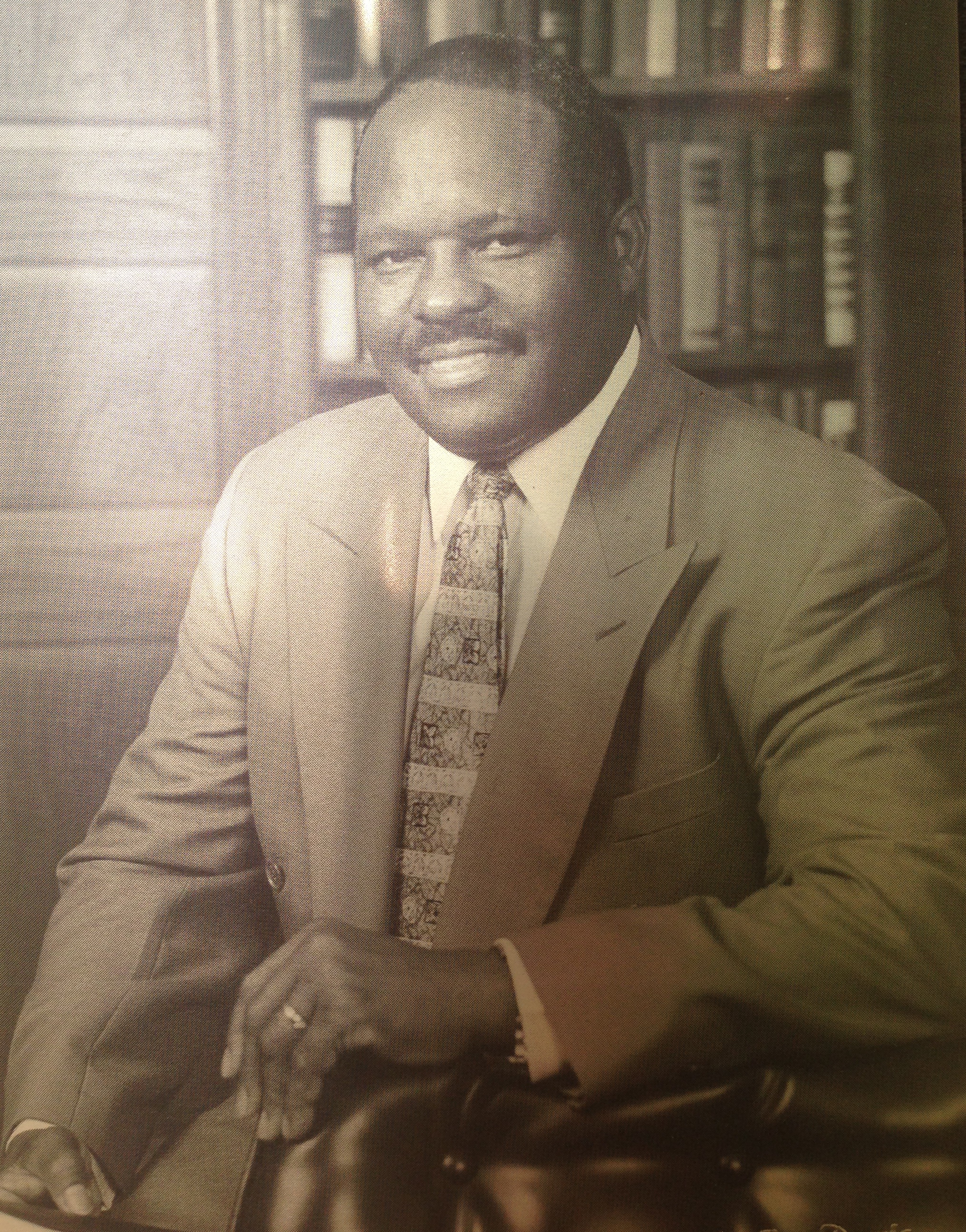
Little Rock Look Back: City Director Willie L. Hinton

HintonOn August 2, 1947, future Little Rock Vice Mayor Willie Lee Hinton was born in Wynne and educated in Cross County.  He then attended what is now the University of Arkansas at Pine Bluff.

For twenty-eight years, Hinton was a vocational education teacher at the Arkansas School for the Deaf.  He was also very active in neighborhood activities as well as in grassroots community-building efforts.

In 1993, Hinton made his first race for the City Board of Directors.  After narrowly losing the Ward 2 race in a special election, he returned to run again the following year.  Hinton won the race in November 1994 and was re-elected in 1998 and 2002.  In 2003, he was selected to serve as Little Rock Vice Mayor for a two year term.

Long an advocate for neighborhood empowerment, Hinton had championed the transformation of the old Lee Elementary School into a resource center.  Under his leadership the building was purchased from the Little Rock School District in 1997 and opened in 2000 as the Neighborhood Resource Center.  Five years later, the Little Rock City Board of Directors voted to name it in his honor.  The building, which stands at 12th and Pine Streets, is a living testament to his vision of inclusiveness and the worth of every individual.

After battling a brain tumor for nearly two years, Hinton chose not to seek a fourth term on the Little Rock City Board.  His public service to the citizens of Little Rock ended on December 31, 2006.  On February 13, 2007, Hinton died at his home in Little Rock at the age of 59.  He was survived by his wife Blondell, two children and two grandchildren.  He is buried in the Graham Cemetery in Cross County.

Little Rock Look Back: Mayor Jim Dailey

cna_commissioner_daileyOn July 31, 1942, future Little Rock Mayor Dalton James “Jim” Dailey, Jr. was born to Dalton and Ellen Dailey.  After graduating from Little Rock Catholic High School, he attended the University of Arkansas at Fayetteville.  He graduated with a Bachelor of Science degree in Business Administration. He joined his father in the family business, Dailey’s Office Furniture.

In 1974, Dailey was elected to the City of Little Rock Board of Directors.  He served one four-year term. The last two years of that term, he was the Vice Mayor of Little Rock.

Following that term, he remained engaged in civic activities including serving in leadership capacities in community campaigns.  He also served as president of the National Office Products Association – the first Arkansan to do so.  Dailey also served as the founding chair of Leadership Greater Little Rock.

In 1988, Dailey was elected to return to the City Board.  He was reelected in 1992.  Dailey served as Vice Mayor in 1991 and 1992.  In January 1993, he was chosen by his fellow City Directors to serve a two year term as Mayor.  Under his leadership, the Future-Little Rock goal-setting process took place.

Following a voter-approved change to the City structure, the position of Mayor was changed to be elected by the people while maintaining the City Manager form of government.  On January 1, 1995, Jim Dailey was sworn in as the first popularly-elected Mayor of the City of Little Rock in over 38 years.

cityoflr_img_mayor_01Dailey has served on the Board of Directors for the Little Rock Regional Chamber of Commerce, Metroplan, Communities in Schools, Arkansas BioVentures and New Futures for Youth. He was appointed to the National League of Cities Board of Directors and the Municipalities in Transition on Public Finance.

As Mayor, he served as Chair of the Intergovernmental Advisory Committee of the Federal Communications Commission. He was also a member of the United States Conference of Mayor’s Communications Task Force.  He also served as president of the Arkansas Municipal League in 2002 and 2003.

While he was Mayor of Little Rock, he was a strong proponent of the development of the River Market and worked to locate the Clinton Presidential Library in Little Rock.  He also worked to increase public safety support.  He also oversaw the establishment of Central Arkansas Water, the development of downtown headquarters for Acxiom Corporation and Heifer International, and the creation of Prevention, Intervention and Treatment programs.  In addition, he was instrumental in leading the efforts for the 40th anniversary of the integration of Little Rock Central High in 1997.

Mayor Dailey was re-elected in 1998 and 2002.  His fourteen years as Mayor of Little Rock set a longevity record.  Upon his retirement the City’s fitness center was renamed the Jim Dailey Fitness and Aquatic Center.  This was in recognition of his lifelong interest in wellness activities.

Since leaving office, he has continued his civic involvement by serving as a member of the Little Rock Airport Commission which oversees the Bill and Hillary Clinton National Airport. He is also involved in commercial real estate.

Since 1965, he has been married to the former Patti Murphy.  They have four children and six grandchildren.

Learn about Little Rock’s earliest auditorium (which also was a roller rink AND rifle range) today at noon at Old State House Museum Brown Bag Lecture

11805726_10154024863604908_1192217255_nToday at noon, the Old State House Museum will have another Brown Bag Lecture.  This one focuses on three decades of unsuccessful efforts to build a municipal auditorium in Little Rock.  That time period was filled with big dreams, lawsuits, personality clashes, disappointments, and a Roller Rink that was also a Rifle Range.

In April 1904, Little Rock Mayor W. E. Lenon spoke of the need for a municipal auditorium in Little Rock. It would take thirty-six years for that dream to be realized. Along the way there were numerous twists, turns, detours and disappointments as the saga was played out in the newspapers, courtrooms, and offices of every major Little Rock architect at the time.

Until a permanent auditorium could be found, the City made do with vaudeville houses, high schools, and even a roller skating rink which doubled as a rifle range. Over the three decades of planning for an auditorium, some names came and went, others such as Mayor Lenon, architect Charles L. Thompson and Arkansas Gazette publisher J. N. Heiskell appeared time and time again. This Brown Bag Lunch Lecture explores the time period from 1904 to 1934 as it looks at the numerous unsuccessful attempts to construct a municipal auditorium in Little Rock.

In 2016, there will be a Brown Bag Lecture to look at construction and opening of Robinson Center Music Hall.

Scott Whiteley Carter is Special Projects Administrator for the City of Little Rock. As the unofficial historian of Little Rock City Hall, he can often be found leafing through sheaves of papers in the City Clerk’s vault or furiously scribbling notes in Little Rock research libraries. He is also the author of the LRCultureVulture.comblog. A native of Little Rock, he is a graduate of Missouri State University.

Vintage Military Vehicles on display today in MacArthur Park

MacMus vintage jeepThe MacArthur Museum of Arkansas Military History will host its third annual vintage military vehicle show on Saturday, July 25, from 9:00 a.m. to 2:00 p.m.

Two dozen military vehicles from World War II through Desert Storm will be on display in front of the museum, located at 503 E. 9th Street in downtown Little Rock’s MacArthur Park.  The vehicle show will feature Jeeps and other vehicles from the Arkansas Military Vehicle Preservation Association and the West Tennessee Military Vehicle Collectors Club. Any vehicle may be displayed, so long as it was used by the military in the past.

The show appeals to those who have an interest in military history, as well as in vintage cars and trucks.    It is free to the public.

Local vendors, with items for sale, will include Bennett’s Military Supplies, Loblolly Creamery, Southern Salt Food Company, and East Ninth Vintage.


Wildwood Park gets greener, brighter due to Earth 7 AmeriCorps team

Wildwood Park partnered with nine talented and hard-working Earth 7 AmeriCorps team members for several months. They made such a positive impact on the landscape here. Among their many accomplishments, Earth 7 planted more than 1600 bedding plants, removed 800 pounds of weeds, distributed 60 cubic yards of mulch, planted 16 new trees, rewired the Park’s pavilion, revamped the Cabe Theatre’s lighting inventory, restored 11 benches, and worked on 2 miles of trails including the new Wild 40 and the Ruth Allen Dogwood Trail.

NCCC AmeriCorps teams are groups of young people ages 18 – 24 who provide one or more years of volunteer service to nonprofits and communities in need across the United States. Thank you for your awe-inspiring help, Amy B. Stewart (Team Leader), Jillian Kelly (Assistant Team Leader), Daniel Bracamontes, Kara Churchill, McKenzie Dunlap, Jessica Faylor, Thomas Moore, Mike Mwrigi, and Gabriel Pope.  While in Little Rock, they worked with Michael Drake, the City of Little Rock’s Chief Service Officer and Lauren Faehl, the City’s AmeriCorps coordinator.

Alongside them were Wildwood’s Grounds Manager David Pickens, Facilities Manager Kevin Thompson, and some very fine volunteers including Tom Bruce, Pulaski County Master Gardeners, Bill Toland, members of Central Arkansas Master Naturalists and Central Arkansas Trail Alliance, Jim Patterson, and John Cooke of Stageworks.

According to the Corporation for National and Community Service, these individuals are among 62.6 million volunteers who last year gave 7.7 billion hours of time across the country to make our communities better places to live. At the Park in 2014, volunteers provided upwards of 4000 hours of service to assure that Wildwood is thriving and fulfilling its mission to enrich the lives of Arkansans of all ages by creating community through nature and the arts.

The various volunteers bring to life Wildwood Park for the Arts’ green spaces, performances, and programs like Art in the Park and the Wildwood Academy of Music & the Arts. From the gardens to greeting guests, from administrative tasks to the woods, your every hour counts and is deeply appreciated!

Little Rock Look Back: LR Mayor Harold “Sonney” Henson

On July 18, 1928, future Little Rock Mayor Harold E. “Sonney” Henson, Jr. was born in Fayetteville to Harold E Henson Sr. and Dollie Croxdale Henson.  He and his sister Sara Sue grew up in Springdale.

Henson graduated from Springdale High School and was later inducted as one of the first inductees into the Springdale High School Hall of Fame where he participated in the state high school championship in football and basketball. He attended the University of Arkansas in 1945 on an athletic scholarship where he participated in three sports, golf, basketball and football, and graduated in 1949 with a degree in Business Administration.

He was active in ROTC at the university and graduated as a second lieutenant in the U.S. Army. Henson served in Korea as a captain and commander during the Korean conflict. He attained the rank of major as an active member of the Army reserve post his duty in Korea.

Henson’s professional career began with First National Bank of Springdale and soon moved to Little Rock where he served as Vice President at the Worthen Bank on Asher Avenue. In 1962 he was elected to the City of Little Rock Board of Directors.  From January 1965 to December 1966, he served as mayor of Little Rock.  In November 1966, he was unopposed in his bid for a second term on the City Board.  However in October 1967, he resigned from the City Board because he was taking a position with a bank in Joplin, Missouri.

From 1966 to 1972, he served as President of Security National Bank Joplin.  While there, he was a Missouri amateur championship golfer.  Herbert Thomas then asked him to move to Ft. Smith to head up City National Bank (present Bank Corp South) where he served as President and CEO from 1972 to his retirement in 1993 at the age of 65. He continued his service to Bank Corp South as an active board member for several years.

Among his many civic activities throughout his career were the Springdale Junior Chamber of Commerce,  Sparks Regional Medical Center board of directors of Fort Smith, president and active member of the board for the Arkansas Sports Hall of Fame and Razorback Foundation, on the board for the University of Arkansas for Medical Sciences foundation, the Westark area council for Boy Scouts, the Arkansas State Chamber of Commerce, the Small Colleges of Arkansas, Leadership Fort Smith, the Community Rescue Mission and the President of the Arkansas Bankers Association to name a few.  In 1995 he received the meritorious service award by the Arkansas Sports Hall of Honor for his lifelong commitment to Arkansas sports.

Henson was married for 53 years to Helen Garrott Henson. He had four children, 16 grandchildren and one great-grand child.