Unknown's avatar

About Scott

A cultural thinker with a life long interest in the arts and humanities: theatre, music, architecture, photography, history, urban planning, etc.

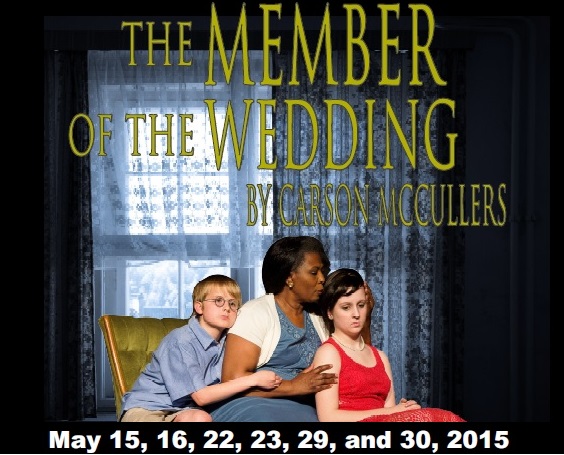
Award winning THE MEMBER OF THE WEDDING at Weekend Theater

TWT Member WedNext at the Weekend Theater is The Member of the Wedding, Carson McCullers unflinching yet heart-warming look back at the transition from childhood to adulthood.

Winner of the New York Drama Critics’ Circle Award and the Donaldson Award in 1950 for best play, The Member of the Wedding is based on the Carson McCullers multi-award winning novel by the same name. The play set during World War II takes place over a few days in late August, 1945.

It tells the poignant story of 12-year-old tomboy, Frankie Addams, who, like many prepubescents, feels disconnected from everything in the world; in her words, an “unjoined person.” Frankie’s mother has died in childbirth, and her widowed father is a distant, vacuous figure who has no idea of the anxiety his daughter is experiencing. Her closest companions in her small racially divided hometown are the family’s African American housekeeper and surrogate mother to Frankie, Berenice Sadie Brown, and her six-year-old pesky cousin, John Henry West. She has no other friends in her deeply southern birthplace and dreams of going away with her soldier brother and his bride-to-be on their honeymoon in the Alaskan wilderness. Frankie Addams desperately wants to become “joined” with the newlyweds in The Member of the Wedding.

Directed by Margaret Pierson Bates, the production opens tonight and runs through May 30 on Friday and Saturday evenings.

The cast includes Danette Scott Perry, Ellis Golden, Alex Harkins, Barry Clifton, Elizabeth Bartyzal, Peter Emery, Amanda Oxford, Stacy Williams Jr., Eric Tate, Akasha Hull, Allison Filbert, Claire Green, Jeffrey Oakley, Hannah Smith, Nikolai Gordeev, Drew Ellis, Keith Harper, Tommie Tinker, Alexander White, Terry White and Ryan Whitfield.

 

Heritage Month – Joseph T. Robinson House

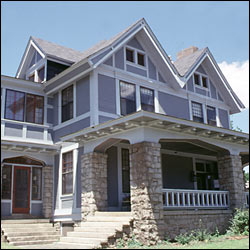
JT Robinson HouseThe Robinson House or the Foster-Robinson House is located at 2122 Broadway.

It was designed by Frank W. Gibb and built in 1904 for lumber man H. H. Foster.  Senator Robinson purchased the home from Foster’s widow and the house remained in the Robinson family until 1972 (following the Senator’s death in 1937 and his widow’s death in 1958). While visiting the state, President Roosevelt stayed at this house.

The Robinson house is a 2-1/2 story wood frame structure resting on a foundation of granite and brick. The exterior is sheathed in clapboards, and the roof is steeply pitched with a complex and irregular plan. There are four chimneys, two of brick and two of granite and brick. The main facade consists of a full-width porch supported by three square granite posts, above which are two pairs of sash windows, topped by a pair of gable ends, each with two small square windows. The gable ends are finished in stucco with decorative half-timbering. The porch is decorated with flattened Tudor-style arches and ornamental brackets, and shelters the main entrance, which is under the right gable, and paired windows under the left gable.

The interior has a wealth of high-quality woodwork, made using some of the choicest and most unusual cuts available at the time.

In addition to the house, the property includes a carriage house built using the same methods as the house. The yard is enclosed by an iron fence on the south and east sides, and a rock wall on the north and west sides.

It was listed in the National Register of Historic Places on March 28, 1975.  On October 12, 1994, it was designated a National Historic Landmark.

Thursday at the Little Rock Film Festival – Films, Films and More Films

lrff_logo-backgroundThe fourth day of the Little Rock Film Festival gets going at 12:30 with “Made in Arkansas” Shorts Block 4 in the Bill and Margaret Clark Room at the River Market.  This includes: “The Tricycle” (David Bogard), “What Was Lost” (Romello Williams), “Overgrown” (Bruce Hutchinson, “Pyro” (Cole Borgstadt), and “The Space Station” (Michael Sutterfield).  At 1pm, Breaking a Monster screens at the CALS Ron Robinson Theater and The Chinese Mayor will be shown at the Butler Center.

At 3pm, “Made in Arkansas” Shorts Block 1 will be shown at the Joint.  It includes “Loser” (Andrew Lisle), “Forsaken” (Krisha Mason), “Monotony Broken” (J. C. Cocker), “Stranger Than Paradise” (Johnnie Brannon), “Rites” (Cody Harris), and “The Dealer’s Tale” (Justin Nickels).  Also at 3, “Comes and Goes” World Shorts will be shown in the Bill and Margaret Clark Room. This includes “Tough” (Alfonso Johnson), “Marathon” (Lauren Smitelli), “The Art of Richard Thompson” (Bob Burnett), “Papa Machete” (Jonathan David Kane), “How to Stand Up for Yourself” (Sarah Hanssen), “La Reina” (Manual Abramovich) and “Mr. Gold” (Brian Carlson).

The films Krisha (at the Ron Robinson Theater) and Uncertain (at the Butler Center) will start at 3:15.  At 4pm, the Filmmaker Welcome Reception will take place at the THEA Foundation.

At 5:30, all screens will be filled:

  • Funny Bunny – Ron Robinson Theater
  • Barge – Butler Center
  • Short Films celebrating Civil Rights past and present – The Joint
  • “Made in Arkansas” Shorts Block 5 – Albert Pike Memorial Temple
    • “Not Interested” (Matt Foss), “The Making of ‘Sensitivity Training’” (Tanner Smith), “’Twas the Night of the Krampus” (Donovan Thompson), “Vampire-Killing Prostitute” (Jordan Mears), “Southern Pride” (Nick Lane), “The Paper Boy” (Thien Ngo) and “I Hate Alphaman” (Hunter West)
  • “Some Lives” World Shorts Block – Bill and Margaret Clark Room
    • “The Resort (Shadae Lamar Smith), “Tom in America” (Flavio Alves), “Elgin Park” (Danny Yourd), “Write with Me…” (Hannah Leshaw), “Chute Fighter” (Laurel Parmet), “Lay in Wait” (Jonathan Ade), “The Murder Ballad of James Jones” (Jesse Kreitzer)
  • How to Change the World – Clinton School


At 8pm, the lineup features:

  • H. – Butler Center
  • “Made in Arkansas Shorts” Block 2 – The Joint
    • “MatchMaker” by Robin Sparks, “Hush” by Kenn Woodard, “Dim the Lights” by Dwight Chalmers, “The Pop N’ Lock” by Jadon Barnes, “Rapture Us” by Levi Agee, “The Ask” by Edmund Lowry and “Contact” by Alexander Jeffery
  • “Made in Arkansas” Shorts Block 6 – Albert Pike Memorial Temple
    • “Go to the Ball with Me, Jenny” (Cole Borgstadt), “Simple” (Scott McEntire), “Stay a While” (Michael Kelley), “Sassy & the Private Eye” (Tanner Smith), “The Whisperers” (Jason Miller) and “Perfect Machine” (Jarrod Paul Beck)
  • “This Life” World Shorts Block – Bill and Margaret Clark Room
    • “The Suburbs Go On Forever” (Mark Day), “The Way Things Are” (Guy Nemesh), “Stella Walsh” (Rob Lucas), “The Youth” (Dehanza Rogers) and “Unmappable” (Diane Hodson, Jasmine Luoma)
  • Crocodile Gennadiy – Clinton School


The final film of the day is 7 Chinese Brothers at the Ron Robinson Theater at 9pm.  At 10pm the KABF Radio Dance Party gets going at Good Food by Ferneau.

Little Rock Look Back: Mayor J. V. Satterfield

SatterfieldOn May 14, 1902, future Little Rock Mayor John Vines Satterfield, Jr. was born in Marion.   He grew up in Little Rock and Earle. J.V. was a star quarterback for the Earle football team and is featured in a painting of that team by respected painter Carroll Cloar.

Following high school, J.V. taught (including, much to his family’s amusement, a course in penmanship) and coached and sold Fords.  He then moved to Little Rock and sold insurance and later securities.  In 1931 he opened his own business; that same year he built a house at 40 Beverly Place in Little Rock, which would serve as his home until his death.

J. V. Satterfield was elected to serve as Mayor of Little Rock in 1939 and served one term, until 1941.  He was credited with saving the City from bankruptcy because of his fiscal policies. Among his efficiencies were the creation of a central purchasing office and using grass moved from the airport to feed the Zoo animals.  Though as a private citizen he had voted against the creation of a municipal auditorium in 1937, Mayor Satterfield fought valiantly to ensure that Robinson Auditorium opened to the public once he took office.  Shortly after he became Mayor, it was discovered that there were not sufficient funds to finish the construction. After the federal government refused to put in more money, he was able to negotiate with some of the contractors to arrange for the building to be completed. He also oversaw a successful special election to raise the money to finish the project.

Satterfield was a staunch supporter of the airport and worked to expand it.  He would serve as the chair of the first Municipal Airport Commission.  He also established the Little Rock Housing Authority (on which he would later serve on the board).  Mayor Satterfield also served as President of the Arkansas Municipal League in 1941.

Following the outbreak of World War II, Satterfield enlisted in the Army and was given the rank of a Major. He later was promoted to a Colonel and worked in the Pentagon during its early days.

In the late 1940s Satterfield became president of a small Little Rock bank called People’s Bank.  The bank changed its named to First National Bank when it moved into new offices at 3rd and Louisiana in 1953.  By focusing on smaller customers and courting corporate customers, Satterfield grew the bank into one of the state’s largest banks.  He maintained his desk in the lobby of the bank so he could interact with the customers and ensure they were having a positive experience.

Due to chronic health issues, Satterfield retired from the bank in 1964. He died in March 1966.

Go for Baroque with the ASO Neighborhood season finale

TASO_revhe Arkansas Symphony Orchestra, Philip Mann, Music Director and Conductor, presents the finale of the 2014-2015 Intimate Neighborhood Concerts series with Baroque by Candlelight on Thursday, May 14, 2015 at 7:00 PM at the Trinity Episcopal Cathedral, 321 310 W 17th St, Little Rock. The candlelit concert features masterpieces of the baroque era by Handel, Bach and Vivaldi with piccolo soloist Gabriel Vega. The Intimate Neighborhood Concerts series is sponsored by the Stella Boyle Smith Foundation.

Originally written for “small flute” and probably performed on the high-pitched sopranino recorder, Vivaldi’s concerto is a perfect fit for the modern piccolo. Vivaldi puts the instrument through paces of extreme virtuosity in the outer movements and features a lyrical central largo.

Tickets are $25; active duty military and student tickets are $10 are can be purchased online at www.ArkansasSymphony.org; at the Trinity Episcopal Cathedral beginning 60 minutes prior to the concert; or by phone at 501-666-1761, ext. 100.

The Stella Boyle Smith Intimate Neighborhood Concerts Series is a wonderful opportunity to enjoy fantastic music in gorgeous, acoustically unique venues around Little Rock. The concerts offer a special, intimate performance where patrons can get up-close and personal with musicians in chamber orchestra ensembles performing pieces in the settings intended by the composers. In addition to hearing these beautiful works, concertgoers are invited to mingle with the musicians after the concerts.

PROGRAM:
HANDEL: Entrance of the Queen of Sheba from Solomon, HWV 67
BACH: Suite No. 3 in D Major, BWV 1068
VIVALDI: Concerto for Piccolo in C Major, Op. 44, No. 11, RV 443
Gabriel Vega, piccolo
HANDEL: Water Music: Suite No. 2 in D Major, HWV 349

Originally written for “small flute” and probably performed on the high-pitched sopranino recorder, Vivaldi’s concerto is a perfect fit for the modern piccolo. Vivaldi puts the instrument through paces of extreme virtuosity in the outer movements and features a lyrical central largo. Piccolo soloist, Gabriel Vega, hails from Los Angeles and graduated from the prestigious Manhattan School of Music. Gabriel joined the ASO in 2009, and performed movements from Vivaldi’s piccolo concerto on the ASO’s Children’s Concerts in the 2013-2014 season.

The Arkansas Symphony Orchestra celebrates its 49th season in 2014-2015, under the leadership of Music Director Philip Mann. ASO is the resident orchestra of Robinson Center Music Hall, and performs more than sixty concerts each year for more than 165,000 people through its Stella Boyle Smith Masterworks Series, ACXIOM Pops LIVE! Series, Landers FIAT River Rhapsodies Chamber Music Series, and numerous concerts performed around the state of Arkansas, in addition to serving central Arkansas through numerous community outreach programs and bringing live symphonic music education to over 26,000 school children and over 200 schools.

Local Live tonight at South on Main featuring Rodney Block & The Love Supreme

llsom rblockTonight at 7:30pm, this week’s installment of the South on Main Local Live concert series features Rodney Block & The Love Supreme!

Presented by the Oxford American magazine, Local Live showcases the best of local and regional music talent and is always free and open to the public. Call ahead to South on Main to make your reservations and ensure a table: (501) 244-9660. Local Live is made possible by the generous sponsorship of Ben and Jane Hunt Meade.

Rodney Block is a native of Dumas, Arkansas, where he began studying trumpet in the school band at a young age. Block has shared the stage with such artists as Earth, Wind, & Fire, Joe, Algebra, Whodini, Johnny Gill, Dwele, Johnathon Butler, Dave Hollister, Wynton Marsalis, and Eric Roberson. He has backed for artists such as Liv Warfield, Conya Doss, Dwele, Sy Smith, Carol Riddick, and Anthony David.

Heritage Month – Hotze House

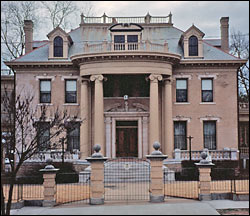
Hotze hosueThe Hotze House, located at 1619 Louisiana in Little Rock’s historic Quapaw Quarter district, was built by one of Arkansas’ most successful and prominent businessmen.  Designed by Charles L. Thompson, Little Rock’s most prominent architect and constructed in 1900, the house reflects the Beaux Arts tradition combined with Georgian influence.  The interior was reputed to have been designed by Tiffany Studios of New York.  The house has been remarkably well preserved and remains practically unaltered.

Peter Hotze was born in Innsbruck, Austria, on October 12, 1836.  He was young at the time of his father’s death, but Mrs. Hotze’s inheritance made it possible for her three sons to attend the University of Innsbruck.  In 1857 Peter Hotze moved to Little Rock and went into the general merchandise business.

Returning to Little Rock after service and imprisonment in the Civil War, Hotze went into a business as a merchant in partnership with Capt. John G. Fletcher, who had been his company commander.  Each man put $2,500 into the business.  After a while, they limited their business exclusively to the cotton trade.  In 1873 it was decided that Hotze should move to New York to handle that end of the firm’s business.  He lived there for 27 years, in a fashionable neighborhood near Central Park.

In 1900, Hotze retired and returned to Little Rock.  Upon his return in 1900 he built the large house in which he lived with his daughter Clara and son Frederick until his death on April 12, 1901.  He chose to build his home directly behind the small frame house he had built about l869 and lived in during his previous residence in Little Rock.

The Hotze House is one of the finer homes remaining in the state which expresses the opulence of the period in which it was constructed, particularly in the interiors, which are extraordinarily rich in quality. Resting on three and one-half lots, the Hotze House is remarkably well preserved and appears practically the same as when it was first constructed.

It was added to the National Register of Historic Places on August 11, 1975.