Explore the Transformation of Arkansas during Civil War and Reconstruction at Mosaic Templars Cultural Center

MTCC-1Through December 31, Mosaic Templars Cultural Center is featuring the exhibit “Freedom! Oh, Freedom!” Arkansas’s People of African Descent and the Civil War: 1861-1866.

The Civil War radically changed the lives of all Arkansans, especially those of African descent. Across the country freed Africans were no longer property or simply viewed as a part of the South’s agrarian society. The war destroyed a society and an economy that had enslaved Africans and used them as chattel property.

“Freedom! Oh, Freedom!” tells a story of transformation, as it will allow visitors the opportunity to explore the African American perspective of the Civil War from the lens of slavery, the contributions of African American soldiers, and what happened through and after the Reconstruction Era.

The transformation was not swift or seamless as the United States government made empty promises to the newly freed African Americans, however in the aftermath of the Civil War Arkansas’s African Americans seized new opportunities and freedoms to create a new way of life as citizens of the United States. African Americans used the war to participate in their own emancipation. Former enslaved people experienced not only physical liberation from the ties of slavery, but a transformation of the spirit from bondage to freedom.

African American politicians emerged after the war ended and took seats in the state general assembly in 1869. The state general assembly even passed the Arkansas Civil Rights Act of 1873, which provided for equal access to all public institutions and outlawed segregation. However, as Reconstruction came to an end in 1874, Democrats replaced Republicans and began altering the civil rights laws and enacting segregationist policies in their place. African Americans maintained some representation in the general assembly until 1893, but it was nearly a century later when Arkansans elected another African American to the legislature in 1973. The fight for full equality, the fight for justice,and the fight for civil rights had just begun.

This exhibit was made possible through a grant from the Arkansas Natural and Cultural Resource Council, funded by the Arkansas Real Estate Transfer Tax. All pictures are courtesy of the Arkansas History Commission.

The Mosaic Templars Cultural Center is an agency of the Department of Arkansas Heritage.
Women in Bicycling is topic of today’s Old State House Museum Brown Bag lunchtime lecture

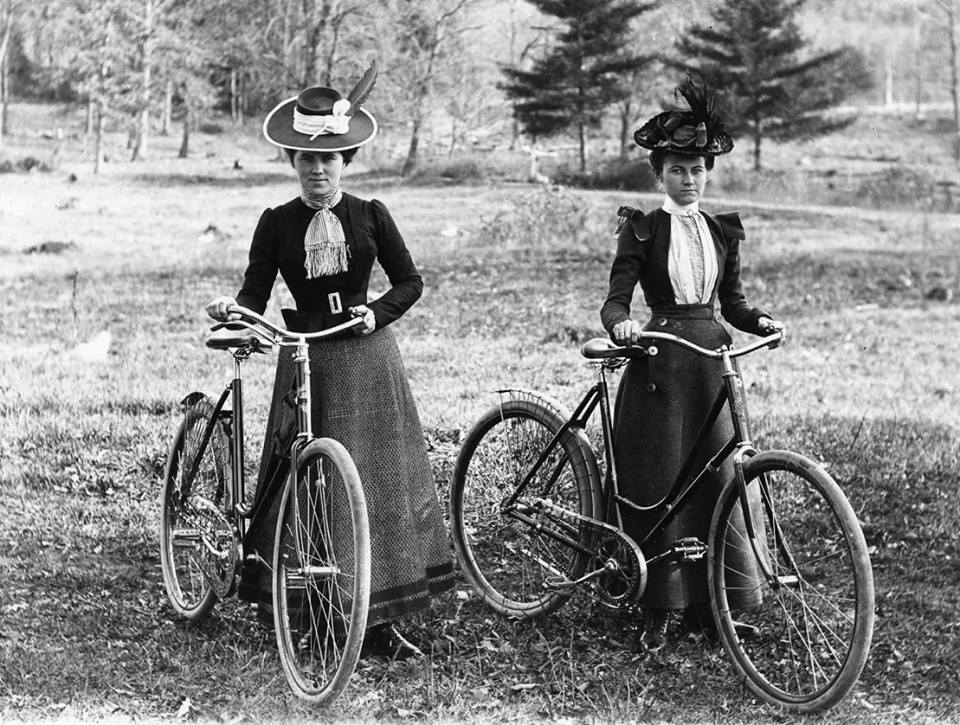
osh bikeToday at noon, the next installment in the Old State House Museum’s Brown Bag series takes place.  Misty Murphy will discuss Women in Bicycling.

The bicycle was one of many factors that helped open the world to women in the 1890’s and early 1900’s.

From changes in clothing styles to increased mobility, the advent of the bicycle marked a turning point in the social life of women around the nation and at home in Arkansas.

Misty Murphy is the regional trails coordinator for the Northwest Arkansas Council. A native of small-town Arkansas, she loves local history and keeping alive the traditions unique to the state.

The Old State House Museum is an agency of the Department of Arkansas Heritage.
Go to the “Suggin Territory” at Historic Arkansas Museum

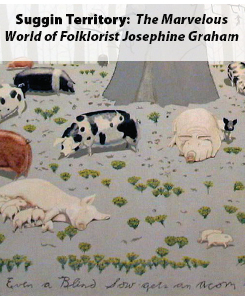
Graham-promoIn this heat, it is nice to be able to travel to a different time and place in the comfort of air conditioning.  Historic Arkansas Museum’s current exhibit “SUGGIN TERRITORY: THE MARVELOUS WORLD OF FOLKLORIST JOSEPHINE GRAHAM” offers a chance to visit a bygone era in Arkansas.

Josephine Graham (1915-1999) a.k.a. “Josus,” was a celebrated artist and folklorist of Arkansas’s White River culture. Her “Suggin” folk paintings depict the Depression-era folk history of the White River region.

Though professionally trained as a painter at Columbia University, Graham’s paintings are intentionally primitive in style, inspired by the stories and lives of “Suggins,” a playful term she used in reference to the people living along the White River.

Through more than twenty exhibitions, over 100 paintings, and a self-published cookbook, she shared the wonder and charm of her native region with the world. Graham was a founding member of the Mid-Southern Watercolorists and founder of the Suggin Folklife Society.

The exhibition continues through November 29, 2015.

Sandwich in History at Oak Forest United Methodist Church today at noon

ofumc sandwichThe monthly architectural history program “Sandwiching in History” visits Oak Forest United Methodist Church, located at 2415 Fair Park Boulevard. The program begins at noon today.  A historian with the Arkansas Historic Preservation Program delivers a brief lecture about the church before leading guests on a tour.

The church was founded in 1943 and is located in the Oak Forest neighborhood near UALR. The building was built in 1949 and was designed by Little Rock architect John Parks Almand. The distinctive stone building features elements of the Gothic Revival style as well as a Mission-style parapet and bell tower

Sandwiching in History is a program of the Arkansas Historic Preservation Program, an agency of the Department of Arkansas Heritage.

Cleanup day at William E. Woodruff House announced for Saturday, Aug 8

The historic Woodruff house.

The historic Woodruff house.

The QQA acquired the William E. Woodruff Housein December 2014 with the help of the City of Little Rock and the Arkansas Historic Preservation Program.   The QQA has donated interior and façade easements to protect the house in perpetuity, and we continue to work with the City and AHPP to stabilize the house and make repairs before selling it for development.

On Saturday, August 8 from 8am to 12 noon, join other volunteers at the Woodruff House (1017 East 8th Street) for a cleanup day.

The main task is basic landscape cleanup surrounding the house.  Before the house can be treated for termite damage and repaired, weeds and shrubs surrounding the foundation must be removed.  There is also trash on the property that needs to be picked up.

Volunteers must sign a waiver before working, they will be available on site.  Volunteers should wear old clothes, sturdy closed-toe shoes, and bring work gloves. If you would like to be involved but can’t join us on the 8th, you can help by donating cold drinks, snacks, or lunch to our volunteers. Contact the QQA office at qqa@quapaw.com or 501-371-0075 to make arrangements. If you have supplies you would be willing to let us borrow, drop them by QQA office, clearly labeled with your name and phone number, or just bring them with you when you volunteer.

If you’re interested in sponsoring this or future work days at the Woodruff House, please contact the QQA office at qqa@quapaw.com or 501-371-0075. 

The Quapaw Quarter Association’s mission is to promote the preservation of Little Rock’s architectural heritage through advocacy, marketing and education. Incorporated in 1968, the QQA grew out of an effort to identify and protect significant historic structures in Little Rock during the urban renewal projects of the early 1960s. Throughout its existence, the QQA has been a driving force behind historic preservation in Greater Little Rock.

Learn about Little Rock’s earliest auditorium (which also was a roller rink AND rifle range) today at noon at Old State House Museum Brown Bag Lecture

11805726_10154024863604908_1192217255_nToday at noon, the Old State House Museum will have another Brown Bag Lecture.  This one focuses on three decades of unsuccessful efforts to build a municipal auditorium in Little Rock.  That time period was filled with big dreams, lawsuits, personality clashes, disappointments, and a Roller Rink that was also a Rifle Range.

In April 1904, Little Rock Mayor W. E. Lenon spoke of the need for a municipal auditorium in Little Rock. It would take thirty-six years for that dream to be realized. Along the way there were numerous twists, turns, detours and disappointments as the saga was played out in the newspapers, courtrooms, and offices of every major Little Rock architect at the time.

Until a permanent auditorium could be found, the City made do with vaudeville houses, high schools, and even a roller skating rink which doubled as a rifle range. Over the three decades of planning for an auditorium, some names came and went, others such as Mayor Lenon, architect Charles L. Thompson and Arkansas Gazette publisher J. N. Heiskell appeared time and time again. This Brown Bag Lunch Lecture explores the time period from 1904 to 1934 as it looks at the numerous unsuccessful attempts to construct a municipal auditorium in Little Rock.

In 2016, there will be a Brown Bag Lecture to look at construction and opening of Robinson Center Music Hall.

Scott Whiteley Carter is Special Projects Administrator for the City of Little Rock. As the unofficial historian of Little Rock City Hall, he can often be found leafing through sheaves of papers in the City Clerk’s vault or furiously scribbling notes in Little Rock research libraries. He is also the author of the LRCultureVulture.comblog. A native of Little Rock, he is a graduate of Missouri State University.

Celebrate the Arts Council’s Arkansas Living Treasures tonight at Historic Arkansas Museum

2fan ham 0715Tonight’s 2nd Friday Art Night at Historic Arkansas Museum is a special event! In collaboration with the Arkansas Arts Council, a sister agency of the Department of Arkansas Heritage, it celebrates the work of those who have been designated Arkansas Living Treasures.

“Art. Function. Craft. The Life and Work of Arkansas Living Treasures” – See the works of Arkansas’s finest and most fascinating artists and artisans practicing, preserving and progressing traditional craft. Hear about their personal artistic journeys in a series of documentary shorts. This exhibition, and corresponding film series, is a collaboration of Historic Arkansas Museum and the Arkansas Arts Council, which gives the Arkansas Living Treasure Award to those who excel in the practice of a traditional craft.

Since 2002, the Arkansas Arts Council has recognized Arkansas Living Treasures, Arkansas artisans who excel in the practice of a traditional craft and who have passed the tradition on to the next generation. For the past four decades, Historic Arkansas Museum’s Arkansas Made has systematically documented, collected and preserved the work of Arkansas artisans who lived and worked in the state from the early 19th century to present day. In 2013, the Arkansas Arts Council and Historic Arkansas Museum collaborated to produce a series of short films that celebrate the lives and work of each Arkansas Living Treasure.

In addition, the evening will feature award-winning Arkansas fiddler,Clancey Ferguson. Historic Arkansas Museum’s Year of Arkansas Beer continues with Saddlebock Brewery of Springdale.

The festivities run from 5pm to 8pm.