
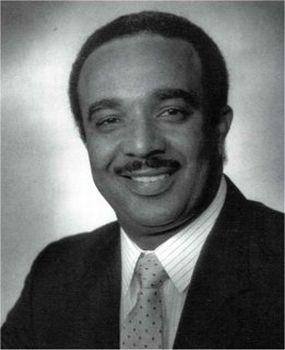
Remembering Mahlon Martin on what would have been his 73rd birthday

On July 19, 1945, future Little Rock City Manager Mahlon A. Martin was born in Little Rock.

After graduating in 1963 from Horace Mann High School, he attended Philander Smith College.  (He had received a baseball scholarship to Grambling, but chose to remain in Little Rock to be near his ailing grandmother.)  Martin graduated from Philander Smith in 1967 with a degree in business administration.

After working in the private sector for two years, Martin was hired by City Manager Jack T. Meriwether to work for the City of Little Rock in 1969 after the City had received a Model Cities grant.  Martin started working with community organizations and then became promoted to the City’s recruiting officer.

In 1972, he was named to leadership posts at the four-county Central Arkansas Manpower Program.  Three years later, he returned to the City of Little Rock to work on the staff of City Manager Carleton McMullin.  In 1976, Martin was named Assistant City Manager for Little Rock.

Martin left City Hall in 1979 to become a top executive at Systematics, Inc.  However, his stint in the private sector was short-lived.  In 1980, the City Board of Directors asked him to come back and be Little Rock’s sixth City Manager.  At thirty-four, he was one of the youngest chief administrators of a major city in the country and the first African American City Manager for Little Rock.

In 1983, Governor Bill Clinton asked him to join the state of Arkansas as the Director of the Department of Finance and Administration.  He was the first African American to lead that or any major Arkansas state department.  Throughout his tenure with the State, he oversaw numerous initiatives to restore the state to sound financial footing.

Martin joined the Winthrop Rockefeller Foundation as president in 1989.  He held that position until his death in 1995.

The name Mahlon Martin lives on in a son and grandson named after him, in an apartment complex on south Main Street, in a street in Clinton Presidential Park, and in the City of Little Rock’s Employee of the Year award.  The latter was created by City Manager Bruce T. Moore in 2004.  At the time Moore noted that Martin had been so popular while City Manager, “It was said you could criticize the Razorbacks to a City of Little Rock employee, but you better not say anything bad about Mahlon Martin to them.”

In 2001, Mahlon Martin was posthumously inducted into the Arkansas Black Hall of Fame.  A decade later, the Butler Center for Arkansas Studies created a fellowship in his memory.  It supports research and programming in the field of public policy in Arkansas.  In 2015, he was included in the Arkansas Civil Rights Heritage Trail.

Three years since USS LITTLE ROCK (LCS) was christened

On July 18, 2015, the new U.S.S. Little Rock (LCS9) was christened and officially launched in a ceremony in Marinette, Wisconsin.

Among those in attendance at the ceremony were Little Rock Mayor Mark Stodola and US Senator John Boozman.   Then-Secretary of the Navy Ray Mabus, who served on the original U.S.S. Little Rock during the Vietnam War, was also present at the ceremony.

The U.S.S. Little Rock will be the nation’s ninth littoral combat ship.  It has been built for the U.S. Navy by Lockheed Martin and Marinette Marine Corporation (MMC) at the MMC shipyard in Marinette, Wisconsin.

The  christening ceremony celebrated the ship’s physical transition from land to sea.  The ceremony was a symbolic transition from a hull number to a ship with a name and spirit of its own.

Following Janee Bonner’s shattering of the champagne bottle on the hull, the U.S.S. Little Rock was side launched into the Menominee River.  A side launch is unique, because the ship enters the water broadside. It is mostly used on inland waters, rivers and lakes.  To see the side launch, view the video here.

In December 2017, the ship was commissioned in 2017 in Buffalo, New York.  Situated next to the original USS Little Rock (now docked in Buffalo as a museum), it was the first time a ship was commissioned adjacent to a former ship bearing the same name.

Remembering Sen. Joseph Taylor Robinson

Eighty-one years ago today, on July 14, 1937, U.S. Senator Joseph Taylor Robinson died in his apartment in Washington D.C.

The Senator’s wife, Ewilda, was in Little Rock making preparations for a trip the couple was to take. (She was informed of her husband’s death when her sister-in-law called to express condolences. No one had yet notified her of her husband’s demise.) Following the news, Mrs. Robinson went to Washington to accompany her husband’s body back to Arkansas.

As the Senate Majority Leader, Senator Robinson was usually President Franklin Roosevelt’s point person to shepherd legislation on Capitol Hill.  The Democrat’s 1928 Vice Presidential nominee, Senator Robinson was particularly close to FDR. He had successfully steered numerous pieces of New Deal legislation through Congress.  However, at the time of his death, the Senator was facing an uphill climb trying to build consensus on the President’s unpopular Court Packing scheme.

The Senator was honored with a memorial service in the Senate chambers on Friday, July 17.  President Roosevelt and the cabinet joined members of the senate on the floor in what was described as a state funeral without pomp.  Mrs. Robinson sat with her brothers and two nephews as well as Bernard Baruch and Arkansas Power & Light’s Harvey Couch, who were Senator Robinson’s closest friends.  Eleanor Roosevelt was one of the many crowded in the senate galleries observing the service.  Following the service his body remained in the chambers until it was transferred to a train to make the journey to Little Rock.

A sealed mailer containing bound copy of remarks delivered at Sen. Robinson memorial. It bears the franking signature of Sen. Hattie Caraway.

The funeral train bore his body, his family, 50 senators and over twenty congressmen. It reached Little Rock around 8am on Sunday the 19th.  From there, Senator Robinson’s body was taken to his house on Broadway Street until noon.  It subsequently lay in state at the Arkansas State Capitol until being escorted by military to First Methodist Church.

1,500 people packed the church a half hour before the service began. The sun shone through the windows onto the flag-draped coffin as Rev. H. Bascom Watts led the service. Among the pallbearers was former Vice President Charles G. Dawes. Governor Carl Bailey of Arkansas was joined by Governors Richard Leche of Louisiana and E.W. Marland of Oklahoma.

As the funeral procession reached Roselawn Cemetery, thunder echoed. The skies which had alternated between sun and rain that day, returned to rain. A deluge greeted the end of the service and sent visitors hurrying for shelter at the end.

Five months after her husband’s death, Mrs. Robinson participated in the groundbreaking of the Joseph Taylor Robinson Memorial Auditorium.  The groundbreaking ceremony was the first time it was announced that building would be named in his memory.   On a plaque inside that building today, a quote from President Roosevelt stands as a further testament of the importance of Senator Robinson to the US.  Taken from President Roosevelt’s remarks upon learning of the Senator’s death, the plaque reads, in part, “A pillar of strength is gone.”

2nd Friday (the 13th) Art Night

For those who do not have paraskevidekatriaphobia, tonight is a good night to stop by several downtown museums and galleries for 2nd Friday Art Night.
It runs from 5pm to 8pm (though times at some individual locations may vary slightly).

Among the locations and their offerings are:

CALS Butler Center for Arkansas Studies (401 President Clinton Avenue) –

A Matter of Mind and Heart: Portraits of Japanese American Identity holds up a mirror to Arkansas and U.S. culture and asks what it means to be an American today. Displaying portraits created by Japanese Americans unjustly incarcerated in Arkansas during World War II, this exhibition invites visitors to reflect on American identity and challenge widely held assumptions about living in a diverse society.

A Legacy of Brewers  – Incorporating paintings from both private and public collections, this exhibition of paintings by Nicholas, Adrian, and Edwin Brewer includes portraits and landscapes featuring people and places in Arkansas, Arizona, Minnesota, New Mexico, and Texas going back to the early 1900s.

Historic Arkansas Museum (200 E Third Street) – Justin Bryant: That Survival Apparatus.  The exhibit will contain pieces from Justin Bryant’s most recent body of work, which was made in response to Maya Angelou’s poem “Mask.” His drawings and paintings show the bottom half of black faces, images pulled from documentary and commercial photographs of famous individuals and civil rights leaders. Each mouth and chin is carefully rendered, while the eyes and other features are left blank.

Old State House Museum (300 W Markham Street) – Erin Enderlin in Concert.  Beginning at 5:30 p.m., Enderlin will perform on the second floor of the museum. Recently named to the CMT Next Women of Country Class of 2018, Enderlin is an Arkansas native and award-winning singer/songwriter currently based in Nashville, Tenn.

Christ Episcopal Church (500 Scott Street) – a selection of small works including paintings and mixed media by a variety of artists from the Little Rock area.

Matt McLeod Fine Art (108 E Sixth Street) – Arkansas League of Artists 2018 Members Show and Sale.

Other participating sites include Nexus Coffee and Creative (301 President Clinton Avenue); The Art Group Gallery in the Marriott Little Rock (3 Statehouse Plaza), Bella Vita (523 S Louisiana), and Gallery 221 (221 W Second Street).


Todd Herman departs Arkansas Arts Center

On Wednesday, July 11, 2018, Dr. Todd Herman, announced to Arkansas Arts Center staff that he will be leaving to take a position in North Carolina.  His last day at Little Rock’s art museum will be August 10.

Formal announcement of the new position is expected to be made on Thursday, but local media broke the story on Wednesday evening.

Herman, who joined the AAC in 2011, succeeded Nan Plummer as director, who served from 2002 to 2010. She was preceded by longtime director Townsend Wolfe, who led the AAC from 1968 to 2002. Between 1961 and 1968, the Arts Center had a revolving door of directors and acting directors including Muriel Christison (1961), Alan Symonds (1962-1964), William H. Turner (1964-1965), and Louis Ismay (1966-1968).  William Steadman (1958) and George Ware (1959-1960) lead the museum as it transitioned from the Museum of Fine Arts to the Arkansas Arts Center.  Nettie L. Robinson was the director of the original Museum of Fine Arts from its opening in 1937 until her retirement in 1957.

T. Laine Harber, the Arts Center’s Chief Operations Officer/Chief Financial Officer will be Interim Director while a search is conducted for Herman’s replacement.

Work continues on the planning for the expansion and enhancement of the Arts Center which is currently slated to be completed in 2022.

Another Judge Kavanaugh: William Marmaduke Kavanaugh

On March 3, 1866, William Marmaduke Kavanaugh was born in Alabama. He later moved with his family to Kentucky before coming to Little Rock as a newspaper reporter.

Kavanaugh served as editor and manager of the Arkansas Gazette before entering politics.  From 1896 until 1900, he served as Pulaski County Sheriff, which at the time also included the duties of tax collector.  From 1900 until 1904, he was County Judge of Pulaski County.  In that capacity he helped wrangle several cities, railroads and trolley lines to create a compromise which lead to the completion of the Third Street Viaduct which connected Little Rock with Pulaski Heights. It is still in use today.

After leaving his post as County Judge, he had a varied career in banking and business interests.

When Senator Jeff Davis died in early January 1913, he left the last few weeks of his term incomplete as well as the new term he was set to start in March 1913.  There was much interest in who would fill the remainder of Davis’ current term, because that person might be the frontrunner to also fill out the new term.  (This was at the time that the U.S. Senators were still selected by state legislatures.) Defeated Governor George Donaghey appointed J. N. Heiskell to fill out the term. But once the Arkansas General Assembly convened in mid-January, they overrode Donaghey’s appointment and replaced Heiskell with Kavanaugh.

Kavanaugh served in the Senate from January 29, 1913 until March 3, 1913.  He was succeeded by Joseph T. Robinson who had only recently taken office as Governor.  Speculation was that Kavanaugh would not want the full six year term, so that he was acceptable choice to all of the politicians jockeying for the full appointment.  From 1912 until 1915, he was an Arkansas member of the Democratic National Committee.

Another interest of Kavanaugh’s was baseball.  He served as president of the Southern Association minor league starting in 1903.  The baseball field in Little Rock situated at West End Park was named Kavanaugh Field in his honor.  It stood until the 1930s when it was replaced by what is now known as Quigley Stadium.  (In 1927, Little Rock High School had opened on the land which had been West End Park.)

Kavanaugh died on February 2, 1915 at the age of 48.  He is buried in Oakland Cemetery.

Prospect Road was renamed Kavanaugh Boulevard in his memory.

Little Rock Look Back: Plans Approved for new City Hall in 1906. But will it be built?

The 1906 plans for City Hall with the Municipal Auditorium on the left portion.

On July 9, 1906, the Little Rock City Council approved Resolution 281 and Ordinance 1,295. These actions approved the plans for a new City Hall complex to be constructed on land at the northwest corner of Markham and Broadway Streets.  A few days later, the contract was awarded for the construction of the new building.

Mayor Warren E. Lenon had first called for a new city hall complex in his annual address in April 1904. He repeated his request in April 1905.   The City Council took up Mayor Lenon’s quest for a new city hall in December of 1905.  The Council appropriated money for the purchase of land for a city hall, jail and auditorium.

In response to this, the Arkansas Gazette daily newspaper ran a story featuring the viewpoints of a few civic leaders weighing in on the need for a new city hall complex which would also include a new jail and a city auditorium.  Two of the respondents, L. B. Leigh and P. Raleigh, stressed the need for paved streets and better sewers instead of a new city hall and auditorium.

The other three businessmen interviewed were more favorable to Mayor Lenon’s proposal.  Morris M. Cohn, a former Little Rock City Attorney, stated “I do not think we can make a better investment than in a fine city hall and auditorium.”  (Mr. Cohn, though an M. M. Cohn, was not related the M. M. Cohn who was the namesake for the longtime Little Rock department store.) County Judge William Marmaduke Kavanaugh offered his satisfaction with the action of the City Council on that matter.  R. E. Walt, a banker, opined that he thought $150,000 was not enough; he suggested $200,000 should be spent.

Later that month the Gazette reported that a site had been selected for the city hall and auditorium complex.  The proposed location was most of a city block located at the corner of Markham and Broadway Streets.  Mayor Lenon was vague as to the details of the deal because negotiations were still underway with the property owners

As 1906 dawned, Mayor Lenon and other city leaders continued to take steps to build the new city hall and auditorium.  They invited three local architects to make presentations for the chance to design the new complex.  The three were Charles L. Thompson, Frank W. Gibb and George R. Mann.  Mr. Thompson was chosen to receive the assignment.

On February 5, 1906, Mayor Lenon announced the creation of a special committee to work on the planning for a future city hall complex.  This committee consisted of Aldermen Louis Walther, A. B. Poe, L. N. Whitcomb, Christopher Ledwidge, and John A. Adams.

Mayor Lenon further stated that the new city hall complex and several private developments would “put us in that march of progress with which nothing can prevent us from having a 100,000 population in a few years.”

The saga to get the building built was just starting.