Tony Awards Week – SOUTH PACIFIC – “How Far Away from Little Rock A-r-k”

southpacific_obcSeveral Tony Awards have been won by a show with a main character from Little Rock.

South Pacific opened at the Majestic Theatre on April 7, 1949 and settled in for a run of 1925 performances. Based on the James Michener Pulitzer Prize winning novel Tales of the South Pacific, it featured a book by Oscar Hammerstein II and Joshua Logan, songs by Richard Rodgers and Hammerstein and direction by Logan. It was produced by Rodgers, Hammerstein, Logan and Leland Hayward. Set in the titular islands, it concerned the relationships of sailors, nurses, island natives and other island inhabitants.

The musical starred recent Tony winner Mary Martin as Little Rock native Nellie Forbush, opera star Ezio Pinza, stage veterans Myron McCormick and Juanita Hall, and stage newcomers William Tabbert and Betta St. John. Cloris Leachman was Martin’s understudy and would later succeed her in the part of Little Rock native Nellie Forbush.

Like other Rodgers and Hammerstein musicals, this show tackled tough themes – this one being prejudice. That did not set well with some theatergoers. Indeed, some potential investors did not put money into the show because of its stance. But Rodgers, Hammerstein, Logan and Hayward persisted. Their diligence paid off when the musical received the 1950 Pulitzer Prize in Drama, only the second musical to receive this designation. It is also the only Pulitzer Prize for Drama winner to be based on Pulitzer Prize winning source material. This was the first Rodgers & Hammerstein musical to not feature big dance numbers. In fact, there was no choreographer. The dance steps which existed were created by Martin, who had taught dance in her native Texas as a young mother.

Opening late in the season, South Pacific was named the 1949 New York Drama Critics Circle Best Musical, but was not part of the Tony Awards until 1950. (Though Jo Mielziner, who designed the set for South Pacific received a Tony for his set designs of shows during the 1948-49 season and South Pacific was one of the titles listed.) At the 1950 Tonys, it received six Tony Awards: Best Musical, Actor in a Musical (Pinza), Actress in a Musical (Martin), Featured Actor in a Musical (McCormick), Featured Actress in a Musical (Hall), and Director (Logan).

This is the only time that all four acting awards in the musical category went to performers in the same production. In fact, the other two acting trophies that year were incorrectly engraved as being from South Pacific out of habit. Logan’s win was also the first time that the Director Tony went for a musical, since at the time that award was not separated out among plays and musicals. Hall was the first African American to win a Tony Award for Acting.

In 1999 for the 50th anniversary and in 2008 for the opening of the first Broadway revival remaining cast members from the original production had reunions in New York City. At the 50th anniversary ceremony, a proclamation from Little Rock Mayor Jim Dailey was read declaring it South Pacific day in Little Rock and honoring the show. It is interesting to note that in 1949, there were two heroines on the Broadway stage from Little Rock: Nellie Forbush from South Pacific and Lorelei Lee from Gentlemen Prefer Blondes.

In 2008, Lincoln Center Theatre produced the first revival of South Pacific on Broadway. It opened on April 3, just four days shy of the musical’s 59th anniversary.  The cast was led by Paulo Szot, Kelli O’Hara (as Little Rock girl Nellie Forbush), Matthew Morrison (before “Glee”), Danny Burstein and Loretta Ables Sayre.  The production restored a song which had been written for the original Broadway production that had been dropped. “My Girl Back Home” was featured in the movie version and in this Broadway revival. In it O’Hara and Morrison sang of their hometowns of Little Rock and Philadelphia.  The production was nominated for 11 Tony Awards and won 7: Best Musical Revival, Actor in a Musical (Szot), Director of a Musical (Bartlett Sher), Scenic Design (Michael Yeargan), Costume Design (Catherine Zuber), Lighting Design (Donald Holder) and Sound Design (Scott Lehrer).

Sher, Yeargan, Zuber, Holder and Lehrer are all reuniting again next season to work on a revival of Fiddler on the Roof.  One of the producers of that is Little Rock native (and three time Tony winner) Will Trice.

While Trice has not starred in a production of South Pacific, his mother Judy Trice starred in a statewide tour in the 1970s. A few years later, his sister Kathryn Pryor, starred in the Central High production.

Tony Awards Week – Trouble with a capital T and that rhymes with…. HAIR?

Ad for the original production of HAIR in Little Rock. Note the ticket prices. And that they could be purchased at Moses Music Shops.

Ad for the original production of HAIR in Little Rock. Note the ticket prices. And that they could be purchased at Moses Music Shops.

The Tony winning musical The Music Man may have featured a song about “Trouble in River City” but the Tony nominated musical Hair brought trouble to this “river city” in 1971 and 1972.

In February 1971, a young Little Rock attorney named Phil Kaplan petitioned the Little Rock Board of Censors to see if it would allow a production of Hair to play in the city. He was asking on behalf of a client who was interested in bringing a national tour to Arkansas’ capital city. The show, which had opened on Broadway to great acclaim in April 1968 after an Off Broadway run in 1967, was known for containing a nude scene as well for a script which was fairly liberally sprinkled with four-letter words. The Censors stated they could not offer an opinion without having seen a production.

By July 1971, Kaplan and his client (who by then had been identified as local promoter Jim Porter and his company Southwest Productions) were seeking permission for a January 1972 booking of Hair from the City’s Auditorium Commission which was charged with overseeing operations at Robinson Auditorium. At its July meeting, the Commissioners voted against allowing Hair because of its “brief nude scene” and “bawdy language.”

Kaplan decried the decision. He stated that the body couldn’t “sit in censorship of legitimate theatrical productions.” He noted courts had held that Hair could be produced and that the Auditorium Commission, as an agent for the State, “clearly can’t exercise prior censorship.” He proffered that if the production was obscene it would be a matter for law enforcement not the Auditorium Commission.

The Commission countered that they had an opinion from City Attorney Joseph Kemp stating they had the authority. One of the Commissioners, Mrs. Grady Miller (sister-in-law of the building’s namesake the late Senator Robinson who had served on the Commission since 1939), expressed her concern that allowing Hair would open the door to other productions such as Oh! Calcutta!

On July 26, 1971, Southwest Productions filed suit against the Auditorium Commission. Four days later there was a hearing before Judge G. Thomas Eisele. At that hearing, Auditorium Commission member Lee Rogers read aloud excerpts from the script he found objectionable. Under questioning from Kaplan, a recent touring production of Neil Simon’s Tony winning play Plaza Suite was discussed. That play has adultery as a central theme of one of its acts. Rogers admitted he found the play funny, and that since the adultery did not take place on stage, he did not object to it.

Judge Eisele offered a ruling on August 11 which compelled the Auditorium Commission to allow Hair to be performed. Prior to the ruling, some of the Auditorium Commissioners had publicly stated that if they had to allow Hair they would close it after the first performance on the grounds of obscenity. To combat this, Judge Eisele stated that the Commission had to allow Hair to perform the entire six day engagement it sought.

Upon hearing of the Judge’s ruling, Commissioner Miller offered a succinct, two word response. “Oh, Dear!”

In the end, the production of Hair at Robinson would not be the first performance in the state.  The tour came through Fayetteville for two performances in October 1971. It played Barnhill Arena.

On January 18, 1972, Hair played the first of its 8 performances over 6 days at Robinson Auditorium.  In his review the next day, the Arkansas Gazette’s Bill Lewis noted that Hair “threw out all it had to offer” and that Little Rock had survived.

The ads promoting the production carried the tagline “Arkansas will never be the same.”  Tickets (from $2 all the way up to $8.50) could be purchased at Moses Melody Shops both downtown and in “The Mall” (meaning Park Plaza). That business is gone from downtown, but the scion of that family, Jimmy Moses, is actively involved in building downtown through countless projects. His sons are carrying on the family tradition too.

Little Rock was by no means unique in trying to stop productions of Hair.  St. Louis, Birmingham, Los Angeles, Tallahassee, Boston, Atlanta, Charlotte NC, West Palm Beach, Oklahoma City, Mobile and Chattanooga all tried unsuccessfully to stop performances in their public auditoriums.  Despite Judge Eisele’s ruling against the City of Little Rock, members of the Fort Smith City Council also tried to stop a production later in 1972 in that city. This was despite warnings from City staff that there was not legal standing.

Within a few years, the Board of Censors of the City of Little Rock would be dissolved (as similar bodies also were disappearing across the US). Likewise, the Auditorium Commission was discontinued before Hair even opened with its duties being taken over by the Advertising and Promotion Commission and the Convention & Visitors Bureau staff.  This was not connected to the Hair decision; it was, instead, related to expanding convention facilities in Robinson and the new adjacent hotel.  Regardless of the reasons for their demise, both bygone bodies were vestiges of earlier, simpler and differently focused days in Little Rock.

Over the years, Hair has returned to the Little Rock stage. It has been produced two more times at Robinson Center,  UALR has produced it twice, and the Weekend Theater has also mounted a production.   The most recent visit to Little Rock at Robinson Center, which was the final Broadway show before the building closed for renovations, was based on the 2009 Broadway revival.  That production, was nominated for eight Tony Awards, and captured the Tony for Revival of a Musical.  Several members of the production and creative team are frequent collaborators of Little Rock native Will Trice.

Tony Awards Week – History of theatre in Little Rock

Joe E. Brown in HARVEY

Joe E. Brown in HARVEY

Little Rock existed as a theatre town for over 100 years prior to the Tony Awards.  But since this is Tony Awards week, “let’s start at the very beginning, a very good place to start” (words by my favorite lyricist Oscar Hammerstein II).

The first documented theatrical performance was on November 4, 1834, and in August 1838 the construction of the first theatre in Little Rock was announced.  Through Little Rock’s early years a variety of spaces were used for performances including the City Hall on Markham near Main Street which had been built in 1867.

The opening of the Capital Theatre in December 1885 would be Little Rock’s first large-scale, non-church space for performances and gatherings.  The Capital had a seating capacity of approximately 2,000 seats.  Designed to house theatrical productions, it also played host to civic events ranging from high school graduations (for both the white and African American high schools) to public memorials.  For instance, in 1901 it was the site of a public memorial for the recently assassinated President William McKinley.  In time, the Capital Theatre (which was situated on land that is now occupied by a portion of the Statehouse Convention Center) would be joined by a variety of other theatres, public houses, vaudeville houses and lodge halls.

The 1908 “temporary” City Auditorium probably played host to theatrical performances, but records do not exist for it.  The amphitheatre in Forest Park was home to many theatrical performances including appearances by Sarah Bernhardt.  Judy Baker Goss’s play Fond Farewell looked at one of Bernhardt’s visit to Little Rock.  (In the local production of that play, Bernhardt was played by Judy Trice, the mother of a three-time Tony winner Will Trice. His father, Bill Trice, played a Little Rock City Council member smitten with the actress.)

When Robinson Auditorium opened in 1940, it had space to host theatrical productions in the main music hall as well as in the lower level “little theatre.”  By that time, there were a variety of community theatre groups performing.  The first national tour to play in Robinson was Springtime for Henry starring Edward Everett Horton.

The first Tony winning production to play Robinson was the national tour of Harvey starring Joe E. Brown.  Brown, in fact, received a special Tony for starring in the national tour of the play.

Arkansas connections to 2015 Tony nominations

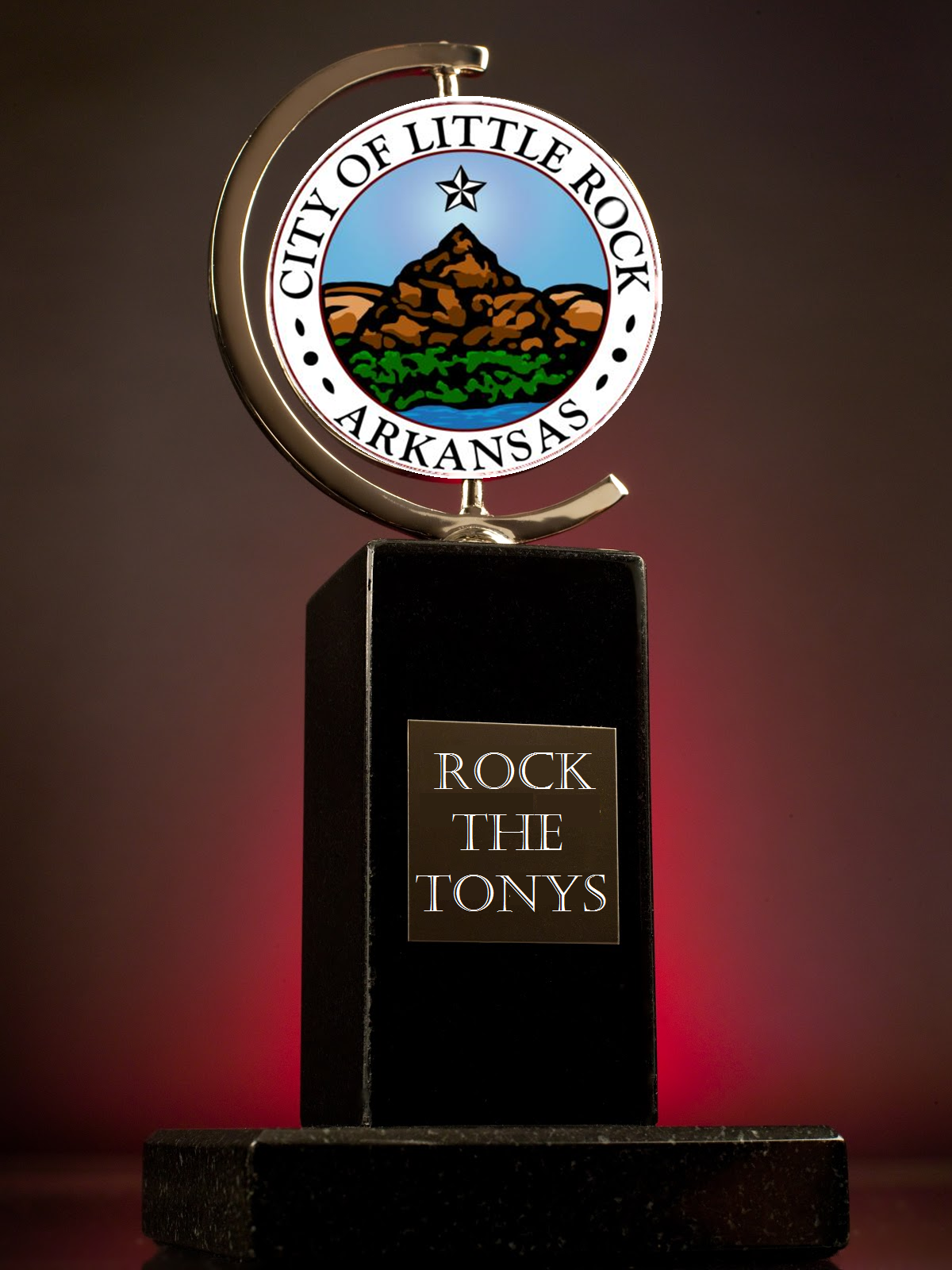
Rock the TonysLittle Rock native Will Trice picked up his sixth and seventh Tony nominations this morning. He was nominated as a producer for Best Play nominee Wolf Hall, Parts 1 & 2. He was also nominated for being a producer of Best Revival of a Play nominee You Can’t Take It with You.

Each of the past three years, Trice has earned a Tony. On June 7, he’ll find out if there will be another silver medallion or two to add to his mantle.

Wolf Hall Parts 1 & 2 was the most nominated play picking up eight nominations.  In addition to Best Play, it was nominated for Actor in a Play (Ben Miles), Featured Actor in a Play (Nathaniel Parker), Featured Actress in a Play (Lydia Leonard), Director of a Play (Jeremy Herrin), Scenic Design of a Play (Christopher Oram), Costume Design of a Play (Christopher Oram) and Lighting Design of a Play (Paule Constable & David Plater).

You Can’t Take It with You picked up a total of five nominations.  In addition to Revival of a Play, it was recognized for Featured Actress in a Play (Annaleigh Ashford), Director of a Play (Scott Ellis), Scenic Design of a Play (David Rockwell) and Costume Design of a Play (Jane Greenwood).

A third title which Trice produced received a Tony nomination.  Elisabeth Moss was nominated for Actress in a Play for her performance in the revival of The Heidi Chronicles.

Another Arkansas connection to the Tonys is Japhy Weideman. A few seasons back, he was a lighting designer at the Arkansas Repertory Theatre.  This marked the third year he received a Tony nominations for his lighting design. This year, he picked up a Tony in both Lighting Design of a Play (for the play Airline Highway) and Lighting Design of a Musical (for the musical The Visit).  Incidentally, both of these productions opened on the same night. That put Weideman in rarefied company of having two shows opening on the same night.

14ish Cultural Highlights of 2014

2014 was a busy year.  Here are 14 cultural highlights. In no particular order. Except maybe once in while.

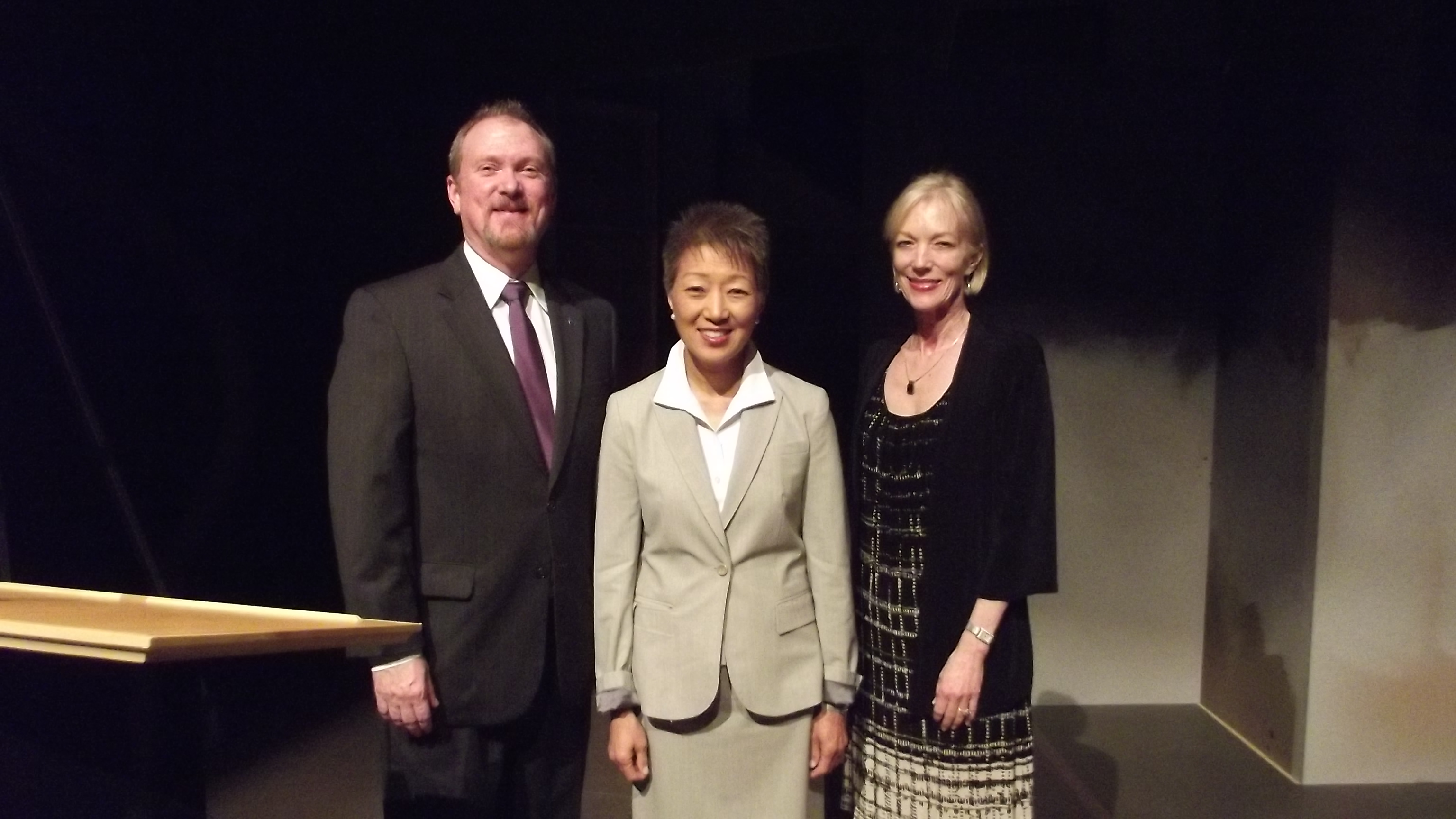
The Rep's Bob Hupp and Catherine Hughes flank NEA Chair Jane Chu

The Rep’s Bob Hupp and Catherine Hughes flank NEA Chair Jane Chu

Dr. Jane Chu visits Arkansas. Former Arkadelphia resident Dr. Jane Chu was appointed as the Chairman of the National Endowment for the Arts. In October, she paid a visit to Little Rock and northwest Arkansas. While in the Rock, she participated in a discussion at the Arkansas Repertory Theatre and toured the new Creative Corridor spaces under construction for the Rep, Ballet Arkansas and Arkansas Symphony Orchestra. Dr. Chu was also the guest of honor at a reception hosted by the Arkansas Arts Council. While here, she had the chance to renew old friendships as well as make new ones.

Carroll Cloar exhibit at Arkansas Arts Center. The Arkansas Arts Center featured the works of Arkansas native Carroll Cloar. Much as the Biblical prophet who is ignored in his homeland, Cloar has long been better recognized outside of his native state.  The Cloar exhibit (which included a painting of future Little Rock mayor J. V. Satterfield playing football, a personal favorite of the LRCV) and the outreach by the AAC staff made great strides towards raising Arkansas’ consciousness about the works by the American treasure.

DSCF0011Robinson Center Music Hall closes for renovation. Opening in February 1940 as the Joseph Taylor Robinson Memorial Auditorium, the City’s prime venue for performances and civic gatherings needed an external and internal facelift at 74. The building closed in July 2014 for a two year renovation which will see the reconfiguration of the performance and audience space in the music hall, the creation of a new special events venue overlooking the Arkansas River, and the restoration of this historic main lobby and front façade to 1940 appearance. During this closure tenants such as Ballet Arkansas, the Arkansas Symphony Orchestra and Celebrity Attractions have temporarily relocated to other venues including the Pulaski Academy Connor Performing Arts Center and the Maumelle Performing Arts Center.

Ron Robinson Theater opens. Shortly before one Robinson closed, another opened.  The Central Arkansas Library System’s new Ron Robinson Theater opened. This multi-purpose venue has quickly become home to lectures (by the library, the Clinton School and others), films (in partnership with Arkansas Times, Little Rock Film Festival and others) and music (including the Arkansas Sounds series).  Named for famed Little Rock adman Ron Robinson, the public spaces pay tribute to his love of movies and music about Arkansas.

Music Music Music

  • As noted above, Arkansas Sounds has switched from a concentrated music festival to instead offering a variety of music styles and genres throughout the year at the new Ron Robinson Theatre. The music has ranged from Big Band to Klezmer to Country to Rock to Rap.  This is only one of the new music offerings in Little Rock.
  • South on Main completed its first full year of the weekly Local Live free music series sponsored by the Oxford American and Landers Fiat. South on Main also started a Jazz on Main series as well as increased their bookings of other musicians ranging from Rodney Block to Rodney Crowell.
  • Meanwhile, The Undercroft completed its first full year of (mainly) acoustic music offerings at the corner of Capitol and Scott Streets.

New Works of Art.

  • New sculptures were added to the Vogel-Schwartz Sculpture Garden and Riverfront Park as well as the Bernice Gardens.
  • In what may be the first for any symphony in the US, the musicians of the Arkansas Symphony Orchestra commissioned a new piece in honor of the ASO board of directors. The work, composed by Christopher Theofanidis, was entitled The Wind and Petit Jean.  It was well-received by audience and musicians alike.
  • Ballet Arkansas sponsored a choreography competition “Visions” which featured five choreographers competing to be selected for a full-scale commission.  The winner was Hilary Wolfley whose work will be seen at the spring Ballet Arkansas presentation.
  • Finally, in conjunction with the 175th anniversary of Christ Episcopal Church (the oldest church in Little Rock to be at its original location), a new choral piece was commissioned. Daniel E. Gawthrop’s “Haste the Day” premiered on December 7.

mod delaneyThe Tonight Show with Kevin Delaney. Because Jimmy Fallon is really just a big kid at heart, he wanted to include periodic “cool” science experiments when he took over the “Tonight Show.”  After being contacted by a producer of Fallon’s show and an audition process, the Museum of Discovery’s Kevin Delaney was booked to appear.  He debuted on May 5 performing experiment with Fallon and returned on November 7. When not a guest of NBC, Delaney performs the same types of “Awesome Science” experiments for tens of thousands of children and adults at the Museum of Discovery.

New Festival of Arts. Acansa, a new multi-discplinary, multi-venue arts festival, debuted this year in September.  Over a five day period, ACANSA Arts Festival brought together audiences and cultural resources to present unique and exciting visual and performing works which celebrate the unique influence of the south and champion excellence and innovation in artistry.  There was theatre, dance, instrumental music, choral music, puppetry and visual art.

14 14 4Gridiron Returns. The talk of the return of the Star Wars movie franchise was not the only welcome news of returns. Gridiron, the biennial attorney fundraiser which spoofs politics, current events, sports and everything that is “sacred” to the general populace, returned after a hiatus.  Once again this effort was under the watchful eye of producer Judge Mary McGowan, the creative leadership of Jana Beard, and the writing prowess of the anonymous committee.  As has been the case in the past, many of the targets of the show good-naturedly showed up and laughed along in the audience.

Sculptures Returned.  Gridiron was not the only welcome return. Earlier this year several sculptures were stolen from the Vogel-Schwartz Sculpture Garden in Riverfront Park. After a media blitz about the theft, some people strolling through the park stumbled across a bag containing the missing sculptures. The pieces are in the process of being restored and will be reinstalled soon.

14 14 3Clinton Center turned 10.  Proving that you can come home again, quite a few of the people who were present for the opening of the Clinton Presidential Center in 2004 showed up again in 2014 to take part in celebratory festivities.  Among events included several lectures; a day of service benefiting the Arkansas Food Bank; a barbecue picnic; and a concert featuring Nick Jonas, Kool & the Gang and others which was hosted by Kevin Spacey.  The Clinton School also celebrated 10 years of lectures and innovative programs.

Preservation Concentration – The Quapaw Quarter Association marked the 50th Spring Tour this year. The event was co-chaired by First Lady Ginger Beebe and lifestyle expert P. Allen Smith.  Later in the year, the QQA hosted its first Mid-Century architecture tour highlighting some of Little Rock’s buildings from this style. They ended the year with the news that they had purchased the William E. Woodruff House in east Little Rock. One of Little Rock’s oldest houses, it was built by the founder of the Arkansas Gazette.  They will shore up the building to try to ensure no further decay as the building is readied for its next phase.

Huzzahs

  • 14 14 2Reese Rowland, architect and principal at Polk Stanley Wilcox Architects of Little Rock, was named a fellow of the American Institute of Architects, awarded to fewer than 4 percent of AIA members.
  • Little Rock native Will Trice earned his third Tony Award in three years, this time for producing All The Way, the Best Play of 2014. His previous Tonys were for Porgy and Bess (Musical Revival-2012) and Who’s Afraid of Virginia Woolf? (Play Revival-2013).
  • Arkansas native and frequent Little Rock performer Al Green was one of the 2014 Kennedy Center Honorees.
  • Little Rock’s Creative Corridor continued to rack up honors. The UA’s Community Design Center, which includes faculty and staff members from the school, won a 2014 Honor Award from the American Institute of Architects for its work on the Creative Corridor, on which it collaborated with Marlon Blackwell Architect of Fayetteville. The project also received the American Society of Landscape Architects Honor Award for Analysis and Planning.

Transitions.

  • 14 14Sharon Priest, a longtime cultural advocate as a City Beautiful Commission member, Little Rock City Director, Little Rock Mayor and Arkansas Secretary of State announced her retirement after 12 years as Executive Director of the Downtown Little Rock Partnership.  Over the past dozen years, she has continued her cultural advocacy.
  • One of Priest’s successors as a member of the Little Rock City Board, Stacy Hurst, was named by Gov.-Elect Asa Hutchinson to be his choice to lead the Department of Arkansas Heritage. She will oversee seven agencies including three Little Rock museums: Mosaic Templars Cultural Center, Old State House Museum and Historic Arkansas Museum.
  • Following the closure of Starving Artists Cafe, the weekly Tales from the South program (which originated from there) had to scramble to find a place.  After several weeks of a completely nomadic existence, it is now settling into a rotating list of locations. The Arkansas Arts Center’s Best Impressions restaurant has been designated a “permanent” site for the first Tuesday of each month.
  • The free outdoor Movies in the Park celebrated its 10th season this year. Founders Blake Rutherford, Heather Allmendinger and Ben Beaumont were honored at the start of the season.  A few weeks into the season, the series screened the film Frozen and set a new record for attendance by logging over 7,000 attendees.
  • After the closure of the Riverdale cinema in 2013, the space sat vacant.  In June 2014, Matt Smith moved the Market Street Cinema operations into the Riverdale space. He upgraded the equipment at Riverdale (which was also a vast improvement over the equipment at Market Street).  The new Riverdale 10 shows a mix of first-run blockbusters as well as the independent films for which Market Street had been beloved.
  • The Studio Theatre was launched adjacent to the new Lobby Bar in downtown Little Rock.  In addition to producing its own performances, it is also the new home of the Community Theatre of Little Rock and Precipice Theatre.
  • Weekend Theatre founder Ralph Hyman retired as the Artistic Director of that group. He will continue to direct productions from time to time.


Little Rock Look Back: Oscar Hammerstein II

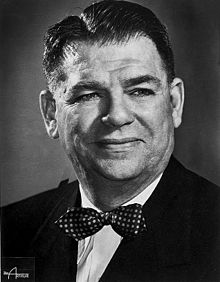
OHIIOn July 12, 1895, Oscar Greeley Clendenning Hammerstein, better known as Oscar Hammerstein II was born. He spent his entire professional life working in the theatre.  One of the musicals he wrote was South Pacific, which featured a character from Little Rock.

In the source novel, Tales of the South Pacific, Forbush is from rural Arkansas.  When Hammerstein, Richard Rodgers and Joshua Logan were adapting it for the stage, they moved the character to Little Rock (or “Small Rock” as the French planter Emil De Becque mistakenly refers to it).

Little Rock is referred to throughout the show.  One song, “My Girl Back Home” contained musical references to Arkansas’ capitol city.  That song was cut before South Pacific opened on Broadway.  It was, however, included in the movie version.  It was also reinstated and included in the 2008 Broadway revival.

Mary Martin won a Tony for originating the role of Nellie Forbush on Broadway. One of the actors who succeeded her was Cloris Leachman. Kelli O’Hara received a Tony nomination in 2008 for the Broadway revival.

South Pacific became the second musical to win the Pulitzer Prize for Drama. It also became the first winner of the Pulitzer for Drama to be based on another Pulitzer prize winner — James Michener won the Pulitzer for Tales of the South Pacific.

Hammerstein’s creation of a character from Little Rock caused problems when the show was being performed in late 1957 and for a few years after.  With the 1957 desegregation crisis still fresh in people’s memories, a show about a woman from Little Rock facing her own racial prejudices was sometimes a bit much for audiences. Apparently some audiences would boo when Little Rock was mentioned.  But Rodgers and Hammerstein did not change her hometown.

At the 1999 celebration marking the 50th anniversary of South Pacific opening on Broadway, a proclamation from then-Little Rock Mayor Jim Dailey was read.  It paid tribute to Nellie Forbush as an ambassador (albeit fictional) for Little Rock. The proclamation noted that her optimism, forbearance and ability to change for the better were emblems of Little Rock.  Since these were attributes which Mr. Hammerstein himself exhibited, one suspects he would be pleased.

Hammerstein died in 1960 during the run of The Sound of Music (which like South Pacific starred Mary Martin).

For those wanting to see an Oscar Hammerstein II show on his birthday or during his birth month, South Pacific has just started a run in Benton at the Royal Players.

LR native and 3 time Tony winner Will Trice headed back to Broadway as a producer of revival of YOU CAN’T TAKE IT WITH YOU.

YCTIWY bwayThree time Tony winner (and Little Rock native) Will Trice is heading back to Broadway this fall as a producer of an all-star revival of the Pulitzer Prize winning comedy You Can’t Take It with You.

The cast will be led by two time Tony winner James Earl Jones.  Additional casting was announced yesterday.  The production will mark a reunion from the recent revival of The Best Man for Jones with actress Elizabeth Ashley and producers Jeffrey Richards and Trice.

The Little Rock Central alum has won a Tony for each of the past three seasons. This marks the first announced project for the Trice for the 2014-2015 season.

First performed on Broadway at the height of the Great Depression, it has not been revived on Broadway since 1983.  You Can’t Take It with You, by George S. Kaufman and Moss Hart, celebrates the American spirit as well as spirited family life.  Others in the cast, which is to be directed by multiple Tony nominee Scott Ellis, are Tony nominee Kristine Nielsen, Tony nominee Reg Rogers, Tony nominee Annaleigh Ashford, Theatre World winner Crystal A. Dickinson and stage veterans Byron Jennings and Julie Halston.

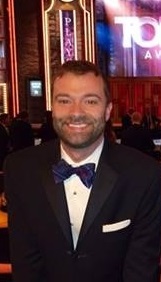
Trice at the 2014 Tony Awards

Trice at the 2014 Tony Awards

Mark Linn-Baker, who has cut his teeth on both stage and TV, is also in the cast. Others in the show include Marc Damon Johnson and Patrick Kerr. Three time Tony winner Jason Robert Brown is composing music for the play.

Performances will start at New York’s Longacre Theatre on August 26 with an official opening night of September 28.

Trice’s Tony Awards came for the 2014 Best Play All the Way, 2013 Best Play Revival Who’s Afraid of Virginia Woolf? and the 2012 Best Musical Revival Porgy and Bess.  He also received a nomination for 2012 Best Play Revival for The Best Man.  This past year, of the 26 Tony Awards presented, seven went to shows produced by Jeffrey Richards and Will Trice.