LR Culture Vulture turns 7

The Little Rock Culture Vulture debuted on Saturday, October 1, 2011, to kick off Arts & Humanities Month.

The first feature was on the Arkansas Symphony Orchestra, which was kicking off its 2011-2012 season that evening.  The program consisted of Mendelssohn’s Symphony No. 4 in A, Op. 90, Rossini’s, Overture to The Italian Girl in Algiers, Puccini’s Chrysanthemums and Respighi’s Pines of Rome.  In addition to the orchestra musicians, there was an organ on stage for this concert.

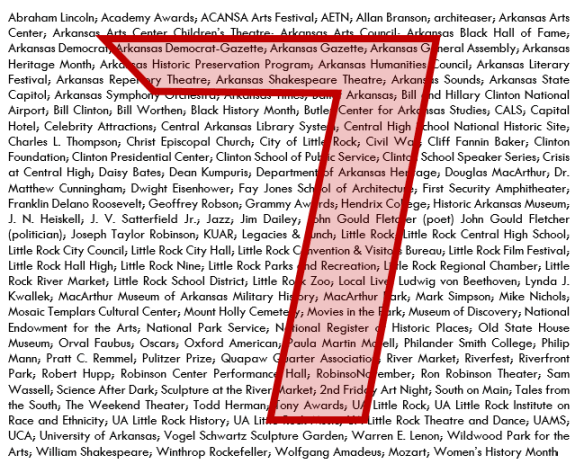
Since then, there have been 10,107 persons/places/things “tagged” in the blog.  This is the 3,773rd entry. (The symmetry to the number is purely coincidental–or is it?)  It has been viewed over 288,600 times, and over 400 readers have made comments.  It is apparently also a reference on Wikipedia.

The most popular pieces have been about Little Rock history and about people in Little Rock.

Little Rock Look Back: Dedication of Clinton Presidential Park Bridge and Bill Clark Wetlands

Photo by the Little Rock Convention and Visitors Bureau

On a very warm Friday, September 30, 2011, the Clinton Presidential Park Bridge was dedicated.  This completed the eastern loop of the Arkansas River Trail as well as created another feature in Clinton Presidential Park.

The ceremony featured remarks by both President Bill Clinton and the incumbent Secretary of State Hillary Rodham Clinton.  Chelsea Clinton also took part in the ceremony.  Former US Senators (and Arkansas Governors) Dale Bumpers and David Pryor were in attendance as was Jim Guy Tucker who followed Clinton into the Arkansas Governor’s Office.  Current Governor Mike Beebe was also present and took part in the ceremony, which was emceed by Stephanie Streett, executive director of the Clinton Foundation.  Many other former and current elected officials were present.

In addition to dedicating the bridge, the ceremony officially dedicated the William E. “Bill” Clark Presidential Wetlands which are adjacent to the bridge.  City Director Dean Kumpuris joined Clark’s widow, Margaret, and son, William, in the dedication of the wetlands.

This Clinton Presidential Park Bridge is over 2,600 ft. long.  It was constructed in 1899 as the Rock Island Bridge.  After the Rock Island stopped using the bridge, the lift span was permanently raised.  It had to stay this was for the Clinton redevelopment.  Therefore a new surface was built that slopingly takes persons from park level up to the span level and back down.

The bridge’s “rusty” structure is complemented by a well-lit 12-18-foot walkway flanked on both sides by silver galvanized steel handrails.
The total investment for this area is over $13.5 million.
Later that weekend, the Clinton Foundation hosted an event to commemorate the 20th anniversary of Clinton’s announcement that he was seeking the Presidency.

Little Rock Look Back: Happy Birthday to Ernest Green

Ernest Green’s sixteenth birthday was probably more memorable than most people’s.  It was not about getting a car, it was about wondering if he would ever get to attend Little Rock Central High School.

Born on September 22, 1941, he was the son of Lothaire S. and Ernest G. Green.  In 1957, his birthday was on a Sunday.  The next day, the Little Rock Nine would spend a few hours in Central High School before being escorted out for their own safety.  However, three days after his birthday, escorted by members of the 101st Airborne Division of the US Army, he finally entered Central to complete the school year.

In May 1958, he became the first African American to graduate from Little Rock Central High School.  At the age of seventeen he was awarded the NAACP’s Spingarn Medal, as one of the Little Rock Nine.  He then obtained a  B.S. in Social Science and Masters in Sociology from Michigan State University.

Featured in the 2006 list of Black Enterprise Magazine’s “75 Most Powerful Blacks on Wall Street”, Ernest has served as senior investment banker on transactions for such key clients as the City of New York, State of New York, City of Chicago, Port of Oakland, City of Atlanta, State of Connecticut, Detroit Wayne County Airport, Denver Airport, and the Washington Metropolitan Airport Authority.

He served as Assistant Secretary of Labor for Employment and Training during the Carter Administration.  President Clinton appointed him to serve as Chairman of the African Development Foundation.  Secretary of Education Richard W. Riley, appointed him Chairman of the Historically Black Colleges and Universities Capital Financing Advisory Board.

In 1995, he was awarded the Distinguished Eagle Scout Award.  Ernest Green is also a recipient of the Urban League’s Frederick Douglass Freedom Medal, and the John D. Rockefeller Public Service Award. On November 9, 1999, with the Little Rock Nine, he was presented by President Clinton with the Congressional Gold Medal. He holds honorary doctorates from Michigan State University, Tougaloo College, and Central State University.

Several books, movies and documentaries have chronicled his and his eight classmates’ historic year at Central High School in Little Rock — the most recent being the “Ernest Green Story”, produced and distributed by the Walt Disney Corporation.

He and his wife Phyllis live in Washington, D. C.  He is the proud father of Adam, Jessica and McKenzie Ann.

 

Little Rock Look Back: Thurgood Marshall confirmed to SCOTUS

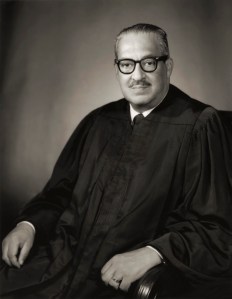
On August 30, 1967, Thurgood Marshall was confirmed as the first African American to serve on the Supreme Court of the United States.
Ten years earlier, Marshall had been spending much time in Little Rock as he fought for the Little Rock Nine to be allowed to integrate Little Rock Central High School.  While he was in town, he would stay at the home of L. C. and Daisy Bates.  One  can tour the home today and see the bedroom in which he, Dr. Martin Luther King Jr., Ossie Davis & Ruby Dee, and other Civil Rights leaders stayed while visiting Little Rock.

His involvement with the Little Rock Nine came about from his role with the NAACP. In had been in that capacity that he was lead attorney for the Brown v. Board of Education decision which paved the way for the Little Rock schools to be integrated.  He worked with local attorneys such as Wiley Branton Sr. and Chris Mercer on the Little Rock efforts.

In May 1961, President John F. Kennedy named Marshall to a seat on the US Court of Appeals. Unsurprisingly, a group of segregationist senators tried to hold up the appointment.  In 1965, he was named to the position of Solicitor General by President Lyndon B. Johnson.

Regrettably there is another Arkansas connection to Thurgood Marshall’s appointment to the Supreme Court.  As he had with the 1961 appointment to the Court of Appeals, Arkansas Senator John L. McClellan vigorously opposed the nomination of Marshall.  As a member of the Judiciary Committee he tried to hold it up.  In the end, McClellan did not vote on Marshall’s appointment when it came before the full Senate.

The final vote was 69 for and 11 against with 20 not voting. Of the 11 former states of the Confederacy, Arkansas’ J. William Fulbright, Tennessee’s Howard Baker & Al Gore Sr., Texas’ John Tower & Ralph Yarborough, and Virginia’s William Spong were the only six votes for yes.  There were six who did not vote, and 10 Nay votes.

The remaining Nay vote came from West Virginia’s Robert Byrd. Among those outside the South who did not vote were future Democratic presidential candidates Eugene McCarthy,  Edmund Muskie and George McGovern as well as Republican former actor George Murphy.  Montana was the only state with neither senator casting a vote one way or the other.

Marshall served on the US Supreme Court until October 1991, when he retired due to failing health. He died in January 1993, just four days after Bill Clinton became president.

Remembering Aretha Franklin at Robinson Center with the ASO

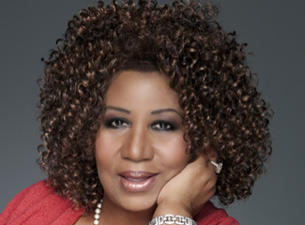
On Tuesday, November 16, 2004, Aretha Franklin showed why she was an unparalleled entertainer.
She shared the Robinson stage with the Arkansas Symphony Orchestra.  The ASO brought Miss Franklin to town as part of the festivities surrounding the opening of the presidential library.  Long a favorite of the Clintons, Miss Franklin sang at his 1993 inaugural festivities the night before he took the oath of office.

Resplendent in a series of white dresses, Miss Franklin was in top form feeding off the love from the audience.  While backstage she may have been dealing with back and knee issues (which I saw first hand), when she stepped on to the stage she was giving her all as she rolled through hit after hit from her starry career.  She sang, she played the piano, she entertained!

It was a sold out house and her voice and energy reached the last row of the balcony.

Prior to her appearance, the ASO played a few selections including variations on “Hail to the Chief” and “America.”

Earlier in the day, I had the chance to meet her.  The ASO had contacted me to see if I could pick up three copies of Bill Clinton’s autobiography for her to have him sign.  I was out and about on Clinton Library-related errands that day, so I happily obliged.  I picked up three copies and delivered them to Robinson Center.  Miss Franklin was on a break in between rehearsals and was about to be interviewed by Craig O’Neill for KTHV.  I only got to shake her hand and briefly say hello, but I could tell she was thrilled to receive the books.

I obviously did not ask to be reimbursed for the expense. The chance to spend a few seconds with her was payment enough.

Remembering Mahlon Martin on what would have been his 73rd birthday

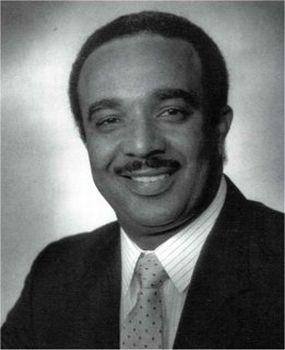
On July 19, 1945, future Little Rock City Manager Mahlon A. Martin was born in Little Rock.
After graduating in 1963 from Horace Mann High School, he attended Philander Smith College.  (He had received a baseball scholarship to Grambling, but chose to remain in Little Rock to be near his ailing grandmother.)  Martin graduated from Philander Smith in 1967 with a degree in business administration.

After working in the private sector for two years, Martin was hired by City Manager Jack T. Meriwether to work for the City of Little Rock in 1969 after the City had received a Model Cities grant.  Martin started working with community organizations and then became promoted to the City’s recruiting officer.

In 1972, he was named to leadership posts at the four-county Central Arkansas Manpower Program.  Three years later, he returned to the City of Little Rock to work on the staff of City Manager Carleton McMullin.  In 1976, Martin was named Assistant City Manager for Little Rock.

Martin left City Hall in 1979 to become a top executive at Systematics, Inc.  However, his stint in the private sector was short-lived.  In 1980, the City Board of Directors asked him to come back and be Little Rock’s sixth City Manager.  At thirty-four, he was one of the youngest chief administrators of a major city in the country and the first African American City Manager for Little Rock.

In 1983, Governor Bill Clinton asked him to join the state of Arkansas as the Director of the Department of Finance and Administration.  He was the first African American to lead that or any major Arkansas state department.  Throughout his tenure with the State, he oversaw numerous initiatives to restore the state to sound financial footing.

Martin joined the Winthrop Rockefeller Foundation as president in 1989.  He held that position until his death in 1995.

The name Mahlon Martin lives on in a son and grandson named after him, in an apartment complex on south Main Street, in a street in Clinton Presidential Park, and in the City of Little Rock’s Employee of the Year award.  The latter was created by City Manager Bruce T. Moore in 2004.  At the time Moore noted that Martin had been so popular while City Manager, “It was said you could criticize the Razorbacks to a City of Little Rock employee, but you better not say anything bad about Mahlon Martin to them.”

In 2001, Mahlon Martin was posthumously inducted into the Arkansas Black Hall of Fame.  A decade later, the Butler Center for Arkansas Studies created a fellowship in his memory.  It supports research and programming in the field of public policy in Arkansas.  In 2015, he was included in the Arkansas Civil Rights Heritage Trail.

Birthday of Little Rock’s 66th mayor, Buddy Benafield

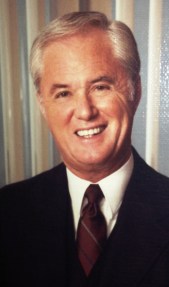
Future Little Rock Mayor James Weldon “Buddy” Benafield was born on July 5, 1927 in Coy, Arkansas.  As a child he spent part of his time chopping cotton.  He graduated from England High School and then served in the U.S. Navy.  Following his stint in the military, he enrolled in Arkansas State Teachers College (now the University of Central Arkansas).

After college he returned to England.  From 1967 to 1974 he served as Mayor of England.  While in England, he also worked to establish a hospital there. While he was Mayor, Benafield also served as a legislative aide to Governor Dale Bumpers.

After moving to Little Rock, Benafield served as legislative aide to Governor Frank White.  He had been a donor to former Governor Bill Clinton, who had been defeated by White. Though a staunch Democrat, he remarked to the media at the time that he had been a friend of White’s and never declined a Governor’s request for help.

Long active in Democratic politics, he had served as Secretary of the State Democratic Party.  (One of his daughters, Dawne Benafield Vandiver has carried on the family tradition serving in several leadership positions in the State Democratic Party.)

In January 1982, Benafield was appointed to fill a vacancy on the Little Rock City Board of Directors. He ran for election to a full term in November 1982 and was reelected in November 1986.  From January 1983 to December 1984, Benafield served as Mayor of Little Rock.

After leaving the Little Rock City Board in January 1991, he has remained engaged in civic matters.  He served a term on the Arkansas Highway and Transportation Commission.  He was first appointed in January 1993 by Gov. Jim Guy Tucker to fill out the remainder of Rodney Slater’s term. Slater had resigned to to take a job in the Clinton Administration in Washington DC.  In 1995, he was reappointed, this time to a full ten year term.  This was only the second time a member of the Highway Commission had been reappointed.

Buddy Benafield is the only Little Rock Mayor to have also been a mayor of another Arkansas city.  He continues to be involved in farming and a variety of business ventures and has maintained his interest in politics.