Food for Fines this December at CALS

Shed unwanted library fines this holiday season. The Central Arkansas Library System (CALS) is continuing its tradition of helping those in need by holding its annual Food for Fines event from Sunday, December 2, through Saturday, December 8.

Food for Fines gives patrons an opportunity to help others in central Arkansas and to reduce fines for overdue library materials. During Food for Fines, patrons may bring in donations of non-perishable food items to offset overdue fines on their library accounts. Each non-perishable food item will offset $1 in fines up to $10. Fines accrued for billed items or replacement fees are not eligible under the program.

Food collected in Pulaski County during the drive will be donated to the Arkansas Foodbank. Donations collected at Milam Library will be donated to Partners for Progress in Perryville.

CALS libraries in Little Rock:

  • Main Library, 100 Rock Street
  • Hillary Rodham Clinton Children’s Library and Learning Center, 4800 W. 10th Street
  • Dee Brown Library, 6325 Baseline Road
  • Fletcher Library, 823 North Buchanan Street
  • Terry Library, 2015 Napa Valley Drive
  • McMath Library, 2100 John Barrow Road
  • Thompson Library, 38 Rahling Circle
  • Oley E. Rooker Library, 11 Otter Creek Court
  • Williams Library, 1800 Chester Street

For more information about Food for Fines, call 918-3000 or visit http://www.cals.org.

The Central Arkansas Library System includes 14 branch libraries located in Little Rock, Perryville, and throughout Pulaski County. CALS has the largest research collection in central Arkansas. Most of its more than one million items may be reserved online and picked up at any branch that is convenient to the patron. Library Square, the library system’s downtown Little Rock campus, includes the Main Library, as well as the Ron Robinson Theater, the Bobby L. Roberts Library of Arkansas History & Art, and the Bookstore at Library Square.

Community Input sought by CALS

The Central Arkansas Library System is undergoing a strategic planning process, and they would like your input and comments.

As part of the process, CALS is conducting an online community survey.  They encourage all residents – whether or not you use the Library regularly – to complete the survey.

The community survey is available online (English | Español) through December 15th.  Paper, hard copies of the survey will also be available at Library facilities.  The short survey only takes about 10 minutes to complete.  It includes an open-ended comment section, and all suggestions for the future directions of the Library are encouraged.

The survey is being conducted by the independent, Library Strategies Consulting Group, and all individual responses will be confidential. Only aggregate responses will be reported to the Library Board and administration.

The community survey, along with other Library data and trends, and input from the staff, Board and other key stakeholders, will form the basis for the strategic plan.  The plan is expected to be completed and approved in the first quarter of next year.

Little Rock Look Back: Civic Leader Adolphine Fletcher Terry

Adolphine Fletcher Terry was born on November 3, 1882 to former Little Rock Mayor John Gould Fletcher and his wife Adolphine Krause Fletcher.

Raised in Little Rock, in 1889 she moved into the Albert Pike House on East 7th Street, when her aunt transferred the title to her father. That house would be her primary residence the rest of her life.  Her sister Mary Fletcher Drennan never lived in Arkansas as an adult after marriage. Her brother John Gould Fletcher spent much of his adulthood in Europe before returning to Little Rock and establishing his own house, Johnswood.

At age 15, Adolphine attended Vassar. She later credited that experience as broadening her views on many issues.  After graduating at age 19, she returned to Little Rock.  Her parents both died prior to her 1910 wedding to David D. Terry, which took place at what was then known as the Pike-Fletcher House (and today is known as the Pike-Fletcher-Terry House).

She is perhaps best known today for establishing the Women’s Emergency Committee in 1958 and for her subsequent deeding of the family house to the City for use by the Arkansas Arts Center.  But her entire life was based on civic engagement.

She was instrumental in establishing the first juvenile court system in Arkansas and helped form the first school improvement association in the state. She was long an advocate for libraries, serving 40 years on the Little Rock public library board.  Through her leadership, the library opened its doors to African Americans in the early 1950s. Today a branch of the Central Arkansas Library System (the successor the Little Rock public library) is named after her.  Another branch is named after her Pulitzer Prize winning brother.

Adolphine formed the Little Rock chapter of the American Association of University Women, the Pulaski County tuberculosis association and the Community Chest.

In 1958, when the Little Rock public high schools were closed instead of allowing them to be desegregated again, she called Harry Ashmore the editor of the Gazette and exclaimed, “the men have failed us…it’s time to call out the women.”  With this, she formed the Women’s Emergency Committee to Open Our Schools. This group played a major role in getting the four high schools open the following year.

From 1933 to 1942, David Terry served in the U.S. Congress. During that time, Adolphine alternated her time between Washington DC and Little Rock. But she spent much time in Little Rock raising her five children.

After her husband’s death in 1963, she continued to remain active in civic affairs. In the 1960’s, she and her sister deeded the Pike-Fletcher-Terry House to the City of Little Rock for use by the Arkansas Arts Center upon both their deaths.  Following Adolphine Fletcher Terry’s death in 1976, Mary turned over the title to the City.

Adolphine Fletcher Terry is buried in Mount Holly Cemetery alongside her husband. Three of her children are also buried in that plot.  Her parents and brother are buried in a nearby plot.

Her granddaughters and their families carry on Adolphine Fletcher Terry’s commitment to making Little Rock better.

Little Rock Look Back: Mr. J. N. Heiskell

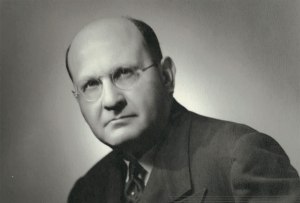
At the age of 87, J. N. Heiskell in 1960.

John Netherland (J. N.) Heiskell served as editor of the Arkansas Gazette for more than seventy years.  He was usually called “Mr. Heiskell” by all, but a very few confidantes felt confident to call him “Ned.”

Mr. Heiskell is the person most responsible for Robinson Center Music Hall being located at the corner of Markham and Broadway.  As Chair of the Planning Commission and editor of the Arkansas Gazette he had twin bully pulpits to promote this location when those on the City Council (who actually had the final say) were looking at other locations.  He felt the location would help create a cluster of public buildings with its proximity to the county courthouse and to City Hall.  Mr. Heiskell finally succeeded in winning over the mayor and aldermen to his viewpoint.

He was born on November 2, 1872, in Rogersville, Tennessee, to Carrick White Heiskell and Eliza Ayre Netherland Heiskell. He entered the University of Tennessee at Knoxville before his eighteenth birthday and graduated in three years at the head of his class on June 7, 1893.

His early journalism career included jobs with newspapers in Knoxville and Memphis and with the Associated Press in Chicago and Louisville. On June 17, 1902, Heiskell’s family bought controlling interest in the Arkansas Gazette. Heiskell became the editor, and his brother, Fred, became managing editor.

Governor George Donaghey appointed Heiskell to succeed Jeff Davis in the United States Senate after Davis’s death in office. Heiskell served from January 6, 1913, until January 29, 1913, when a successor was chosen by the Arkansas General Assembly.  His tenure is the shortest in the U. S. Senate history.  His first speech on the Senate floor was his farewell.  He was also only the second US Senator to live to be 100.

On June 28, 1910, Heiskell married Wilhelmina Mann, daughter of the nationally prominent architect, George R. Mann. The couple had four children: Elizabeth, Louise, John N. Jr., and Carrick.

In 1907, he joined a successful effort to build the city’s first public library. He served on the library board from that year until his death and was issued the first library card.  He also served on the City’s Planning Commission for decades.  In 1912, he was instrumental in bringing John Nolen to Little Rock to devise a park plan.

In the paper and in his own personal opinions, he crusaded on a variety of progressive causes.  Perhaps the most famous was the Gazette’s stance in the 1957 Central High desegregation crisis.  It was for this effort that the paper received two Pulitzer Prizes.

Although Heiskell stopped going to the office at age ninety-nine, he continued to take an active interest in the newspaper. He began by having a copy of the newspaper delivered to his home by messenger as soon as it came off the press each night. Eventually, he switched to having his secretary call him daily at his home and read the entire newspaper to him. He operated on the premise that “anyone who runs a newspaper needs to know what’s in it, even to the classified ads.”

A few weeks after turning 100, Heiskell died of congestive heart failure brought on by arteriosclerosis on December 28, 1972. He is buried in Little Rock’s Mount Holly Cemetery.  Interestingly, he is buried in the same cemetery as two of his most notable adversaries: Governor Jeff Davis, and segregationist Congressman Dale Alford.

Mr. Heiskell donated his vast papers to UALR. They are part of the Arkansas Studies Institute collection. These papers give insight into not only his career as a journalist, but also his political and civic affairs.  Thankfully he saved much of his paperwork. Without it, much insight into Little Rock in the 20th Century would be lost.

The November 4th CALS Rabbi Ira Sanders Distinguished Lecture pays tribute this year to the man who inspired it

The 2018 Rabbi Ira Sanders Distinguished Lecture of the Central Arkansas Library System will honor Rabbi Ira Sanders himself, as two expert scholars engage in a lively dialogue on his inspirational work and legacy.

The lecture will take place at Temple B’nai Israel, 3700 North Rodney Parham Road, at 4:00 p.m. on Sunday, November 4. A reception and book signing will follow the program, and copies of the book will be available for purchase. The event is free and open to the public.

Rabbi Sanders was a member of the library Board of Trustees for over 40 years, but his contribution to social justice, to the Little Rock community, and to the whole region stretched far beyond his library service.

James L. Moses, author of Just and Righteous Causes: Rabbi Ira Sanders and the Fight for Racial and Social Justice in Arkansas, 1926-1963, will join Mark K. Bauman, editor of the journal Southern Jewish History, for a dialogue focusing on the life and work of Rabbi Sanders.

Their dialogue coincides with the launch of the new book by James Moses, just released from the University of Arkansas Press. Moses and Bauman will discuss Sanders’s lifelong work for social and racial justice in Arkansas and its relation to the efforts of other southern rabbis during the civil rights movement.

Rabbi Ira Sanders built an unforgettable legacy through his passionate advocacy for social justice and the many initiatives he founded to better the lives of others. He was a founder of the Little Rock School of Social Work, the Arkansas Lighthouse for the Blind and the Urban League of Greater Little Rock, where he served as an executive and advisory board member for more than 30 years. Dr. Sanders also served as rabbi at Congregation B’nai Israel for 38 years, which makes the congregation’s building a natural setting for this unique lecture. Sanders, who lived in Little Rock from 1926 until his death in 1985, was an outspoken supporter of racial integration, equal opportunity, and women’s rights.

James Moses states: “Rabbi Ira Sanders was a warrior for social and racial justice throughout his life. He took these words from Isaiah strongly to heart: Learn to do well: seek Justice – relieve the oppressed.

Through a lifetime devoted to this moral imperative, Moses says, “Sanders made a real difference in the lives of many thousands over an influential career that spanned the eras of the Depression, World War II, the Civil Rights Movement, and beyond. Sanders’s inimitable career gives us a window through which we can understand the history of Arkansas and the South through the tumultuous 20th Century. I look forward to sharing his singular story – and hearing more stories about him – in Little Rock on November 4.”

Mark K. Bauman praises the new book by Moses: “James Moses has written a trailblazing book on a true Jewish American hero. Ira Sanders was involved in the civil rights movement long before other people were. He was devoted to a variety of causes to help people in need. Sanders is well-deserving of the marvelous tribute that Moses has given him through this biography.”

Bauman is also enthusiastic about the upcoming dialogue. “I very much look forward to relating the work of Sanders to the work of other Reform Rabbis in the South and to sharing these remarkable experiences with an energetic and informed audience.”

Rabbi Barry Block, current leader of Congregation B’nai Israel, sees continuing value in the legacy of Rabbi Sanders. “In collaboration with interfaith clergy partners, members of Congregation B’nai Israel, and diverse leaders throughout the community, Rabbi Sanders transformed Arkansas for the better,” he says. Rabbi Block believes that people of all belief systems can be inspired to bold action against today’s injustice by the example of Rabbi Sanders.

The 2018 Rabbi Ira Sanders Distinguished Lecture is sponsored by the Central Arkansas Library System and Congregation B’nai Israel and co-sponsored by the Jewish Federation of Arkansas and the CALS Butler Center for Arkansas Studies.

For more information about the Rabbi Ira Sanders Distinguished Lecture, contact Madelyn Ganos at mganos@cals.org or (501) 918-3030.

Little Rock Look Back: Mayor W. E. Lenon

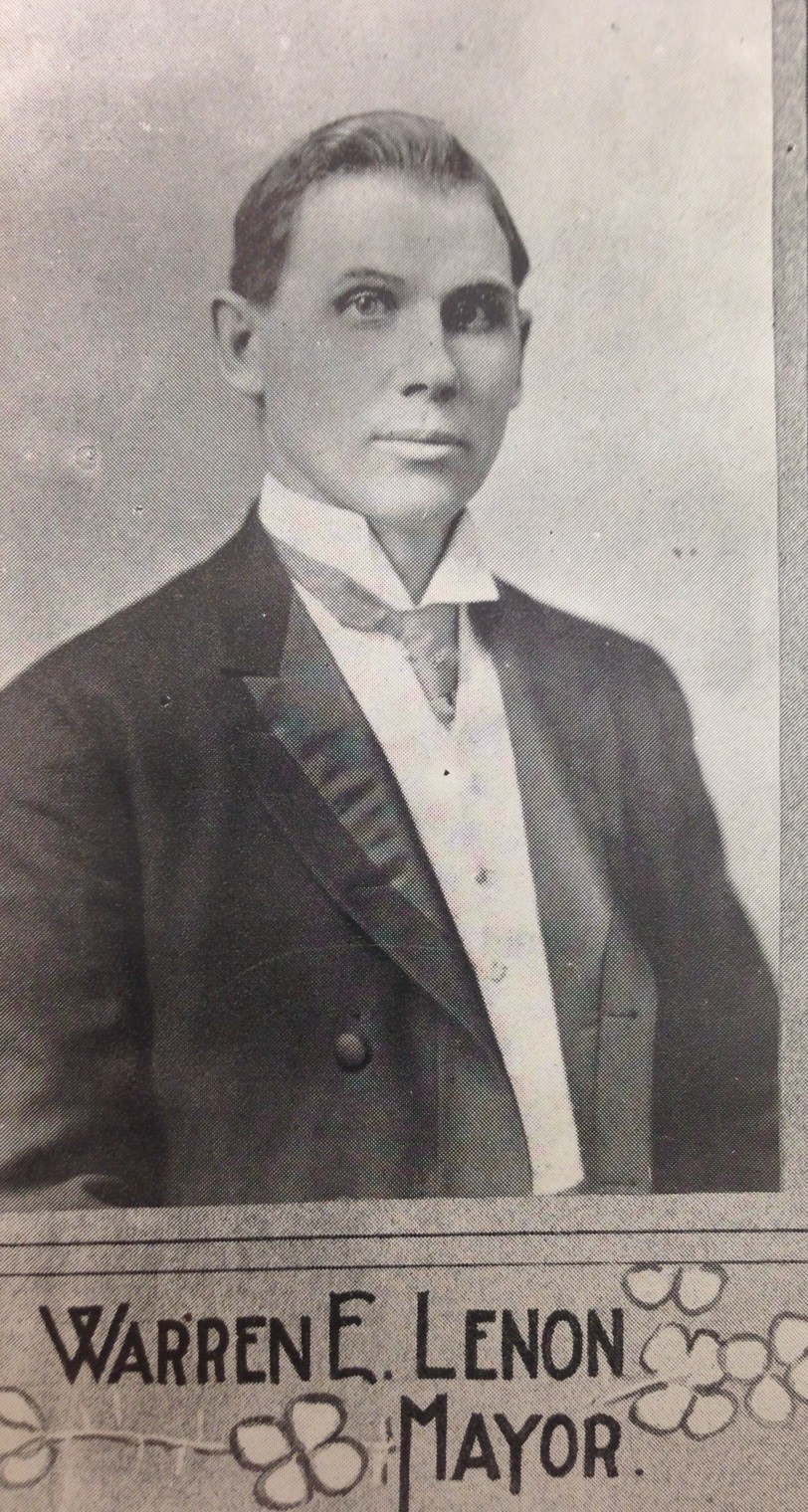
OMayor Lenonn October 8, 1867 in Panora, Iowa, future Little Rock Mayor Warren E. Lenon was born.  He was one of eleven children of John D. and Margaret M. Long Lenon.

Lenon came to Little Rock in 1888 after finishing his schooling in Iowa.  He helped set up an abstract company shortly after his arrival.  In 1902 he organized the Peoples Savings Bank.  Among his other business interests were the City Realty Company, the Factory Land Company, the Mountain Park Land Company, and the Pulaski Heights Land Company.

From 1895 to 1903, he was a Little Rock alderman, and in 1903, he was elected Mayor of the city. A progressive Mayor, he championed the construction of a new City Hall which opened in 1908.  At the first meeting of the City Council in that building, Mayor Lenon tendered his resignation.  His duties in his various business interests were taking up too much of his time.

Mayor Lenon had been a champion for the establishment of a municipal auditorium. He had wanted to include one in the new City Hall complex. But a court deemed it not permissible under Arkansas finance laws at the time.  He also worked to help establish the first Carnegie Library in Little Rock which opened in 1912.

Mayor Lenon continued to serve in a variety of public capacities after leaving office.  In the 1920s, he briefly chaired a public facilities board for an auditorium district. It appeared he would see his dream fulfilled of a municipal auditorium.  Unfortunately the Arkansas Supreme Court declared the enabling legislation invalid.

In 1889, he married Clara M. Mercer.  The couple had three children, two of whom survived him: a son W. E. Lenon Jr., and a daughter Vivion Mercer Lenon Brewer.  Together with Adolphine Fletcher Terry (also a daughter of a LR Mayor), Mrs. Brewer was a leader of the Women’s Emergency Committee.

Mayor Lenon died June 25, 1946 and is buried at Roselawn Cemetery.  Lenon Drive just off University Avenue is named after Mayor Lenon.

LR Culture Vulture turns 7

The Little Rock Culture Vulture debuted on Saturday, October 1, 2011, to kick off Arts & Humanities Month.

The first feature was on the Arkansas Symphony Orchestra, which was kicking off its 2011-2012 season that evening.  The program consisted of Mendelssohn’s Symphony No. 4 in A, Op. 90, Rossini’s, Overture to The Italian Girl in Algiers, Puccini’s Chrysanthemums and Respighi’s Pines of Rome.  In addition to the orchestra musicians, there was an organ on stage for this concert.

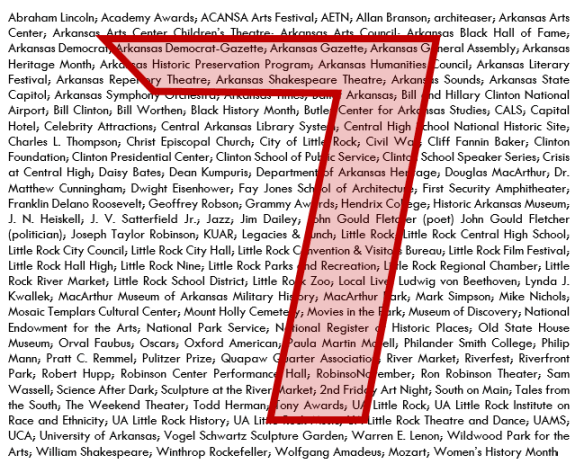
Since then, there have been 10,107 persons/places/things “tagged” in the blog.  This is the 3,773rd entry. (The symmetry to the number is purely coincidental–or is it?)  It has been viewed over 288,600 times, and over 400 readers have made comments.  It is apparently also a reference on Wikipedia.

The most popular pieces have been about Little Rock history and about people in Little Rock.