LR Culture Vulture turns 7

The Little Rock Culture Vulture debuted on Saturday, October 1, 2011, to kick off Arts & Humanities Month.

The first feature was on the Arkansas Symphony Orchestra, which was kicking off its 2011-2012 season that evening.  The program consisted of Mendelssohn’s Symphony No. 4 in A, Op. 90, Rossini’s, Overture to The Italian Girl in Algiers, Puccini’s Chrysanthemums and Respighi’s Pines of Rome.  In addition to the orchestra musicians, there was an organ on stage for this concert.

Since then, there have been 10,107 persons/places/things “tagged” in the blog.  This is the 3,773rd entry. (The symmetry to the number is purely coincidental–or is it?)  It has been viewed over 288,600 times, and over 400 readers have made comments.  It is apparently also a reference on Wikipedia.

The most popular pieces have been about Little Rock history and about people in Little Rock.

Little Rock Look Back: Little Rock Nine enter Central High for First Full Day

After legal challenges, stymied attempts, and literally countless threats, it was on Wednesday, September 25, 1957, that the group of African American students known as the Little Rock Nine actually entered Little Rock Central High School for a full day.  They would return each day through the end of the school year.

Unlike September 23, when they went in a side door before being hustled a few hours later for their own protection, on September 25 they walked in the front door.  They did so escorted by members of the 101st Airborne who had been ordered to Little Rock by President Eisenhower.

Much has been written about the events of September 25, 1957.  Several of the participants that day have penned memoirs.

Whatever I would write today would pale in comparison to the accounts of those who lived it.

So I just end this with words of gratitude to:

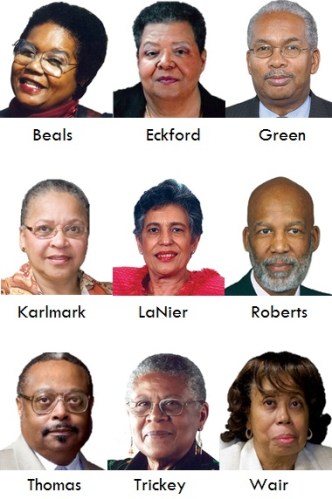
  • Melba Pattillo Beals
  • Elizabeth Eckford
  • Ernest Green
  • Gloria Ray Karlmark
  • Carlotta Walls LaNier
  • Terrence Roberts
  • Jefferson Thomas
  • Minnijean Brown Trickey
  • Thelma Mothershed Wair

Thank you to these nine pioneers, who were simply teenagers trying to have equal education opportunities.  Thank you to their parents, their families, their pastors, their legal team, their support system.  Thank you to Daisy and L. C. Bates, Wiley Branton Sr. Chris Mercer, and Thurgood Marshall for the roles they played.

While Jefferson Thomas passed away in 2010, the other eight continue to tell their stories and speak truth to audiences ranging from one to thousands and ages from pre-school to seniors.

Little Rock Look Forward: Happy Birthday Annie Abrams

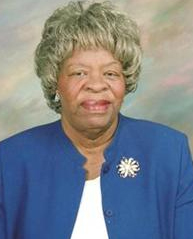
September 25 is the birthday of Annie Mable McDaniel Abrams.

Miss Annie or Mother Abrams or Mrs. Abrams.  Whatever you call her, she greets you with a smile, a hug, and sage advice.

As both a historian and a futurist, she has turned her house into a museum and library. As a writer and preservationist, she has worked to document history and ensure historical properties and neighborhoods will long remain in Little Rock.

Born in Arkadelphia, she moved to Little Rock at age 13 to attend Dunbar Junior High School and High School.  She studied education at Dunbar Junior College and later taught in Marianna. In 1956, she returned to Little Rock to work for the Arkansas Teachers Association.  After her return to the capital city, she married Orville Abrams.  In addition to raising her four children, Miss Annie has helped raise countless others through her advice, support, love, and sometimes strong admonitions.  She also found time to return to school and receive a degree from Philander Smith College.

Among her many accomplishments are leading efforts to rename High Street for Martin Luther King, 14th Street for Daisy L. Gatson Bates and 20th Street for Charles Bussey.  Through her community activities, she had worked closely with both Bates and Bussey.  She was a friend to the Little Rock Nine (who were only a few years younger than she) and to their families. Perhaps, because she has been a personal friend of many Arkansas and national politicians over the past 60 years, it should come as no surprise that she and her husband were also acquainted with Governor Faubus.

Whether a leading political figure or a small child, Miss Annie isn’t afraid to give advice or to share her love.  Once an educator, always an educator, she loves to learn and teach. It is rare for her to miss a speech at the Clinton School or a Political Animals Club meeting.  (She is the Helen Thomas of the Political Animals Club — always given the first question when she is present.)

In recognition of all her efforts she has been recognized with an honorary doctorate from Philander Smith College, the Brooks Hays Award, and an award award from the national Martin Luther King Jr. Commission.  In 2010, she was inducted into the Arkansas Black Hall of Fame.

Little Rock Look Back: Thurgood Marshall confirmed to SCOTUS

On August 30, 1967, Thurgood Marshall was confirmed as the first African American to serve on the Supreme Court of the United States.

Ten years earlier, Marshall had been spending much time in Little Rock as he fought for the Little Rock Nine to be allowed to integrate Little Rock Central High School.  While he was in town, he would stay at the home of L. C. and Daisy Bates.  One  can tour the home today and see the bedroom in which he, Dr. Martin Luther King Jr., Ossie Davis & Ruby Dee, and other Civil Rights leaders stayed while visiting Little Rock.

His involvement with the Little Rock Nine came about from his role with the NAACP. In had been in that capacity that he was lead attorney for the Brown v. Board of Education decision which paved the way for the Little Rock schools to be integrated.  He worked with local attorneys such as Wiley Branton Sr. and Chris Mercer on the Little Rock efforts.

In May 1961, President John F. Kennedy named Marshall to a seat on the US Court of Appeals. Unsurprisingly, a group of segregationist senators tried to hold up the appointment.  In 1965, he was named to the position of Solicitor General by President Lyndon B. Johnson.

Regrettably there is another Arkansas connection to Thurgood Marshall’s appointment to the Supreme Court.  As he had with the 1961 appointment to the Court of Appeals, Arkansas Senator John L. McClellan vigorously opposed the nomination of Marshall.  As a member of the Judiciary Committee he tried to hold it up.  In the end, McClellan did not vote on Marshall’s appointment when it came before the full Senate.

The final vote was 69 for and 11 against with 20 not voting. Of the 11 former states of the Confederacy, Arkansas’ J. William Fulbright, Tennessee’s Howard Baker & Al Gore Sr., Texas’ John Tower & Ralph Yarborough, and Virginia’s William Spong were the only six votes for yes.  There were six who did not vote, and 10 Nay votes.

The remaining Nay vote came from West Virginia’s Robert Byrd. Among those outside the South who did not vote were future Democratic presidential candidates Eugene McCarthy,  Edmund Muskie and George McGovern as well as Republican former actor George Murphy.  Montana was the only state with neither senator casting a vote one way or the other.

Marshall served on the US Supreme Court until October 1991, when he retired due to failing health. He died in January 1993, just four days after Bill Clinton became president.

Little Rock Look Back: Ernest Green graduation from LR Central High

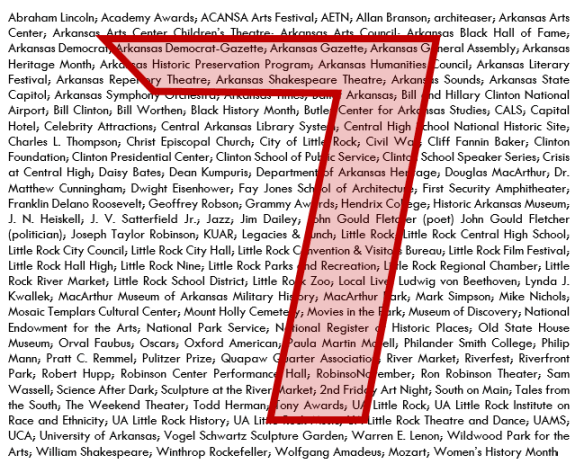
Last week, the Class of 2018 graduated from Little Rock Central High School.  Perhaps the most famous graduation ceremony in the long-storied history of Little Rock Central High took place on May 27, 1958.  It was on that date that Ernest Green became the first African American to graduate from the formerly all-white school.
Among those in the audience to witness this historic event was an up and coming minister named Dr. Martin Luther King, Jr.  A friend of L. C. and Daisy Bates, he attended the 1958 Central High School graduation to witness Green receiving a diploma. Each senior only received eight tickets to the ceremony at Quigley Stadium.   Dr. King was in the state to address the Arkansas AM&N (now UAPB) graduation.  Because he was going to be nearby, Dr. King wanted to witness the history.  Green did not know that Dr. King was in the stands until after the conclusion of the ceremony.  Later that evening, Dr. King gave Green a graduation present of $15.

Ernest Green, Dr. King and Daisy Bates share a relaxed moment — which was probably rare for the three in 1958

Because of fears about the event becoming a media circus, the Little Rock School District limited the press on the field to one Democrat and one Gazette photographer. Other press were limited to the press box normally filled with sportswriters covering the gridiron exploits of the champion Tigers.  There were photos taken of Green prior to the ceremony as well as during the ceremony.

During the graduation rehearsal, there had been concerns that some students or other people might try to disrupt the practice.  But it went off without a hitch.  Likewise, the ceremony itself went smoothly.  Local press reported that some members of the class briefly chatted with Green during the ceremony.  That the event took place without incident was a relief on many levels to City leaders.  Also in the class of 1958 were a son of Little Rock Mayor Woodrow Mann and a daughter of LRSD Superintendent Virgil Blossom.

LR Women Making History – Annie Abrams

Annie Mable McDaniel Abrams is a retired educator by trade and civic activist by avocation.  She is included in this list because she is also a historian.  As a writer and preservationist, she has worked to document history and ensure historical properties and neighborhoods will long remain in Little Rock.

Born in Arkadelphia, she moved to Little Rock at age 13 to attend Dunbar Junior High School and High School.  She studied education at Dunbar Junior College and later taught in Marianna. In 1956, she returned to Little Rock to work for the Arkansas Teachers Association.  After her return to the capital city, she married Orville Abrams.  In addition to raising her four children, Miss Annie has helped raise countless others through her advice, support, love, and sometimes strong admonitions.  She also found time to return to school and receive a degree from Philander Smith College.

Among her many accomplishments are leading efforts to rename High Street for Martin Luther King, 14th Street for Daisy L. Gatson Bates and 20th Street for Charles Bussey.  Through her community activities, she had worked closely with both Bates and Bussey.  She was a friend to the Little Rock Nine (who were only a few years younger than she) and to their families. Perhaps, because she has been a personal friend of many Arkansas and national politicians over the past 60 years, it should come as no surprise that she and her husband were also acquainted with Governor Faubus.

Whether a leading political figure or a small child, Miss Annie isn’t afraid to give advice or to share her love.  Once an educator, always an educator, she loves to learn and teach. It is rare for her to miss a speech at the Clinton School or a Political Animals Club meeting.

In recognition of all her efforts she has been recognized with an honorary doctorate from Philander Smith College, the Brooks Hays Award, and an award award from the national Martin Luther King Jr. Commission.  In 2010, she was inducted into the Arkansas Black Hall of Fame.

For more on Annie Abrams and other inductees into the Arkansas Black Hall of Fame, visit the permanent exhibit at the Mosaic Templars Cultural Center. That museum is an agency of the Department of Arkansas Heritage.

LR Women Making History – Janis Kearney

Janis Kearney is the only person to have held the title of U.S. Presidential Diarist. In 1995 she was appointed to that position by President Bill Clinton.

After graduating from the University of Arkansas, she was hired by the State of Arkansas as a program manager.  Nine years later, she became managing editor for the Arkansas State Press. She later purchased it from owner Daisy Bates.

In 1992, she took a leave from the paper to work on the Clinton presidential campaign.  Following the election, she worked in the transition office, the White House, and the U.S. Small Business Administration until her appointment as Presidential Diarist.

In 2001, she moved to Chicago and started working on a book, while also having fellowships at Harvard and DePaul.  In 2004, she founded Writing Our World Press and published her first book, Cotton Field of Dreams.  Her Clinton biography, Conversations: William Jefferson Clinton-From Hope to Harlem was published in 2006.  Since then she has also published a novel, a biography of Daisy Bates, and the second part of her memoirs.

She is also active in the Celebrate! Maya Project. This program seeks to honor and promote the inclusive literacy, creativity, and social consciousness of the life and work of artist and activist Maya Angelou.