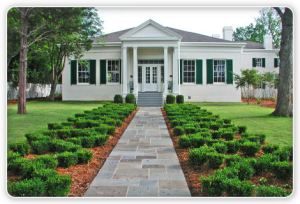
Tonight’s QQA Preservation Conversation explores the National Register of Historic Places

In this month’s Preservation Conversation, the National Register of Historic Places will be discussed.  The program, featuring Callie Willliams, begins today (February 14) with a 5:30 reception and a 6:00 lecture.  It will be in the Mixing Room at the Old Paint Factory in the East Village (1306 East 6th Street).  Preservation Conversations are a program of the Quapaw Quarter Association.

RSVP: The event is free and open to the public, but please RSVP because space is limited.

Parking: There is parking directly in front of the doors that are marked “Live,” “Print,” “Meet.” If those spots are taken. park in the parking lot to the right. There is also street parking in front of the building.

Entrance: Enter the event space through the door facing 6th Street marked “Meet.”

Questions? Call 501-371-0075 ext. 3 or email qqa@quapaw.com

Cfd7e5ed 5b07 457a 8688 f8f5b807f487The National Register of Historic Places is the official list of the Nation’s historic places worthy of preservation. Authorized by the National Historic Preservation Act of 1966, the National Park Service’s National Register of Historic Places is part of a national program to coordinate and support public and private efforts to identify, evaluate, and protect America’s historic and archeological resources. The Arkansas Historic Preservation Program (AHPP) is responsible for National Register implementation in Arkansas. February’s presentation will be on the history and development of the National Register of Historic Places (NRHP) as well as the research and process used to pursue listing in the Register.

Callie is a native of Arkansas and graduated from the University of Arkansas in 2008 with a Bachelors of Science in Architectural Studies. In 2010 she earned a Masters in Architectural History from the University of Virginia. As part of her graduate requirements, she completed a thesis entitled “Euine Fay Jones: Architecture is invention-is innovation-but it is also remembering”. After completing her graduate degree, she worked as the University of Virginia Registrar aboard the Semester at Sea Spring 2011 voyage around the world. In 2011, Callie returned to Arkansas and now works for AHPP. As the Education and Outreach Coordinator, she has worked with individuals and groups across the state to identify, research, and nominate historic structures to the National Register of Historic Places.

Annual Members meeting tonight for Quapaw Quarter Association

Image may contain: outdoor

Join the Quapaw Quarter Association for its yearly members only reception at the beautifully rehabilitated Mills-Davis house!

Built in 1878, this Italianate house was home to Abraham Anderson Mills and his wife Eliza. Abraham was sheriff and county judge. They lived in the house until the 1940s when it was sold to Dr. Emmett N. Davis, who passed the house on to his son, famed photographer William “Bill” Davis. The house was purchased by Jennifer Carman in 2016, and rehabilitated by Jennifer Carman and Donna Thomas. It is now home to J. Carman,Inc. fine art advisory and appraisal services, and Norton Arts, Inc., a nationally known art conservation firm.

This event is for members only, but memberships can be purchased at the door for as little as $35.00. Members who need to renew their memberships will also have the chance to do so at the event.

Event Location: Mills-Davis House, 523 E. 6th St Little Rock, AR.

Time: 5:30 pm to 7:30 pm

Parking: There is parking a block down the street at Curran Hall, or in the Curran Hall parking lot at 620 E. 6th street. There is also street level parking on Capitol (one block north), Sherman, 7th Street, and 8th Street.

Questions? Call 501-371-0075 ext. 3 or e-mail qqa@quapaw.com.

RSVP: Please let them know you are coming by clicking here.

Preservation Conversation tonight – Mason Toms discusses Little Rock’s built environment

Image may contain: house, tree, grass, sky, outdoor and text
A city’s built environment is a tangible link to the past. Walking the streets of cities can be a lesson in architectural history, if you know where to look. Due to the its economic and cultural prominence, Little Rock boasts the best collection of architectural styles in the state of Arkansas . The first Preservation Conversation of 2019 will explore the multitude of different forms that the architecture of the city has taken on over the last 189 years. Learn about what these styles meant to the people that built them and how they related to each other.

The event will take place in the Mixing Room at the Old Paint Factory in the East Village, 1306 East 6th Street, 72202
What Time: 5:30 pm (reception); 6:00 pm (lecture)
RSVP: The event is free and open to the public, but please RSVP. 
Parking: There is parking directly in front of the doors that are marked “live”, “print”, “meet.” If those spots are taken. park in the parking lot to the right. There is also street parking in front of the building.
Entrance: Enter the event space through the door facing 6th Street marked “Meet.”

Questions? Call 501-371-0075 ext. 3 or email qqa@quapaw.com

Speaker Bio: 

Mason Toms is an architectural historian and preservation designer at the Arkansas Historic Preservation Program. He works within the Main Street Arkansas program to assist building owners in historic downtowns to preserve their facades and storefronts, while still making them visually appealing to the changing demographics of the areas. Mason also works closely with the National Register and Survey staff to research and survey Mid-Century Modern architecture around Arkansas. To get the word out about the many remarkable Modernist structures in Arkansas to the general public, Mason created and continues to administer the Facebook group Mid-Century Modern Arkansas, which features a different Modernist building in the state every Friday.

Sandwich in History at Curran Hall today (12/7) at noon

The Arkansas Historic Preservation Program’s next “Sandwiching in History” tour will visit Curran Hall at 615 East Capitol Avenue, in Little Rock at noon today, (December 7).
urran Hall is a great example of Greek Revival architecture and is one of few antebellum houses that survive in Little Rock. Construction began in late 1842. Mary Woodruff Bell (daughter of the Arkansas Gazette founder William E. Woodruff) purchased Curran Hall in 1884 and it remained in the Bell family until the last descendant, Avrill Tate moved out in 1993.

The City of Little Rock and the Little Rock Advertising and Promotion Commission purchased the property and with the assistance of the Little Rock Visitor Information Center Foundation restored the property and converted it into the Little Rock Visitor Information Center. It was opened on May 18, 2002.  Today the facility is run by the Quapaw Quarter Association, which also maintains its offices there.

The “Sandwiching in History” tour series focuses on Pulaski County structures and sites. The noontime series includes a brief lecture and tour of the subject property. Participants are encouraged to bring their lunches with them. The American Institute of Architects offers one HSW continuing education learning unit credit for members who attend a “Sandwiching in History” tour.

The tour is free and open to the public. For information, call the AHPP at (501) 324-9880, write the agency at 323 Center St., Suite 1500, Little Rock, AR 72201, send an e-mail message to info@arkansaspreservation.org, or visitwww.arkansaspreservation.org.

The AHPP is the Department of Arkansas Heritage agency responsible for identifying, evaluating, registering and preserving the state’s cultural resources. Other agencies are the Arkansas Arts Council, Arkansas State Archives, the Delta Cultural Center in Helena, the Old State House Museum, the Mosaic Templars Cultural Center, the Arkansas Natural Heritage Commission and the Historic Arkansas Museum.

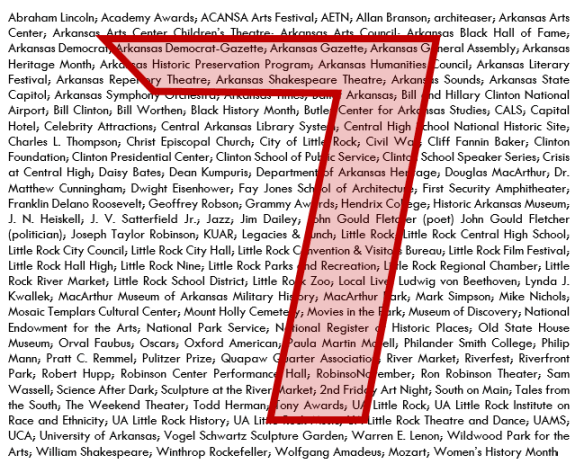
LR Culture Vulture turns 7

The Little Rock Culture Vulture debuted on Saturday, October 1, 2011, to kick off Arts & Humanities Month.
The first feature was on the Arkansas Symphony Orchestra, which was kicking off its 2011-2012 season that evening.  The program consisted of Mendelssohn’s Symphony No. 4 in A, Op. 90, Rossini’s, Overture to The Italian Girl in Algiers, Puccini’s Chrysanthemums and Respighi’s Pines of Rome.  In addition to the orchestra musicians, there was an organ on stage for this concert.

Since then, there have been 10,107 persons/places/things “tagged” in the blog.  This is the 3,773rd entry. (The symmetry to the number is purely coincidental–or is it?)  It has been viewed over 288,600 times, and over 400 readers have made comments.  It is apparently also a reference on Wikipedia.

The most popular pieces have been about Little Rock history and about people in Little Rock.

Little Rock Look Back: The Man behind Little Rock’s Villa Marre

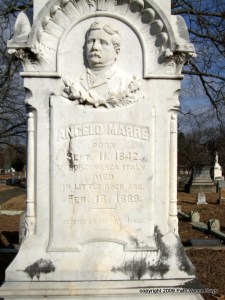
On September 11, 1842, future Little Rock Alderman Angelo Marre was born in Borzonaca, Italy.  He immigrated to Tennessee with his parents in 1854.
During the Civil War, he served in the Confederate Army. From 1865 to 1868, Angelo Marre worked for the Memphis Police Department but was forced to resign after he was accused of killing a man during an argument.  After his acquittal, he returned to the saloon business.  In 1872 Marre was convicted of stealing money and sentenced to three years in prison.

Tennessee Governor John Brown granted Marre a full pardon two years into his sentence, and he regained his citizenship in 1879.

After getting out of prison, he claimed an inheritance and joined his brothers in Little Rock.  He worked as a bartender at the Metropolitan Hotel.  He later opened a saloon and billiard parlor.

By the mid-1880s, Marre owned two saloons, a liquor import business, an office building in downtown LR, 3,000 sharesof stock in mining companies operating in Garland and Montgomery counties, and he was the first president of Edison Electric Company of LR.

In 1883, he was elected as an alderman on the Little Rock City Council.  He lost is bid for reelection in 1885. In 1888, he was an unsuccessful candidate for Pulaski County Sheriff.

villamarreAngelo Marre died February 18, 1889, as a result of his infection.  He is buried at Calvary Cemetery in LR. His custom designed, marble monument was ordered from Florence, Italy, and cost $5,000.

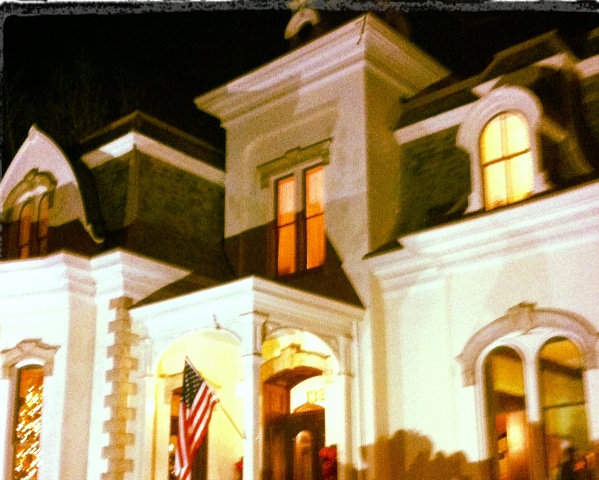
Marre is probably best known today as the builder of the structure now known as the Villa Marre.  Built in 1881, it is designed in the Italianate and Second Empire styles.  It was built in 1881 and 1882 on Block 21, Lots 5 & 6 of the Original City of Little Rock.  The cost was $5,000.

It was originally a red brick structure and has been modified and expanded several times as well as painted white.  It did not bear the name Villa Marre until the 1960s when historic preservation advocate Jimmy Strawn gave it that name.

After serving as the headquarters for the Quapaw Quarter Association for several years, it was returned to a private residence.  It is now available for special events and rentals.

The Villa Marre is probably best known locally and nationally for serving as the facade for the Sugarbaker design firm on the CBS sitcom “Designing Women.”  Though the interior of the house does not match the interior on TV, the building was featured in the opening credits as well as in exterior shots each week.

Two Centuries of the Quapaw Line

Stones placed in Riverfront Park denote where there Quapaw Line started from La Petite Roche

On August 24, 1818, the Quapaw Line was drawn.  Starting at La Petite Roche and heading due south, this line formed the boundary between the Quapaw tribal lands and public lands available for settlement.  (In the 1810s and 1820s, the Quapaw alternated between Central Arkansas and Northwest Louisiana depending on preferences of the tribal leadership.)

Though by 1824, the Quapaw were forced to give up all of their lands in the area, the line continued serve as an important marker.   In the ensuing six years, the first permanent settlement of Little Rock took place and streets were planned.

The 1818 treaty referred to La Petite Roche as the Little Rock.  Some have speculated that this is the first official use of “Little Rock” to designate the outcropping and to name the area.  When the U.S. Post Office was established in March 1820, it was given the name Little Rock.

There is a marker commemorating the beginning of the Quapaw Line located at La Petite Roche in Riverfront Park.  The first segment of the line is also noted in the park.  There are also sunken markers place along the line at various points.  In MacArthur Park, at the corner of 9th and Commerce Streets, there is a marker noting that the line passed through at that location.  A few years ago, engineers from Garver retraced the line using modern technology. They found the original surveyors’ work to be extremely accurate.

A good account of walking the Quapaw Line through downtown Little Rock can be found on this website.

Most of what is now called the Quapaw Quarter was located to the west of the Quapaw Line.  However, it did take its name from the fact that the tribe had once lived in that area and was later sequestered to lands near it.  The name for the area was chosen by a committee composed of David D. Terry, Peg Newton Smith, Mrs. Walter Riddick Sr., Dr. John L. Ferguson, and James Hatcher. They had been appointed to a Significant Structures Technical Advisory Committee to advocate for preservation of important structures as a component of the City of Little Rock’s urban renewal efforts.