
The Old State House Holiday Open House is Sunday, December 2

Help ring in the holiday season at the Old State House Museum on Sunday, December 2, at Holiday Open House!

Visitors will find the Old State House colorfully decorated for the season, and local music groups will perform delightful carols. Fun, hands-on activities will be available to children; they can create unique holiday cards and more.

The hours are 1pm to 5pm, and admission is free.

Schedule of performances at Old State House Museum:

1:30 — Bethel Middle School Bryant
2:00 — Little Rock Central High School Madrigals
2:30 — Sweet Adelines, Top of the Rock
3:00 — Clarksville High School Choir
3:30 — Forest Heights STEAM Middle School Choir
4:00 — JA Fair High School Choir
4:30 — Pine Bluff High School Choir

The Old State House Museum is an agency of the Department of Arkansas Heritage.  A trolley will be available to take patrons between Old State House MuseumHistoric Arkansas Museum and Mosaic Templars Cultural Center, as well as the Arkansas Governor’s Mansion, at no charge

51st annual Historic Arkansas Museum Christmas Frolic on December 2 from 1pm to 4pm

Sunday, December 2 is the 51st annual Historic Arkansas Museum Christmas Frolic!

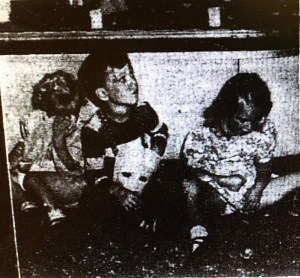
The Frolic celebrates Christmas as it was in the 1800s with living history, carols, reenactments, live music, dancing and more.

Visitors come from across Arkansas each year to sample Historic Arkansas Museum’s famous hot cider and ginger cake, and to shop for unique Arkansas-made holiday gifts in the Museum Store.

Frolickers will enjoy a variety of activities for children and adults, including: living history performances and pioneer games.

This event runs from 1pm to 4pm and is free.

Historic Arkansas Museum is an agency of the Department of Arkansas Heritage.  A trolley will be available to take patrons between Old State House MuseumHistoric Arkansas Museum and Mosaic Templars Cultural Center, as well as the Arkansas Governor’s Mansion, at no charge

Little Rock Culture Vulture Blog Hits a Milestone

Founded in October 2011, the Little Rock Culture Vulture blog passed a milestone today. It has had over 300,000 views during that 7 years and one month.  Considering that it averaged about 10 views a day during the first three months, this accomplishment is a moment to brag.

When it was started, I was unsure if anyone would care. This entry is the 3,874th post on the blog.  Over 10,400 organizations, people, events, pieces of art and works of literature, or historical facts have been featured.

To all the readers and those who post about it on social media, let me say “Thank you!”

Little Rock Look Back: Tricks, Treats on Little Rock’s mid-century streets

A recent romp through an ARKANSAS GAZETTE gave insight into Halloween in Little Rock in the middle of the 20th Century.

Apparently by late afternoon on Halloween 1950, downtown Little Rock was filled with kids and teens in costumes. Much of the focus seemed to be on tricks as many of these revelers were utilizing water guns to soak people, throwing enough talcum powder to create an aroma downtown, shooting off firecrackers, and soaping store windows. Several industrious store owners had coated there windows with glycerine so that soap would not mark them.

The mayhem was enough to cause even more problems to traffic at rush hour. Police officers were helpless as they were directing traffic.  One city bus filled with passengers was attacked by a phalanx of waterguns, until the windows were all closed.

GAZETTE writer noted that two teen boys were dressed rather convincingly as girls. One was described as “rather pretty.” It was not until the teen let out an expletive (which the paper reported as “g— d—–”) that the reporter was certain it was a male.

Not everyone was focused on tricks.  Merchants in the Heights neighborhood created a block party with a carnival. It was deemed to be so successful that it would become an annual event.

31 Days of Arkansas Rep: 1995’s THE RAINMAKER

N. Richard Nash’s romantic drama with comedy, The Rainmaker took over the Arkansas Rep stage in January and February 1995. Following the run in Little Rock, it toured the US through April of that year.
The production was directed by Rep founder and Artistic Director Cliff Fannin Baker. It reunited him with several long-time Rep actors Vivian Morrison, Ronald J. Aulgur, Steve Wilkerson, Richard Glover, and Mark Johnson.

Baker had previously directed Robert Standley in a production of the show, and brought him in to reprise his role as the title character.  Rounding out the cast was Rep newcomer John Stiritz.

The creative team included Mike Nichols (sets), Don Bolinger (costumes), David Neville (lighting) and Chip Salerno (sound).  Salerno also wrote and recorded the music which underscored the production.

LR Culture Vulture turns 7

The Little Rock Culture Vulture debuted on Saturday, October 1, 2011, to kick off Arts & Humanities Month.

The first feature was on the Arkansas Symphony Orchestra, which was kicking off its 2011-2012 season that evening.  The program consisted of Mendelssohn’s Symphony No. 4 in A, Op. 90, Rossini’s, Overture to The Italian Girl in Algiers, Puccini’s Chrysanthemums and Respighi’s Pines of Rome.  In addition to the orchestra musicians, there was an organ on stage for this concert.

Since then, there have been 10,107 persons/places/things “tagged” in the blog.  This is the 3,773rd entry. (The symmetry to the number is purely coincidental–or is it?)  It has been viewed over 288,600 times, and over 400 readers have made comments.  It is apparently also a reference on Wikipedia.

The most popular pieces have been about Little Rock history and about people in Little Rock.

A Bastille Day look at Benard de La Harpe

Today is Bastille Day, or as they say in France, la Fête nationale.  It commemorates both the 1789 storming of the Bastille as well as the 1790 Fête de la Fédération.   

At the time both events occurred, the land today known as Little Rock, like the rest of the Louisiana Purchase, was under Spanish control. (A fact overlooked in the operetta The New Moon which is set in New Orleans during the French Revolution.)

However, since this area was “owned” by the French from 1699 to 1762 and again from 1800 to 1804, it seems appropriate to acknowledge the French heritage of the area on this day.

Even though Arkansas was explored by the French in 1722, no official settlement of the area now known as Little Rock took place until 1812.  There was no permanent settlement until 1820 (though by 1818 settlement was eminent as evidenced by the Quapaw Treaty).

Jean-Baptiste Benard de La Harpe was the lead French explorer who first came to Little Rock in 1722.

From 1718 through 1723, he spent time exploring various areas of the southern sections of North America.  His 1722 trip up the Mississippi and Arkansas Rivers was at least his third such expedition along a river in the area.  From 1718 to 1719, he explored part of what is now Oklahoma up from the Red River.  Next, he explored part of what is now the eastern section of Texas.

After a trip back to France in 1720, he came back to the New World in 1721.  After his February to May 1722 trip up the Mississippi and Arkansas Rivers, he then went to transfer Pensacola to the Spanish on behalf of the French. In 1723 he went back to France and remained there until his 1765 death.