
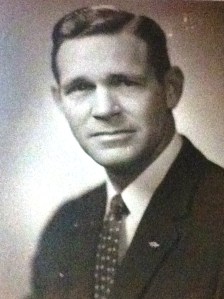
 Future Little Rock Mayor Woodrow Wilson Mann was born on November 13, 1916, in Little Rock. His tenure at Little Rock mayor was tumultuous from both things of his doing as well as events that catapulted him onto the international scene.
In 1955, he ran as the Democratic nominee for Mayor of Little Rock and defeated two term incumbent Pratt C. Remmel, a Republican. He took office in January 1956 and immediately set about to make a lot of changes. In addition to revitalizing the City’s bus system, and removing some color barriers at City Hall, he oversaw the dismantling of the copper dome on top of Little Rock City Hall (as opposed to the repair of the dome championed by Mayor Remmel).
Mayor Mann was caught up in a grand jury investigation into purchasing practices at City Hall as well as within the City government in North Little Rock. Partially in response to this, Little Rock voters approved a new form of government in late 1956. Mayor Mann opposed the switch to the City Manager form and refused to set the election for the new officials but was ultimately compelled to do so.
He was also Mayor during the 1957 integration of Little Rock Central High School. He sought to keep the peace and to broker a deal between President Dwight Eisenhower and Governor Orval Faubus. His powers within the city were, no doubt, hampered because of his lame duck status as Mayor. In November 1957 following the election of the new City Board of Directors, he chaired his last City Council meeting and left office.
In January of 1958, a series of articles written by Mayor Mann detailed his perspective on the events at Central High. These were carried by newspapers throughout the US.
Because of ill will toward him due to the Central High crisis (he was criticized by both sides) and grand jury investigation, Mayor Mann felt it would be difficult to maintain his insurance business in Little Rock. He moved to Texas in 1959 and remained there the rest of his life. He died in Houston on August 6, 2002.
 On October 3, 1963, President John F. Kennedy delivered remarks at the Arkansas State Fairgrounds. Only a few weeks later, he would be felled by an assassins bullet in Texas.
 The Little Rock Culture Vulture debuted on Saturday, October 1, 2011, to kick off Arts & Humanities Month.
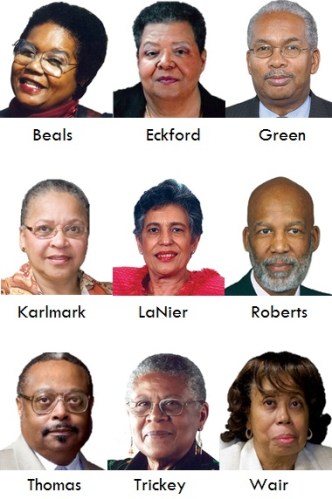 After legal challenges, stymied attempts, and literally countless threats, it was on Wednesday, September 25, 1957, that the group of African American students known as the Little Rock Nine actually entered Little Rock Central High School for a full day. They would return each day through the end of the school year.
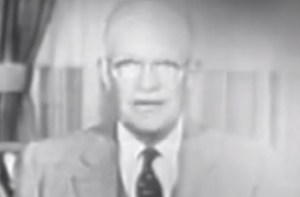 On September 24, 1957, President Dwight Eisenhower ordered the 101st Airborne to Little Rock to ensure that the Little Rock Nine would be able to enter Central High School.
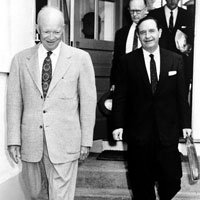 On September 14, 1957, in an attempt to end the stalemate in Arkansas, President Dwight D. Eisenhower met with Arkansas Governor Orval Faubus. The meeting was brokered by Rep. Brooks Hays, whose district included Little Rock.
 On July 4, 1893, Arsenal Park opened in Little Rock. This was the City’s first municipal public park. Though it predated the establishment of a formal Parks and Recreation Department by several decades, it is the oldest part of that department.
 Little Rock Culture Vulture