
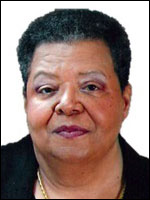
 After 60 years, the most dramatic images of the 1957 crisis at Little Rock Central High School remain those of 15-year-old Elizabeth Eckford, being taunted as she walked through a hate-filled mob, on her way to school. Today, Ms. Eckford recalls how difficult it was for her parents, Oscar and Birdie, to allow her to continue the struggle to integrate the Little Rock schools.
Last month, a replica of the bench on which she sat on that first day in 1957 was unveiled. Instead of sitting on a bench surrounded by taunters, this time she sat on a bench surrounded by cheers and applause. The bench was the latest project of the Central High Memory Project which has also produced an audio tour which takes listeners down the street as Ms. Eckford experienced it in 1957.
Born on October 4, 1941, she grew up in Little Rock. Because all of the city’s high schools closed her senior year, Ms. Eckford moved to St Louis, where she obtained her GED. She attended Knox College in Illinois, and received her BA in History from Central State University in Wilberforce, Ohio. While in college, Ms. Eckford became one of the first African Americans to work in a local St. Louis bank, in a non-janitorial position, and later she worked as a substitute teacher, in Little Rock public schools.
Ms. Eckford, a veteran of the U.S. Army, has also worked as a substitute teacher in Little Rock public schools, test administrator, unemployment interviewer, waitress, welfare worker, and military reporter. Along with her fellow Little Rock Nine members, she is a recipient of the NAACP’s Spingarn Medal and the prestigious Congressional Gold Medal. Together with one of her former tormenters, Ms. Eckford also received a Humanitarian award, presented by the National Conference for Community and Justice (NCCJ), following their meeting 34 years after an apology. The award recognizes forgiveness and atonement. They talked to students for two years, and, together, attended a 12-week racial healing course.
Ms. Eckford has started to walk through the painful past in sharing some of her story. She has said that true reconciliation can occur if we honestly look back on our shared history. She believes that the lessons learned from Little Rock Central High School must continue to be shared with new generations, reminding audiences that “the dead can be buried, but not the past.” Ms. Eckford continues her interest in education by sharing her story with school groups, and challenges students to be active participants in confronting justice, rather than being passive observers.
 The Little Rock Culture Vulture debuted on Saturday, October 1, 2011, to kick off Arts & Humanities Month.
 Gloria Ray Karlmark enraptured the audience in 2017 at the Central High Integration 60th Anniversary when she talked about how welcomed she finally felt in the city of her lost youth. She was born on September 26, 1942. So her second full day of classes in 1957 was her birthday.
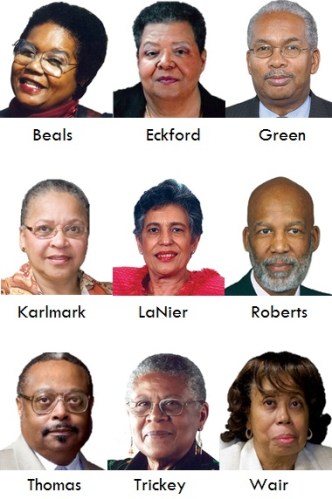 After legal challenges, stymied attempts, and literally countless threats, it was on Wednesday, September 25, 1957, that the group of African American students known as the Little Rock Nine actually entered Little Rock Central High School for a full day. They would return each day through the end of the school year.
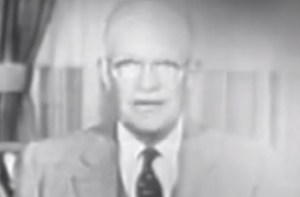 On September 24, 1957, President Dwight Eisenhower ordered the 101st Airborne to Little Rock to ensure that the Little Rock Nine would be able to enter Central High School.
 Ernest Green’s sixteenth birthday was probably more memorable than most people’s. It was not about getting a car, it was about wondering if he would ever get to attend Little Rock Central High School.
 Little Rock Culture Vulture