Little Rock Look Back: Pratt C. Remmel

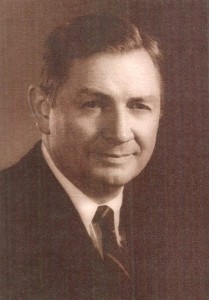
One hundred and three years ago today, on October 26, 1915, future Little Rock Mayor Pratt Cates Remmel was born.  He was one of five children of Augustus Caleb and Ellen Lucy Remmel.  His father died when he was five, leaving his mother to raise six children (Gertie, Harmon – also known as Buck, Pratt, Gus, Rollie, and Carrie) by herself.  After graduating from high school in 1933, he received a bachelor’s degree in economics from the University of Virginia in 1937.  During World War II, he held the rank of Lieutenant in the US Navy.

The Remmel family had long been involved in politics.  A great-uncle had been the GOP nominee for governor and senator as well as serving on the GOP national committee.  Remmel’s father had been the state GOP chair and his mother was the Arkansas Republican national committeewoman for nearly three decades.  In 1938, shortly after returning from college, Remmel ran for the Little Rock City Council but did not win.  In 1940, he became chairman of the Pulaski County Republican Executive Committee. For the next several decades, he held various leadership posts in the GOP at the county, state and national level.

Remmel made his second bid for public office in 1951 when he challenged incumbent LR Mayor Sam Wassell, who was seeking a third term.  Wassell shared the often held belief at the time that the GOP could not win any races in Arkansas because of the aftereffects of Reconstruction.  Remmel ran a vigorous campaign and won by a 2-to-1 margin becoming Little Rock’s first Republican mayor since Reconstruction.  In 1953, he sought a second two year term and was re-elected.  Though he had worked to build the GOP in Arkansas, he did not emphasize party affiliation in this campaign. He stressed he had been “fair to all and partial to none.”  This campaign included a rally which was aired live on six LR radio stations at the same time, a first for Arkansas. He won by over 3,000 votes this time over alderman Aubrey Kerr.

Remmel had been mentioned as a potential candidate for US Senate or Congress in 1954.  Instead, he ran for governor and was defeated by Orval Faubus in his first race for the office.  Remmel did receive more votes for governor than any GOP candidate had since reconstruction.  He is credited with laying the groundwork for the future successful campaigns of Winthrop Rockefeller.

A month before the election in 1955, Remmel announced he would seek a 3rd term as Mayor.  While later admitting he should have stuck with the customary two terms, he also said he ran to give voters an alternative to the Democratic nominee Woodrow Mann.  Mann, like Remmel, was in the insurance business; Remmel considered Mann to have a questionable reputation.  Several statewide Democratic leaders campaigned for Mann, who beat Remmel by 1,128 votes, one of Little Rock’s closest mayoral elections.

As Mayor, Remmel served in leadership positions with the US Conference of Mayors and the Arkansas Municipal League.  It was during his tenure as mayor that the land which is now Rebsamen Golf Course was given to the City.

After he left office, Remmel returned to business interests and staying active in civic affairs.   He was an active leader of First United Methodist Church and Gideons International.  He was a Mason, a Shriner, a member of the American Legion, and the American Red Cross.   Remmel served on the Arkansas River Basin Commission and chairman of the Arkansas Waterways Commission.  In 1996, he was posthumously inducted into the Arkansas River Hall of Fame.

Married for many years to Catherine Couch, the couple had three children, Pratt Jr., Cathie and Rebecca.  Lake Catherine in Arkansas is named for his wife. Remmel Park and Pratt Remmel Road in Little Rock are named for Mayor Remmel.

Mayor Remmel died on May 14, 1991.  He and Catherine (who died in 2006) are buried in Oakland Cemetery.
LR Culture Vulture turns 7

The Little Rock Culture Vulture debuted on Saturday, October 1, 2011, to kick off Arts & Humanities Month.
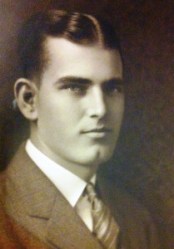
The first feature was on the Arkansas Symphony Orchestra, which was kicking off its 2011-2012 season that evening.  The program consisted of Mendelssohn’s Symphony No. 4 in A, Op. 90, Rossini’s, Overture to The Italian Girl in Algiers, Puccini’s Chrysanthemums and Respighi’s Pines of Rome.  In addition to the orchestra musicians, there was an organ on stage for this concert.

Since then, there have been 10,107 persons/places/things “tagged” in the blog.  This is the 3,773rd entry. (The symmetry to the number is purely coincidental–or is it?)  It has been viewed over 288,600 times, and over 400 readers have made comments.  It is apparently also a reference on Wikipedia.

The most popular pieces have been about Little Rock history and about people in Little Rock.

Little Rock Look Back: Opening of La Harpe Boulevard

Knoop, Parkin and Remmel in this DEMOCRAT staff photo

Not all events in Little Rock on May 25, 1959, were school-related.

On that day, Harry W. Parkin, a member of the Arkansas Highway Commission was joined by Little Rock Mayor Werner Knoop and Pratt Remmel, a former mayor of the city,  in a brief ceremony.

With Mayors Knoop and Remmel standing by, Mr. Parkin snipped the ribbon to officially mark the opening of LaHarpe Boulevard in Little Rock.  Owner of Parkin Printing Company in LR, he had been appointed  to the Highway Commission in 1957.

Mr. Knoop was the current mayor of the City, having been chosen by his colleagues on the initial City Board in November 1957. He was re-selected in January 1959 to a second stint as mayor.  Mr. Remmel had been mayor in 1952 when Little Rock voters approved bonds to pay for their portion of the $3million project.

In February 1957, the street was named in honor of the explorer Jean-Baptiste Benard de La Harpe, who had first claimed the area for the French.

Little Rock Look Back: A few municipal primary races of yore

Taylor

Today is primary day in Arkansas.  Though City of Little Rock municipal races are non-partisan and won’t be on the ballot until November, that has not always been the case.

Between 1874 and 1957, usually winning the Democratic Primary was tantamount to election. So the municipal general elections were usually boring. (The only exception would be the three elections in which Pratt Remmel was the GOP nominee for mayor facing off against the Democratic nominee.)

The real drama was in the primary races.

The 1911 primary pitted crusading businessman Charles Taylor against a firebrand attorney and Alderman John Tuohey, a grocer. Each of the three tried to position himself as an outsider, though Tuohey was least successful in accomplishing this considering he was an alderman and the candidate of choice of the retiring mayor.

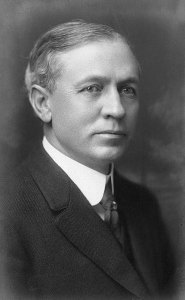
Riffle logged insults at both Taylor and Tuohey. Taylor sought to position himself as not just the candidate of the businessmen. As a progressive, he borrowed Teddy Roosevelt’s Square Deal motto and offered “A Square Deal for Everyone.” A Baptist Sunday School superintendent, he also campaigned against vice. Tuohey offered his own solutions to city issues but was hampered in the campaign by illness.

After the January 12, 1911, primary election day, Tuohey had 1530 votes, Taylor had 1493 and Riffle had 506. Taylor alleged 323 illegal votes were cast and sought the poll tax records to try to prove it. After he saw the poll tax lists, he reduced his charges to 250 illegal votes.

On January 26, Tuohey and Taylor agreed to a new, two-man primary (essentially a run-off) in an attempt to resolve the matter. After that race, Taylor had 1874 votes and Tuohey had 1645. Taylor went on to be elected mayor in April 1911 and would subsequently serve four two-year terms.


Robinson

When he took office in April 1929 having just turned 29 a few weeks earlier, Mayor Pat L. Robinson seemed to be a rising star in the Democratic Party. Within a few months, however, he found himself at odds with the Little Rock City Council on a variety of issues.

Some of these appear to have been of his own doing, partially due to youthful arrogance, and part of these were probably rooted in entrenched resistance to change. With the onset of the Great Depression six months into his term, the City’s already tight financial shape became even tighter. The aldermen and city clerk gave him no quarter (though some may have wanted to draw and quarter him).

Knowlton

In November 1930, City Clerk Horace Knowlton squared off against Mayor Robinson (no relation to Joe T.) in the Democratic primary. It was a particularly raucous primary with charges and counter-charges of corruption, malfeasance and misfeasance. In describing Mayor Robinson’s handling of the City finances, Mr. Knowlton declared the mayor had undertaken an “orgy of spending.”

The results after the election were  Knowlton, 4,537; Robinson, 4,554; and 61 votes for a third candidate. Robinson was declared the nominee. But Knowlton protested and filed suit. There charges of illegal voting and persons whose ballots were not counted. After an exhaustive investigation (over 1,800 pages of testimony were taken), the court found that neither side had willingly engaged in voter fraud or vote tampering. The painstaking analysis further found that Knowlton had received ten more votes than Robinson.

In April 1931, Knowlton won the general election and was sworn in as Little Rock mayor. Robinson continued to pursue the case and appealed to the Arkansas Supreme Court. In June 1931 (in the third month of Knowlton’s mayoral term), the Arkansas Supreme Court upheld the circuit court ruling that Knowlton had indeed won the primary.


Sprick

A little more than a decade later, the state’s high court would again be called on to weigh in on Little Rock’s Democratic primary for mayor. In December 1944, Alderman Sam Wassell and former Alderman Dan Sprick faced off in a particularly nasty race.  As World War II was drawing to a close, there were charges leveled which questioned patriotism. With both men having service on the Little Rock City Council, there were also plenty of past votes on both sides which could become fodder for campaigns.

Wassell

The election was on December 5, 1944. Sprick received 3,923 votes and Wassell 3,805. A few days later, Wassell filed suit claiming that there were people who voted who were not on the poll tax rolls and another group of voters who did not live in the ward in which they voted. Sprick countersued making the same charges against Wassell.

The case eventually ended up at the Arkansas Supreme Court, which remanded it back to the lower court. On March 26, 1945, Wassell dropped his case. This was only eight (8) days before the municipal general election.

Two years later, Wassell would challenge Sprick in the primary and be triumphant. Wassell would serve from 1947 until 1951.  Sprick would later return to politics and serve a decade in the Arkansas State Senate.


There are many more interesting primary and election stories to tell. Stay tuned…

Little Rock Look Back: Mayoral Races without Incumbents

The announcement by Little Rock’s 72nd Mayor, Mark Stodola, that he will not seek a fourth term in 2018, sent the Little Rock Culture Vulture thinking about past mayoral races in Little Rock history.
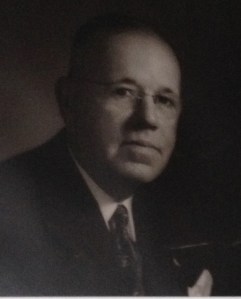
Election records in the 1800s are spotty at best, so this discussion focuses on those who have run for Mayor once the current City Hall opened in April 1908.

The November 2018 election will be only the sixth mayoral election since 1908 without an incumbent or former mayor on the ballot.  (Assuming that none of Little Rock’s living seven former mayors choose to run.)

The most recent election without a current or former mayor was in 2006, when Jim Dailey had announced he would not seek another term. It was at that election that former City Attorney Mark Stodola, faced off against two former City Directors (Barbara Graves and Jesse Mason) and former State Senator Bill Walker.

From 1908 through 1957, Little Rock elections were partisan in nature.  In most instances, if one won the Democratic Primary, one was assured of being mayor.  Looking back at municipal general election results (where there was usually only token opposition at best) in those decades does not give a true picture to the spirited nature of races for City Hall.

The first election since 1908 without an incumbent or former mayor was in 1911. Charles Taylor ran as a reforming outsider and won an open seat for mayor.  He would serve until 1919. That year, former alderman Ben Brickhouse won the open seat.

R. E. Overman was elected to his first term as mayor in 1935, after incumbent mayor Horace Knowlton did  not seek a third term.  After returning to City Hall in 1941 and being re-elected, Mayor Moyer retired a second time in 1945. In that election, Dan Sprick was elected mayor.  That would be the final election in Little Rock without an incumbent or former mayor until 2006.

From 1957 until 1994, the mayor was chosen every two years by members of the City Board of Directors from among their membership.  The last person to be selected in that manner, Jim Dailey, won city-wide election to the mayoral position in 1994 and served until 2006.

Here is a history of all the mayor races since 1908:

1908 Special – Incumbent acting mayor John Herndon Hollis did not seek election to full term.  Former Mayor W. R. Duley elected
1909 – Mayor Duley re-elected
1911 – Charles Taylor elected after Mayor Duley forgoes seeking another term.
1913 – Mayor Taylor re-elected
1915 – Mayor Taylor re-elected
1917 – Mayor Taylor re-elected
1919 – Ben D. Brickhouse elected after Mayor Taylor forgoes seeking another term.
1921 – Mayor Brickhouse re-elected
1923 – Mayor Brickhouse re-elected
1925 – Mayor Brickhouse loses Democratic Primary to County Judge Charles Moyer, who wins the general election.
1927 – Mayor Moyer re-elected
1929 – Mayor Moyer loses Democratic Primary to City Attorney Pat L. Robinson, who wins the general election.
1931 – Mayor Robinson loses Democratic Primary to Horace Knowlton, who wins the general election.
1933 – Mayor Knowlton re-elected
1935 – R. E. Overman elected after Mayor Knowlton forgoes another term.
1937 – Mayor Overman re-elected
1939 – J. V. Satterfield defeats Mayor Overman in the Democratic Primary. He subsequently wins general election.
1941 – Former mayor Moyer returns to City Hall after Mayor Satterfield opts to retire after one term.
1943 – Mayor Moyer is re-elected
1945 – Dan Sprick is elected after Mayor Moyer forgoes another term.
1947 – Sam Wassell defeats Mayor Sprick in the Democratic Primary, subsequently wins general election.
1949 – Mayor Wassell is re-elected
1951 – Republican Pratt Remmel defeats Democratic incumbent Sam Wassell in the general election to become mayor.
1953 – Mayor Remmel is re-elected.
1955 – Democratic nominee Woodrow Mann defeats GOP incumbent Mayor Remmel in the general election to become mayor.
1956 – Voters switch to City Manager form of government, partially in response to actions by Mayor Mann’s administration.  Mayor Mann leaves office in November 1957.

1957 to 1994 – City Manager form with mayor selected from among membership

1994 – Mayor Jim Dailey wins election as Little Rock’s first popularly elected mayor since 1957.  He had previously been selected mayor by his city board colleagues.
1998 – Mayor Dailey is re-elected
2002 – Mayor Dailey is re-elected
2006 – Mark Stodola is elected mayor after Mayor Dailey forgoes another term.
2010 – Mayor Stodola is re-elected
2014 – Mayor Stodola is re-elected
2018 – Mayor Stodola announces he will not seek another term.

Little Rock Look Back: Sam M Wassell

On April 28, 1883, future Little Rock Mayor Sam M. Wassell was born.  His grandfather John W. Wassell had been appointed Mayor of Little Rock in 1868.  He is the only Little Rock Mayor to be a grandson of another Little Rock Mayor.

Sam Wassell served on the Little Rock City Council from 1928 through 1934 and again from 1940 through 1946.  He is one of the few 20th Century Little Rock Mayors who previously served on the City Council.

Wassell was an attorney; he practiced law privately and also served as an Assistant US Attorney.  In 1930, he ran unsuccessfully for the Democratic nomination for the US Congress representing the 5th Congressional District, which at the time included Little Rock.

Wassell ran for Mayor in 1947 and was unopposed in the general election.  (Though the Democratic primary was heated as he took on the incumbent Dan Sprick.)   He was unopposed in his bid for re-election in 1949.  During his second term, President Harry S. Truman visited Little Rock.  In 1951, he sought a third term as Mayor.  No Little Rock Mayor had been successful in achieving a third consecutive term since 1923.  Though he received the Democratic nomination, the Republican party nominated Pratt Remmel who defeated Wassell by a 2 to 1 margin.

With a new USS Little Rock recently put into naval service, it is interesting to note that Wassell’s wife, Ruth Wassell christened the previous USS Little Rock in 1944.

Mayor Wassell died on December 23, 1954 and is buried at Roselawn Cemetery in Little Rock.

MacArthur Returns to Little Rock

MacArthur and Mayor Remmel

General MacArthur and Mayor Remmel

On Sunday, March 23, 1952, General Douglas MacArthur made his only post-infancy visit to Little Rock. He had previously been scheduled to visit Mississippi, and Little Rock Mayor Pratt Remmel had persuaded him to add a visit to Little Rock to the agenda. The fact that Little Rock now had a Republican mayor had apparently piqued the General’s interest.

General MacArthur, accompanied by his wife and son as well as several journalists and members of his military retinue, arrived at Little Rock Airport at 10:40 am. He was met by a delegation of civic leaders including Mayor Remmel. Alderman James Griffey made welcoming remarks on behalf of the city. Then the General and Mayor boarded an open car and led a motorcade from the airport to downtown.

The motorcade’s destination was Christ Episcopal Church at Capitol and Scott streets. It was at this church that MacArthur had been baptized as an infant. The delegation was greeted by the Episcopal Bishop R. Bland Mitchell, Rector J. Hodge Alves, and Rector Emeritus W. P. Witsell. (While he had been Rector, Dr. Witsell had garnered national attention by issuing an Easter blessing to Gen. MacArthur as he had been evacuating the Philippines at the height of World War II.) In order to gain admittance to the church that morning, church members and guests had to have tickets.

Following the worship service, the General and his party went to three events in the park named in his honor. The first was a tour of the Museum of Natural History (now the Museum of Discovery and located in the River Market; the current tenant of the building is the MacArthur Museum of Arkansas Military History), which was located in the building in which the General had been born. After the tour, he spoke at a dedication of a small rose garden adjacent to the museum. It was sponsored by the Little Rock City Beautiful Commission and the Garden Clubs of Greater Little Rock.

Though every stop of the General’s visit had featured crowds, the largest was at the third location in MacArthur Park. A crowd of several thousand greeted the General as he spoke from the Foster Bandshell in the park’s southwest corner. Chamber of Commerce president Richard C. Butler (brother-in-law of Mayor Remmel) was the master of ceremonies. Following an invocation by Methodist Bishop Paul Martin, the only other speaker was the General. In his remarks he spoke of his Southern heritage and of his appreciation for the support of the citizens of Little Rock over the years.

Several gifts were bestowed upon the MacArthurs at the ceremony. The City of Little Rock presented Mrs. MacArthur with an engraved silver serving tray.

Following the events in MacArthur Park, the family retired for a brief respite to the Hotel Marion. They then attended a luncheon buffet in their honor at the home of Howard and Elsie Stebbins on Edgehill Road. The General and Mrs. MacArthur circulated through the house greeting guests and then eschewed a special table in favor of balancing their plates on their laps and sitting in wingback chairs. Meanwhile Arthur MacArthur stayed upstairs and discussed stamp collecting and other hobbies with the Stebbins’ two teenage sons.

Following the luncheon, the MacArthur party went back to the airport and by 4:00pm, the plane was in the air.

Though this visit was coming at the end of a whirlwind of activities, by all accounts, the General and Mrs. MacArthur were very gracious and accommodating. The General was being mentioned as a potential GOP candidate for President, but purposefully steered clear of any political comments in his remarks. He and Mrs. MacArthur dutifully posed for photos not only for the media but also for amateur photographers. At lunch, the General even asked a Gazette photographer to take a photo of him with his Little Rock Police motorcycle escorts so that they could have a souvenir of the visit.